Is The Boat To The Mamanuca Islands Rough?
What to expect on the boat crossing from Port Denarau to the Mamanuca Islands, crossing times by destination, what the operator can change, and how to prepare for a swell.
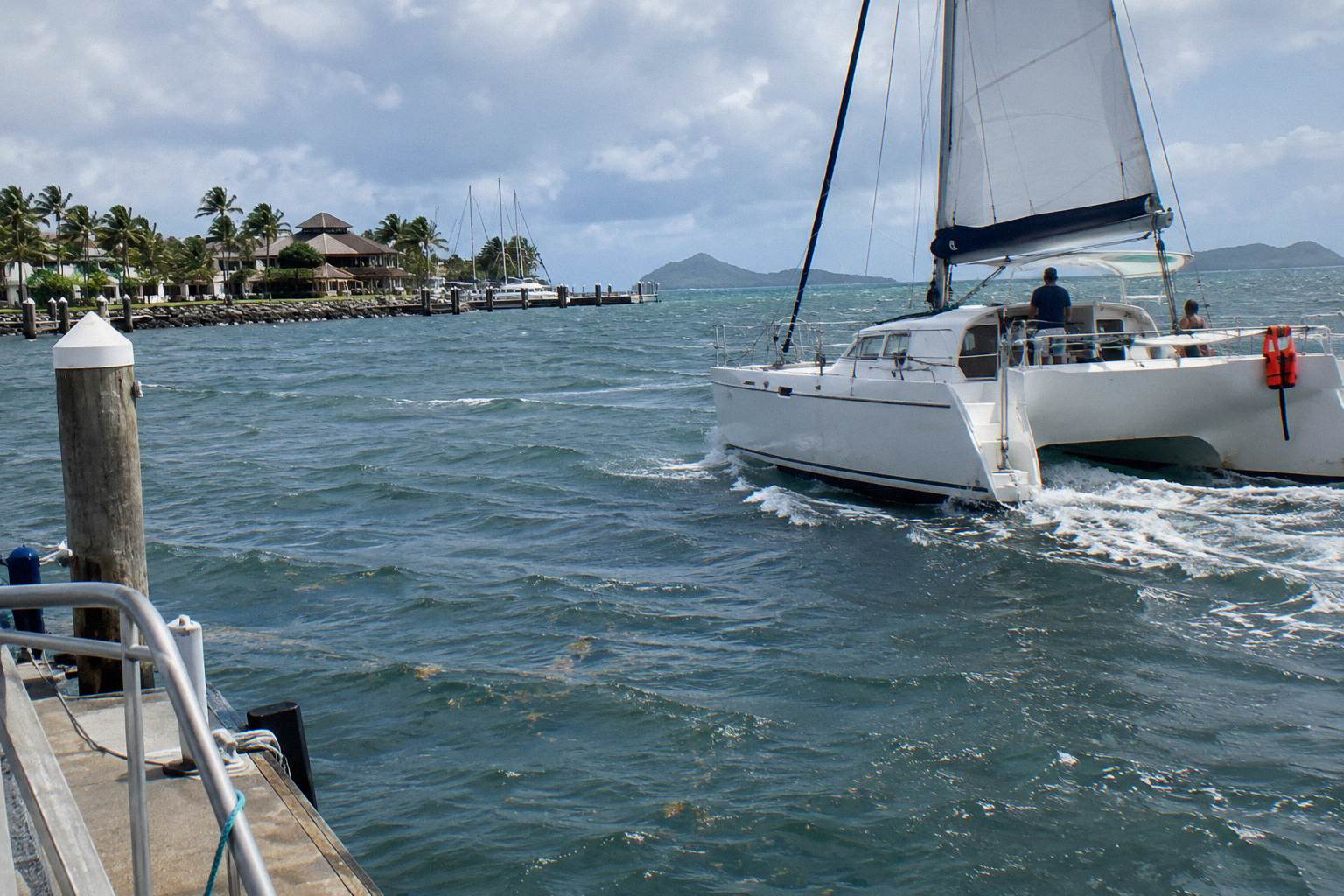
Every day a small fleet of high-speed catamarans leaves Port Denarau Marina bound for the islands scattered west of Viti Levu. The crossings are short by island-hopping standards, anywhere from 30 minutes to just under two hours depending on the destination, and they cross open water at speed. What a passenger feels on any given morning depends on the weather that morning, and no sourced forecast or sea-state figure exists for these routes, so any page promising flat water is guessing. What can be reported is what the operators themselves publish: vessel types, crossing durations, the precautions they recommend, and the rights they reserve when conditions change. The Mamanuca Islands sit just offshore of Nadi, which is why a day cruise there fits into a single morning or afternoon, and the crossing itself is a real part of the planning decision, especially for passengers who feel queasy on boats or are travelling with small children.
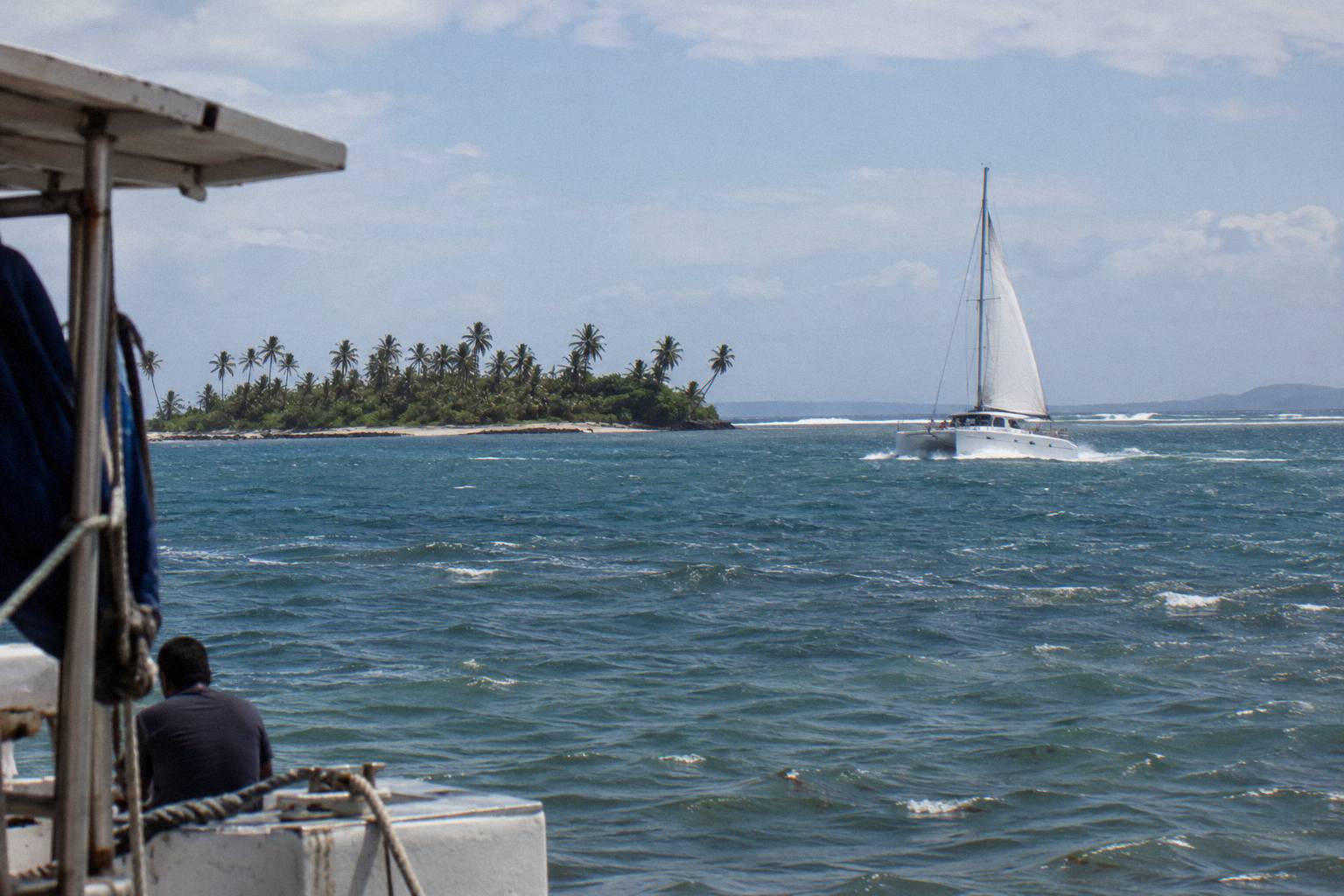
No operator publishes a sea-state description for the Mamanuca crossing, and no wave-height figure is sourced anywhere, so no page can responsibly say the ride is rough or calm. What is documented is that these are open-water crossings at speed, that Cloud 9 explicitly suggests seasickness precautions on its run and warns rough seas add roughly 20 minutes, and that operators reserve the right to cancel or vary departures when weather demands it.
The honest framing is one of variability. The stretch between Port Denarau and the Mamanucas is sheltered in parts and exposed in parts, and the same route can feel entirely different on two consecutive days. The Fiji Met Service, whose climate services pages also track the cyclone outlook, publishes seasonal patterns rather than daily swell reports for tourists, and none of the day cruise operators in the region quotes a numeric sea state on their public pages. That absence is itself informative. If the ride were reliably one thing or the other, the marketing would say so.
What the operators do say is practical. Cloud 9, the floating bar and pizzeria moored on Ro Ro Reef at the edge of the Mamanuca group, describes its boat transfer as an open-water crossing, suggests seasickness precautions are worth taking, and notes the roughly 60-minute run can stretch about 20 minutes longer in rough seas. South Sea Cruises, which carries most day guests to the islands in its group, runs a fleet of high-speed catamarans with air-conditioned lounges and open-air outer decks, and its terms reserve the right to cancel departures, arrange alternative transport, and vary itineraries and services when necessary. Those two statements bracket the reality: open water, real speed, and an operator managing the risk on your behalf.
For most travellers the question underneath the question is whether they or a family member can handle the ride. The short answer is that millions of day trippers have done these crossings, the trips run year-round in every season Fiji has, and preparation matters more than prediction. The sections below cover crossing times by destination, the vessels, what can change on the day, the seasonal picture, and how a nervous passenger can stack the odds in their favour.
How Long Is Each Crossing From Port Denarau?
Crossing time depends entirely on destination. South Sea Island is the closest regular stop at roughly 30 minutes on the morning timetable and about 45 minutes on the full day timetable, Mana Island is about an hour, Castaway Island works out to about an hour and a half by timetable, Kuata Island in the Yasawas is 1 hour 45 minutes each way, and both Tivua and Cloud 9 are roughly 60-minute runs.
The pattern is simple: the further north and west the island, the longer you are on the water. The Mamanuca group is the near cluster, which is why its day trips are the shortest and most numerous, while Kuata sits in the Yasawa group beyond it and demands the longest commitment of any day trip in the region. Cloud 9's platform sits on Ro Ro Reef at the group's edge, and its transfer is an open-water run of about 60 minutes, closer to 80 when conditions slow the boat down.
| Destination | Approximate crossing from Port Denarau | Notes |
|---|---|---|
| South Sea Island | 30 minutes (8.45am departure) or 45 minutes (10.00am departure) | Short tender boat ride from the catamaran to the island |
| Mana Island | About 1 hour | Depart 8.30am, arrive 9.30am |
| Castaway Island | About 1.5 hours | Depart 9.30am, arrive 11.00am |
| Kuata Island (Yasawas) | 1 hour 45 minutes each way | Depart 8.45am, arrive 10.30am |
| Tivua (Kadavu Lailai) | About 60 minutes of sailing | Departs 10am, returns 5pm |
| Cloud 9 floating platform | About 60 minutes, about 20 minutes longer in rough seas | Open-water crossing to Ro Ro Reef |
The two South Sea Island figures are worth a second look, because the same island is served on two timetables. The 8.45am departure, shared by the Finding Nemo morning trip and the combo cruise, makes the crossing in about 30 minutes. The 10.00am full day departure takes about 45 minutes for the same route, which tells you the boats pace the run differently depending on the day's schedule. Neither figure is a promise about conditions, only about duration under normal operation.
A reader weighing a first-time island day against the crossing can compare the options in the guide to the shortest Mamanuca crossings, which works through the South Sea Island timings in detail. Duration is the one variable you can plan around with certainty; how the water behaves on the day is the one you cannot.
What Kind Of Boat Makes The Crossing?
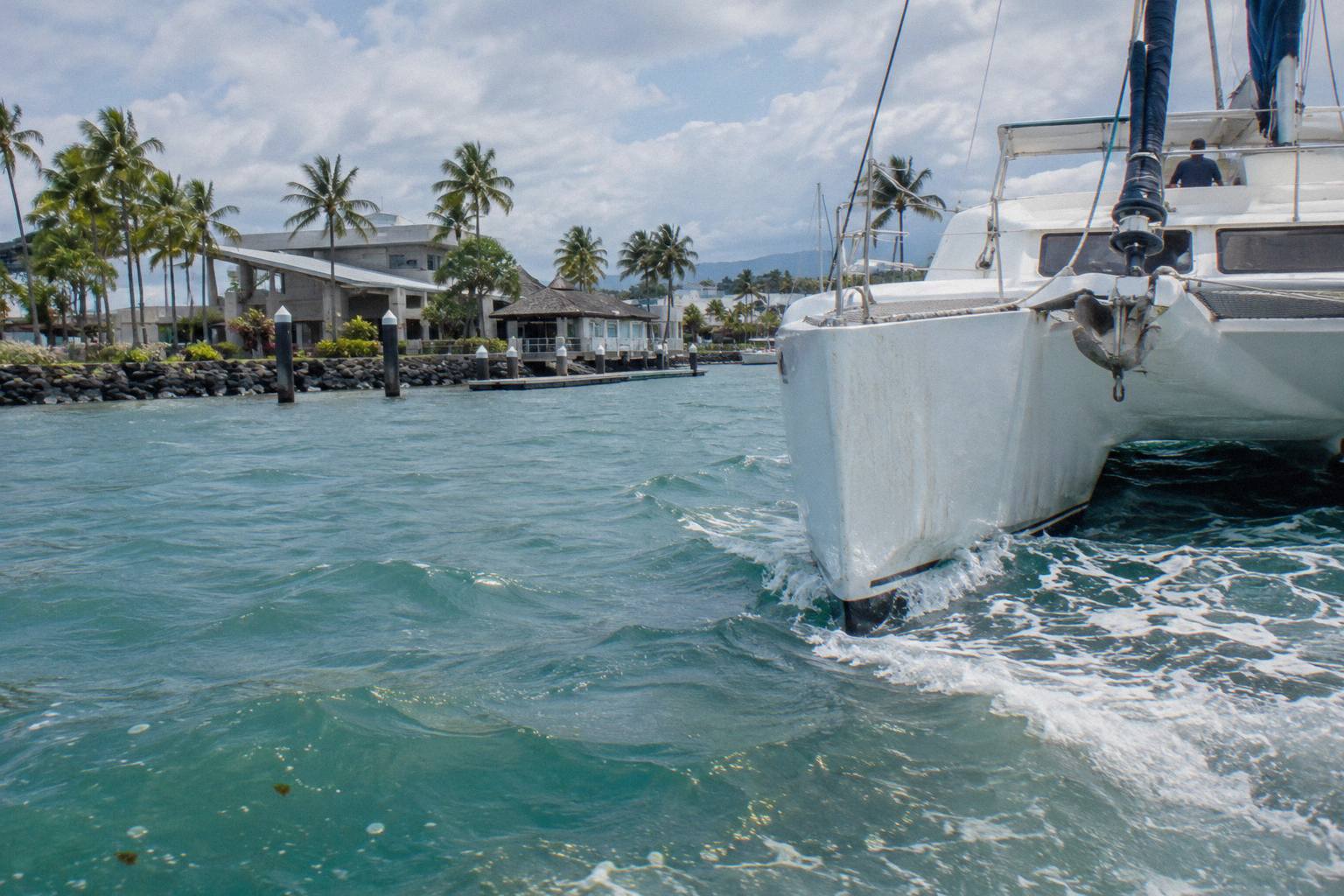
South Sea Cruises runs high-speed catamarans, twin-hulled vessels with an air-conditioned lounge, open-air outer decks and free Wi-Fi on board, and a short tender boat carries passengers the final step from catamaran to beach on South Sea Island. Captain Cook Cruises uses a sailing vessel for its Tivua day, and the Cloud 9 transfer is a dedicated boat from Port Denarau.
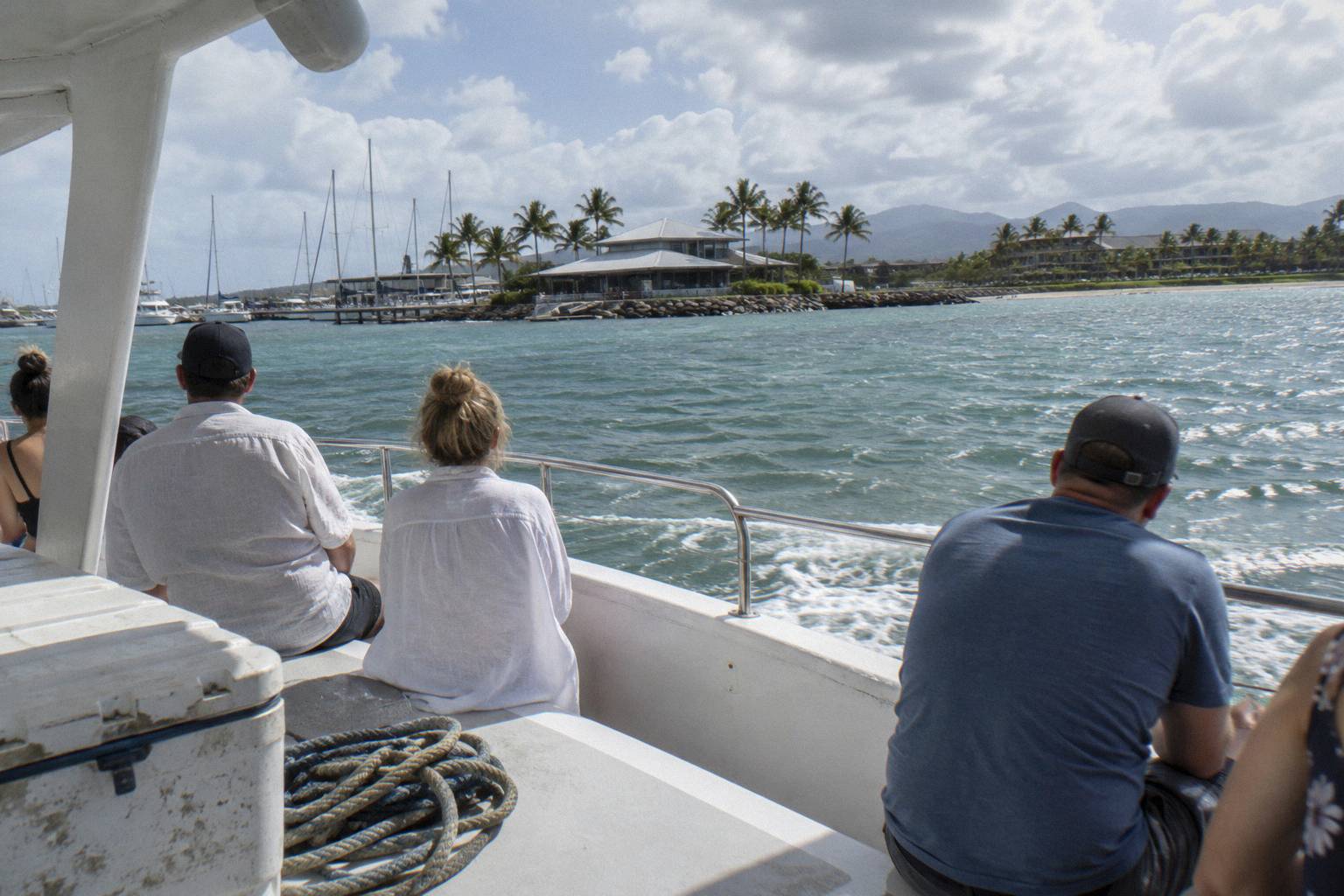
The catamaran hull matters more than marketing suggests. Twin hulls are the standard choice for Fiji's day cruise routes precisely because they handle open water differently from a single-hulled boat, and the interior layout gives passengers options: the air-conditioned lounge for those who prefer to sit inside, the outer decks for fresh air and a view. On a fast crossing, where you sit changes how the ride feels, and passengers who are unsure about their sea legs usually do better mid-ship, low, and outside in the breeze rather than at the bow or in a warm cabin.
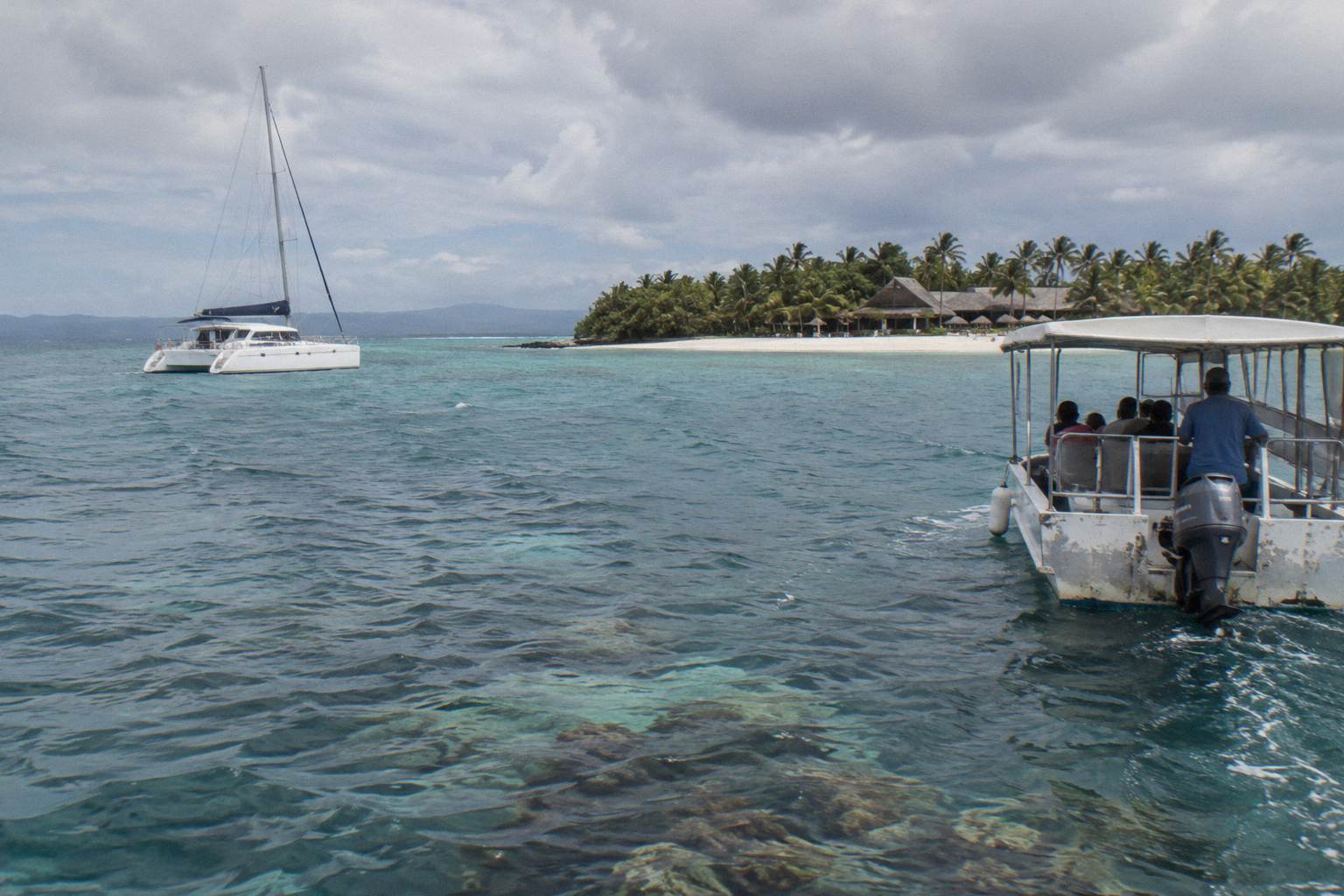
The last leg deserves its own mention. South Sea Island does not have a deep-water anchorage for a large catamaran, so the vessel stands off and a short tender ride takes guests across the final stretch to the beach. It is a brief hop, but it is a smaller boat moving closer to the water, and passengers with mobility concerns or very young children should factor it in. Mana and Castaway are reached on their own operator timetables, and Cloud 9 guests transfer directly onto the two-level platform.
The vessel picture is one part of the answer to whether the ride will bother you. The operator's own day trip pages describe the craft and the on-board facilities, and the boarding process at Port Denarau Terminal is covered in the Port Denarau check-in explainer, including the 30-minute-before-departure check-in window at the South Sea Cruises desk.
What Can Change On The Day?
South Sea Cruises reserves the right to alter prices, apply a fuel surcharge, cancel departures, arrange alternative transport, and vary itineraries and services when necessary, and Cloud 9 refunds a weather cancellation made 24 or more hours ahead, with no refund once a trip is underway. In other words, the operator holds the levers, and a rough forecast is far more likely to change your schedule than to put you on a bad ride.
That clause is standard operator language across the region, but it does real work in Fiji's climate. The Fiji Met Service's 2026-27 tropical cyclone outlook expects eleven to fifteen cyclones across its area of responsibility between November 2026 and April 2027, against around seven in an average season, with the peak usually falling in January and February. In those months a departure can be reshuffled, rerouted or called off entirely, and the operator's terms are what govern what happens next.
| What the operator can change | What it means for you |
|---|---|
| Cancel departures | Your trip may not run; rebooking or refund follows operator policy |
| Arrange alternative transport | A different vessel or route may carry you |
| Vary itineraries and services | On-island time or the order of stops can shift |
| Alter prices and apply a fuel surcharge | A mandatory per-person fuel surcharge applies for travel from 3 November 2026, payable online before departure or at check-in; no amount is printed here |
Weather cancellations are handled differently by different operators. Cloud 9's stated policy refunds a full day-trip cancellation made 24 or more hours ahead for adverse weather, with no refund once the trip is underway. The South Sea Cruises day trips in the region generally carry free cancellation up to 24 hours before the start, which is a materially useful window: if the forecast looks poor the evening before, a traveller with a flexible plan has options, and the details of what happens when a trip is called off are walked through in what happens if a Fiji day cruise is cancelled for weather.
The fuel surcharge line in the table above is not a sea-state matter, but it belongs in any honest account of what can change, because it is mandatory, per person, reviewed monthly, and payable before you board. The operator ties it to Fiji diesel prices set monthly by the Fijian Competition and Consumer Tribunal process, and children aged 5 to 15 pay a lower rate than adults on South Sea Island. The practical takeaway is unchanged: check the total at checkout rather than assuming the headline fare is the whole fare.
When Are Conditions Calmer?
Fiji's dry season, May to October, brings shorter sunnier days with average temperatures of 23 to 24 degrees and rainfall down 50 to 75 percent on the wetter months, while the wet season from November to April runs hotter, up to 31 degrees, with short afternoon downpours and higher humidity. Water temperatures, per Tourism Fiji, barely fluctuate through the year.
Those seasonal figures come from Tourism Fiji's climate guidance, and they are the closest thing to a planning tool a prospective passenger has. Rain and wind drive surface conditions, so the months with less rain are statistically the months with fewer unsettled crossings. July and August are the coolest and driest, which is why they are also the busiest for visitors, and January and February are the warmest and wettest, sitting inside the cyclone season described above.
| Season | Months | Typical conditions | Cyclone season |
|---|---|---|---|
| Dry season (winter) | May to October | Average 23 to 24 °C, most days 19 to 28 °C, rainfall down 50 to 75 percent on the wetter months | No |
| Wet season (summer) | November to April | Long warm days up to 31 °C, average 25 to 26 °C, short afternoon downpours, higher humidity | Yes, peak usually January to February |
Wet-season travel is far from a write-off. Afternoon downpours in the wet season are typically short, and mornings, when every one of these departures leaves, are often the clearer part of the day. The full day trip departs Port Denarau at 10.00am, the half day at 12.15pm, the Finding Nemo morning trip at 8.45am, and the combo at 8.45am, so a traveller who books a morning departure in the wet season is statistically riding before the day's weather has built. The trade-off, honestly stated, is that cyclone-season variability is real and the outlook for this particular season is above average.
Timing within the week matters less than timing within the year. Nothing sourced suggests any day of the week produces different water. What does differ by day is crowding, covered separately in is South Sea Island crowded, and anyone weighing comfort overall may want both pages open at once.
Seasickness And Preparing For The Crossing
Take the standard precautions before boarding rather than on the boat: medication where you use it, a light stomach, a mid-ship seat in fresh air, and eyes on the horizon, because Cloud 9 explicitly recommends seasickness precautions for its open-water crossing and no operator runs a calm-water guarantee. The shortest crossings, 30 to 45 minutes to South Sea Island, keep exposure brief even on an unsettled morning.
Cloud 9's own FAQ is the one place an operator in the region states the precaution plainly, describing its transfer as an open-water crossing and suggesting seasickness precautions are worth taking. That is sensible advice for every crossing in the region, not just that one, and it costs nothing to follow. Motion-sickness tablets generally need to be taken before boarding to work, ginger remedies suit travellers who prefer them, and where you sit genuinely changes the experience: low, central, and outside beats high, forward, and enclosed.
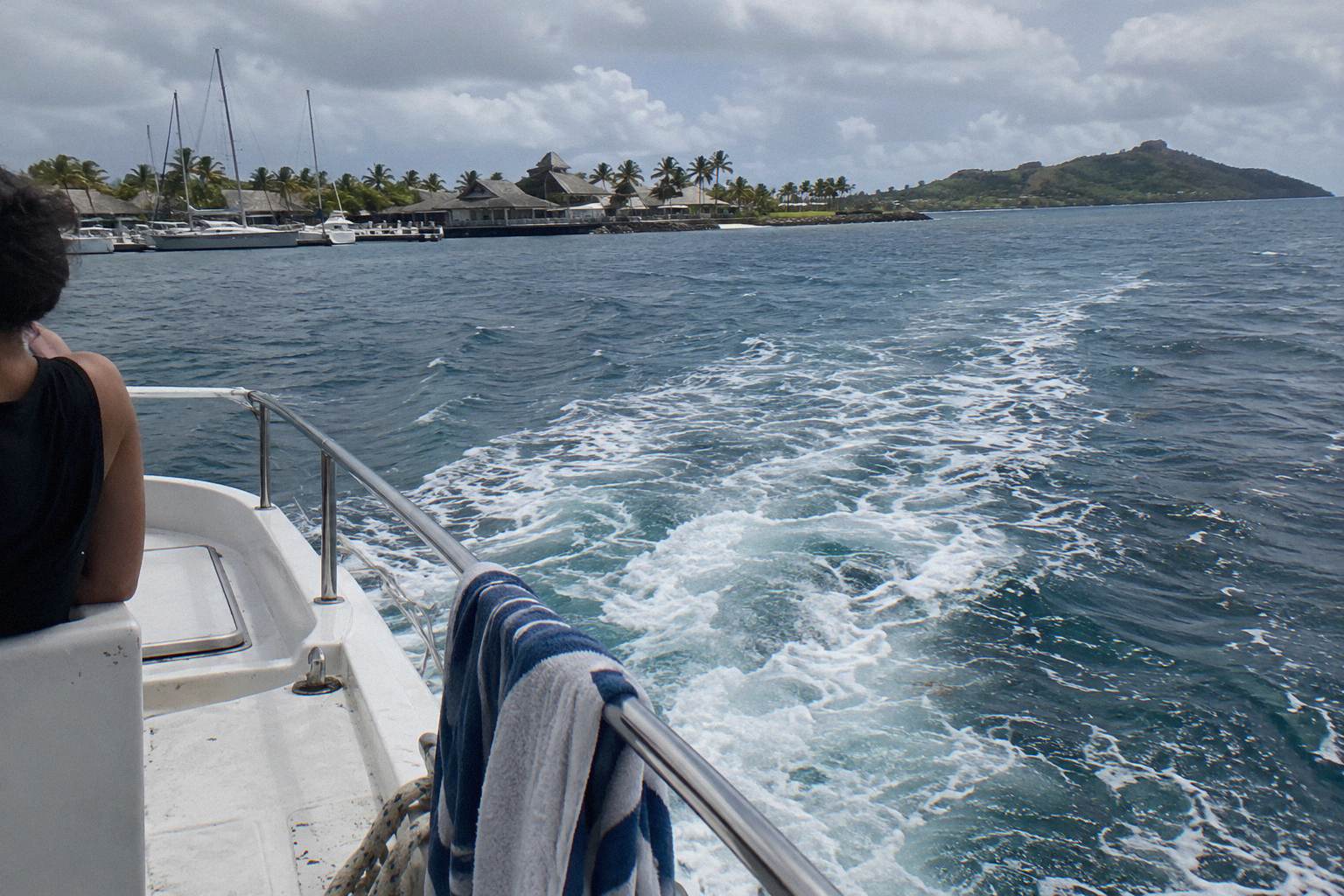
The vessel design helps in ways worth knowing. An air-conditioned lounge sounds appealing on a hot day, but a warm enclosed cabin is the classic trigger for a queasy passenger, while the open-air outer decks give the horizon reference your inner ear needs. Free Wi-Fi on board is a pleasant distraction for confident sailors and a poor idea for uncertain ones; a book or a screen pulls your eyes away from the horizon at exactly the wrong moment. Standing at the stern rail, watching the water, is the oldest remedy in boating for a reason.
Preparation extends to what you pack. Swimwear, towel, sunscreen and a hat are the standard island-day kit, with reef shoes or firm footwear for the beach and the tender, and cash or card for extras on the island, and the full checklist lives in what to bring to South Sea Island. None of it prevents seasickness, but a passenger who is comfortable, hydrated and not rushing is a passenger whose body handles motion better. Arriving at check-in 30 minutes before departure, as the timetable asks, removes the last unnecessary stressor.
For travellers who already know they are prone to motion sickness, the arithmetic of duration is on their side on the shortest routes. A 30-minute exposure is a different proposition from a 1 hour 45 minute run to Kuata, and choosing the near island over the far one is a legitimate, non-defeatist way to manage the day. The half day trip with lunch, from US$108 per person, keeps the boat time to two crossings of under an hour each and still delivers about 4.5 hours on the island, and amounts are US dollars and vary by date and group.
Which Trip Suits A Nervous Passenger?
The Finding Nemo morning trip is the region's gentlest proposition, a roughly 30-minute crossing on the 8.45am timetable from US$65 per person, back at Port Denarau by 11.45am. The full day trip, about 45 minutes each way, offers more island time. Cloud 9, with its roughly 60-minute open-water crossing and strong reef currents, is the one to think hardest about.
The Finding Nemo case rests on duration and timing. The crossing is the shortest scheduled run in the region, it leaves early before the day has warmed and built, and guests enjoy the island largely to themselves because other day guests do not arrive until 10.45am. Drinks are included and lunch is not, which keeps the whole commitment to about three to four hours door to island and back. A nervous passenger gets the complete experience, catamaran, tender, island, snorkelling from the beach, and is back at Port Denarau before lunch.
The full day option is the choice for travellers who want the complete island day and are comfortable with about 45 minutes each way. It carries the strongest review base of the island's trips, a 4.5 rating from 296 reviews, with a BBQ buffet lunch at open-air tables, local beer, house wine and soft drinks complimentary on the island, a saltwater swimming pool, complimentary snorkel gear, paddle boards and kayaks, and a complimentary Kids Club for ages 3 to 12. The 4.6 rating from 123 reviews on the half day trip tells a similar story from a smaller pool, and both figures should be read as what they are, ratings from real guests, not a ranking.
The Captain Cook option is a different animal again, a sailing day of about 60 minutes each way to Tivua, rated 4.5 from 448 reviews, from US$107 per person, with a guided marine-biologist snorkel and a glass-bottom boat on the barbecue booking. A sail is quieter and slower than a catamaran at speed, which some sensitive passengers prefer and others find worse, because the crossing is longer. Cloud 9, by contrast, is the trip to book only with open eyes: a roughly 60-minute open-water run, strong currents possible around the reef, no lockers on board, card only for food and drink, and children under 10 not suitable per the platform's own FAQ.
None of the choices is wrong. The decision is really about matching boat time to confidence, and South Sea Island Cruises lays out the timing, inclusions and pick-up coverage for each trip so the comparison can be made on real numbers rather than nerves.
Common Questions About Mamanuca Crossings
Is The Boat To The Mamanuca Islands Rough?
No operator publishes a sea-state description, and no wave-height figure is sourced for these routes. The crossings are open-water runs at speed, Cloud 9 recommends seasickness precautions on its transfer and notes rough seas add about 20 minutes, and operators can cancel or vary departures when conditions require.
How Long Is The Boat Ride To South Sea Island?
About 30 minutes on the 8.45am departure and about 45 minutes on the 10.00am full day departure, followed by a short tender boat ride from the catamaran to the beach.
Can The Operator Cancel The Boat If The Weather Is Bad?
Yes. South Sea Cruises reserves the right to cancel departures, arrange alternative transport and vary itineraries when necessary. Cloud 9 refunds a weather cancellation made 24 or more hours ahead, with no refund once the trip is underway.
Which Season Has The Calmer Crossings?
The dry season from May to October is statistically the more settled period, with rainfall down 50 to 75 percent on the wetter months. The wet season from November to April brings short afternoon downpours and higher cyclone risk, peaking usually in January and February.
What Can I Do To Avoid Seasickness On The Crossing?
Take any medication before boarding, eat lightly, sit mid-ship in fresh air with eyes on the horizon rather than in the warm enclosed lounge, and consider one of the shorter crossings, where exposure is under an hour each way.
Is There A Trip With The Shortest Boat Ride?
The Finding Nemo morning trip crosses in about 30 minutes on the 8.45am timetable, from US$65 per person, and is back at Port Denarau by 11.45am. Amounts are US dollars and vary by date and group.