Are There Sharks Where Fiji Day Cruises Snorkel?
A plain answer on sharks at Fiji day cruise snorkel spots, plus the guided and dry options for seeing the reef from Port Denarau.
Shark sightings sit outside what any of these trips sell. The operator behind most of the day cruises from Port Denarau makes no claim about sharks at the South Sea Island snorkel area, and no venue page for the islands on these routes describes them either. What follows is the reef experience each format actually offers: the gear included, the guided snorkels, and the dry way to look at coral from inside a boat.
No operator source describes shark presence at the South Sea Island snorkel area, and no day cruise from Port Denarau promises a shark encounter of any kind. These trips sell coral, fish and clear lagoon water, with complimentary snorkel gear on the island and guided snorkels on selected routes. Shark dives do exist in Fiji, but they run elsewhere, on dedicated trips that are not day cruises from Port Denarau.
That is the whole, plain answer, and it is worth stating once at the top so the rest of the article can be useful rather than hedge. When you book a day cruise from Port Denarau, the reef experience you are buying is a mix of swimming, snorkelling, and in some cases a guided briefing or a glass-bottom boat. Whether any particular fish appears on any particular day is not something an operator can promise, and none of these trips tries to.
What the trips do describe, in detail, is the water and the reef. South Sea Island offers swimming and snorkelling "even at low tide", with complimentary snorkel gear, stand-up paddle boards and kayaks. Tivua adds a guided marine-biologist snorkel and a glass-bottom boat on the BBQ booking. Kuata runs its snorkel inside a marine reserve area. Beachcomber sits surrounded by a protected marine sanctuary. These are the differences that should drive your choice, not the question of what large animals might pass by.
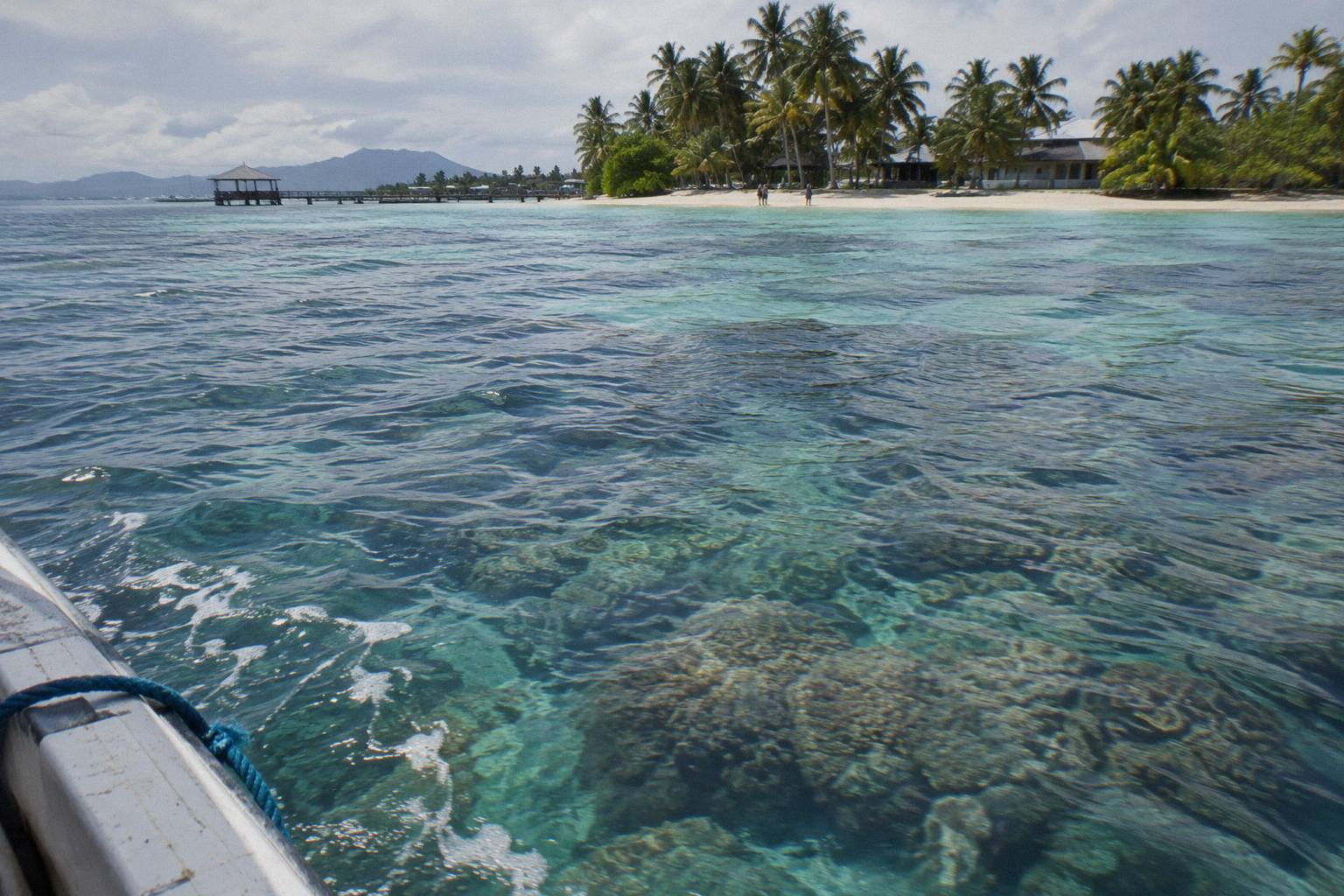
If the underlying worry is safety in open water, the honest framing is structural rather than reassuring: every one of these trips snorkels in a lagoon or a marked reef area off an island, with crew on hand and, on the guided formats, a briefing first. Currents on Ro Ro Reef, where Cloud 9 floats, can be strong, and that platform lends life jackets free. For the island lagoons, the operator simply describes calm, shallow swimming. A reader weighing a first snorkel might also start with whether a Fiji day cruise works for non-swimmers, which covers the same anxiety from another angle.
There is also a practical, non-shark reason this question matters: it is usually a proxy for "will the snorkelling be good". The answer to that is yes, by design, because these operators pick their islands for reef access. The Fiji Meteorological Service notes water temperatures through the year "don't fluctuate much", so the reef experience is not seasonal in the way a wildlife encounter would be. What changes is the weather around it, covered well in Fiji Mamanuca weather for day cruises.
What Snorkelling Actually Looks Like On These Trips
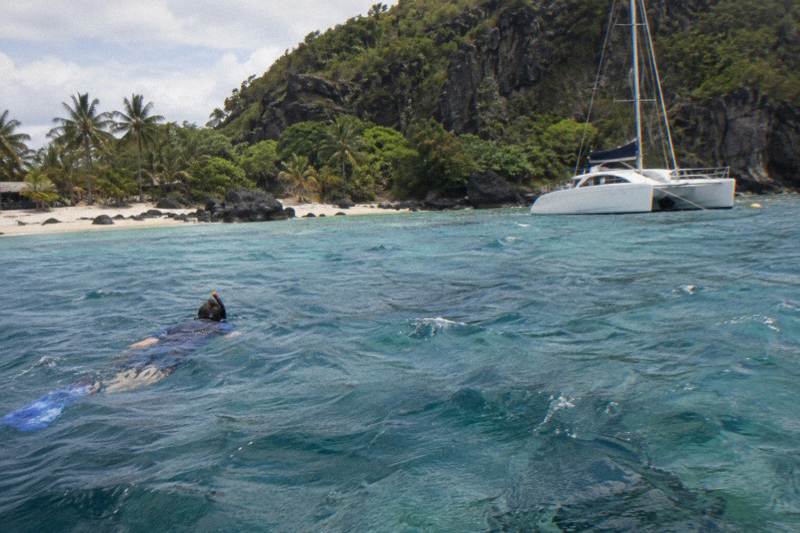
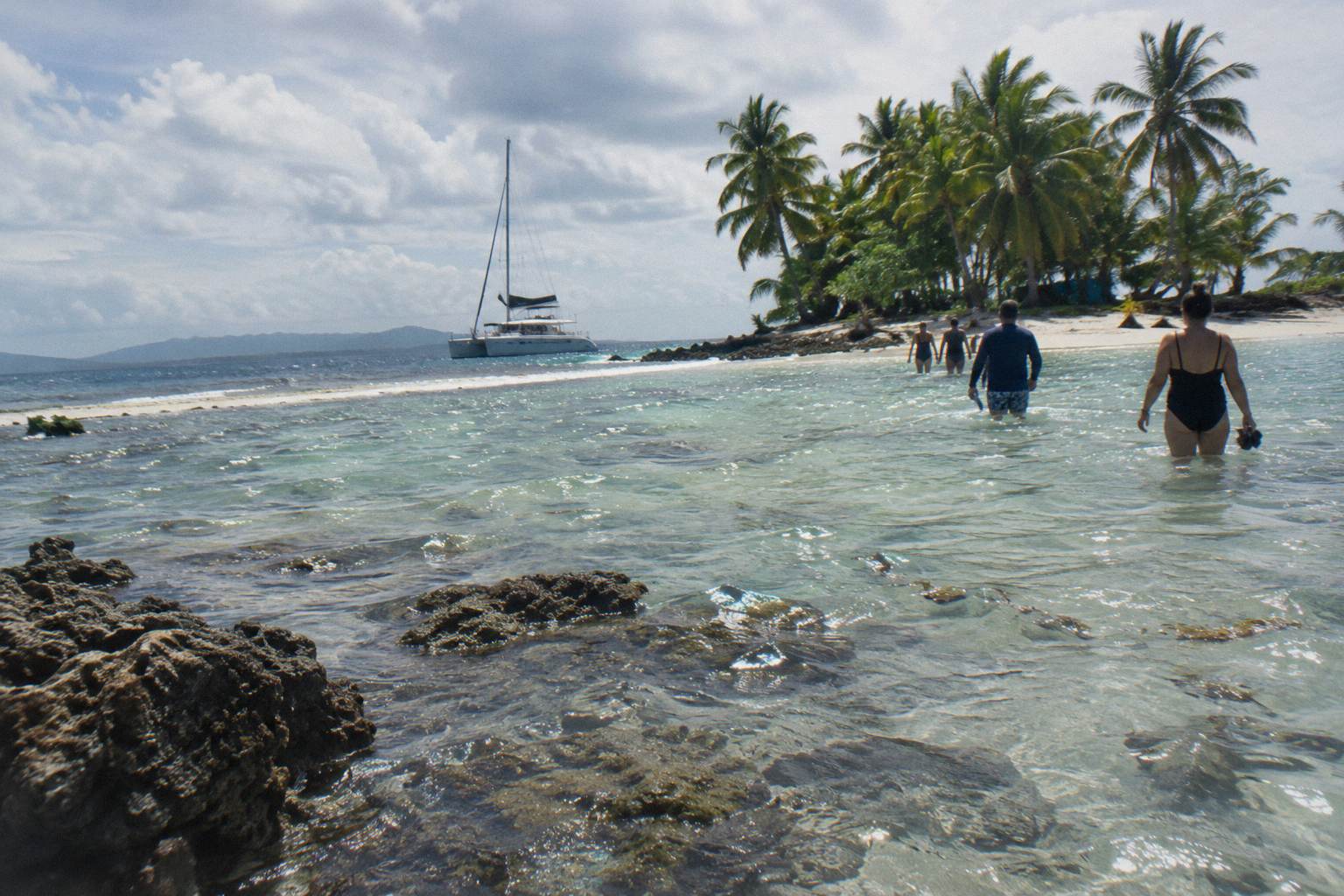
Snorkelling on a Port Denarau day cruise means stepping off a beach into a lagoon, in water shallow enough to stand in at low tide, using gear the island hands out free. On South Sea Island the snorkel area sits alongside a saltwater swimming pool, kayaks and paddle boards, so a nervous snorkeller can stay within arm's reach of dry options all day. There is no swim test and no deep-water drop-off.
The format matters more than people expect. On South Sea Island, snorkel gear, kayaks and stand-up paddle boards are complimentary once you are ashore, and the operator's own description stresses that swimming and snorkelling continue "even at low tide", which is the moment many island lagoons elsewhere go shallow and murky. The island is tiny, so you are never far from the beach, the pool or the BBQ tables, and children aged 3 to 12 can join the complimentary Kids Club while adults snorkel.
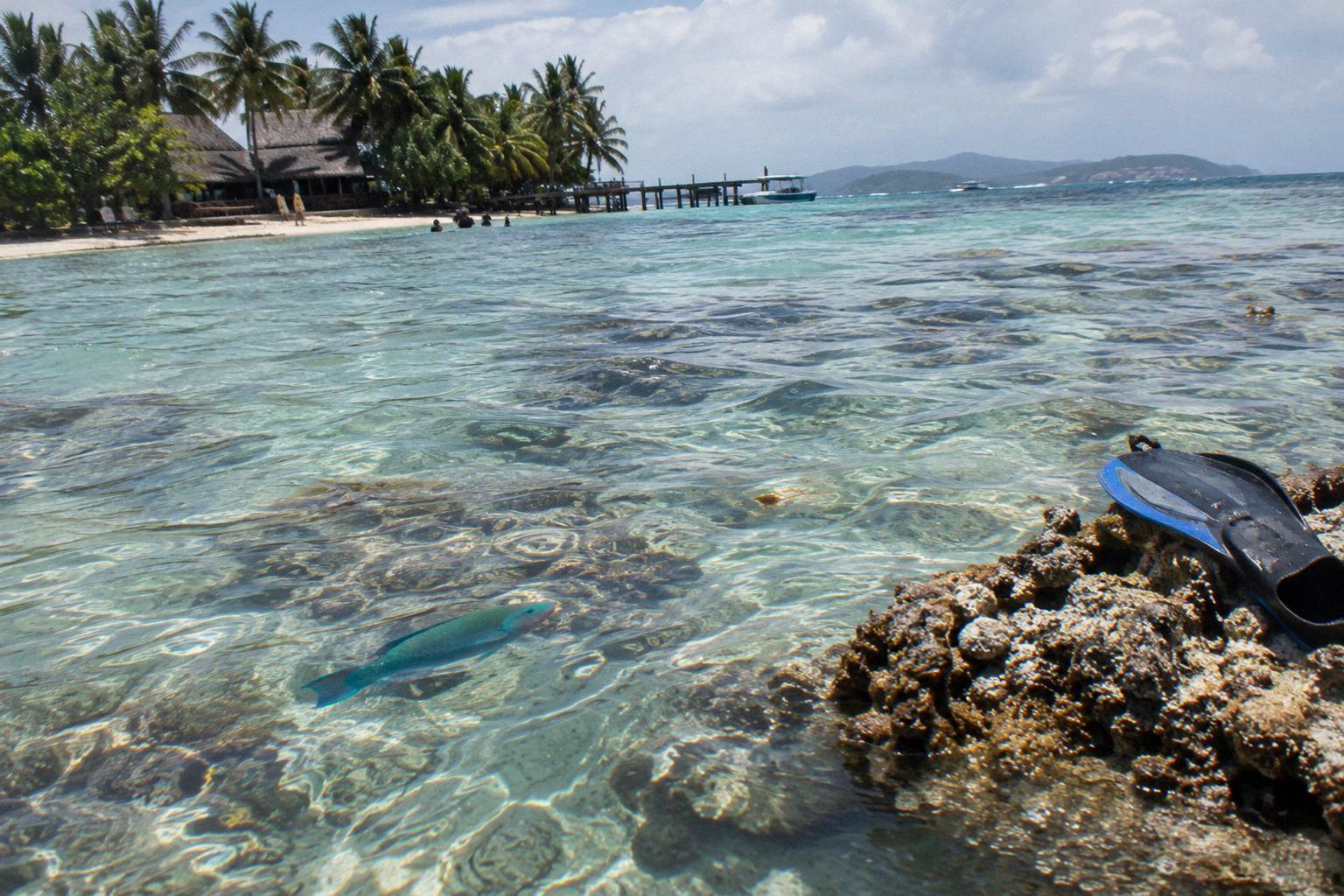
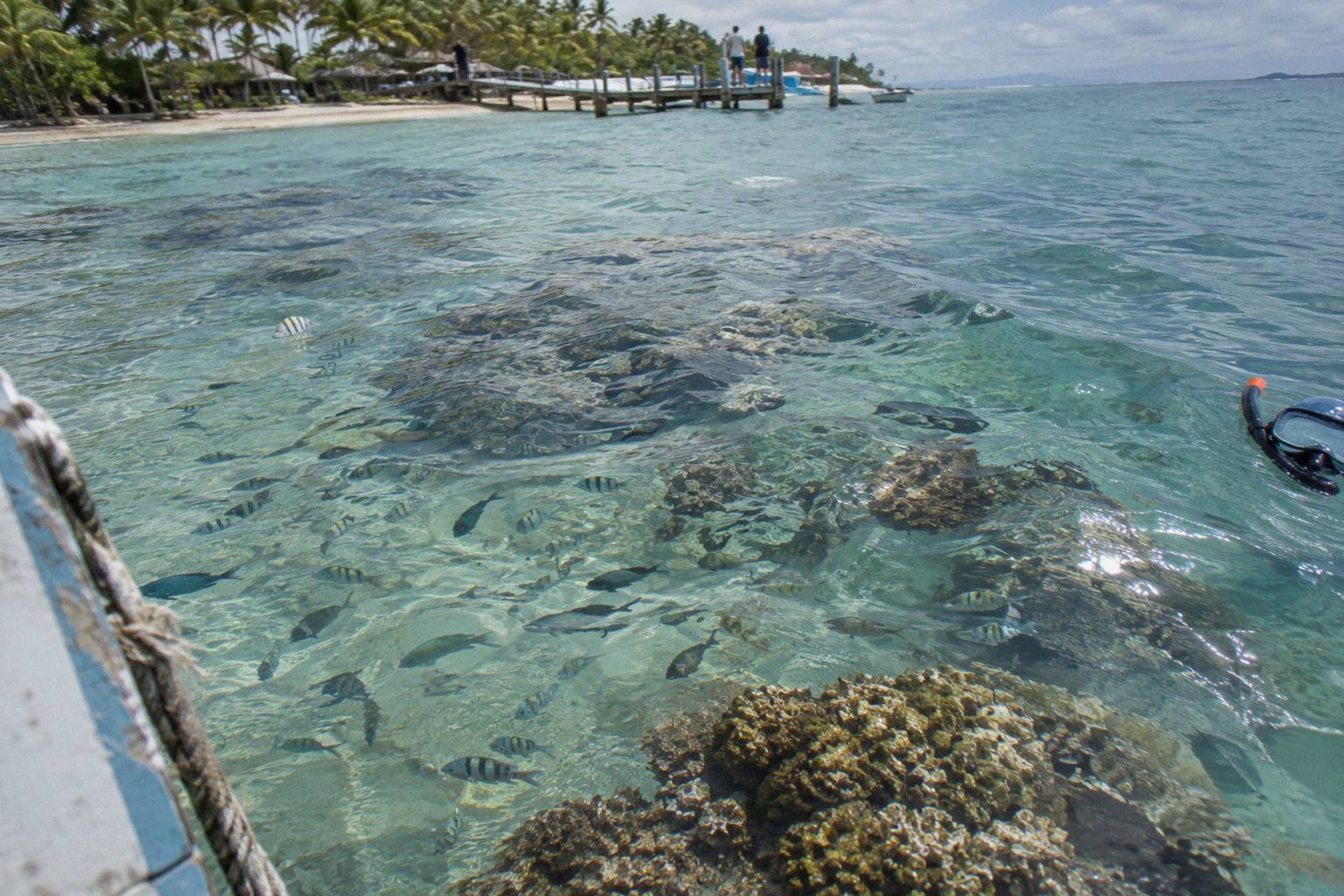
The reef itself is the draw. Fiji's Mamanuca chain sits on shallow fringing reefs, and Tourism Fiji's climate guidance describes water temperatures that barely change across the year, which suits coral and the fish that live in it. What you will see is the standard tropical reef cast: parrotfish working the coral, small reef fish in schools over the shallows, and the odd larger fish at the reef edge. No venue page for these islands names species beyond that general reef life, and no claim about any large fish is made here either.
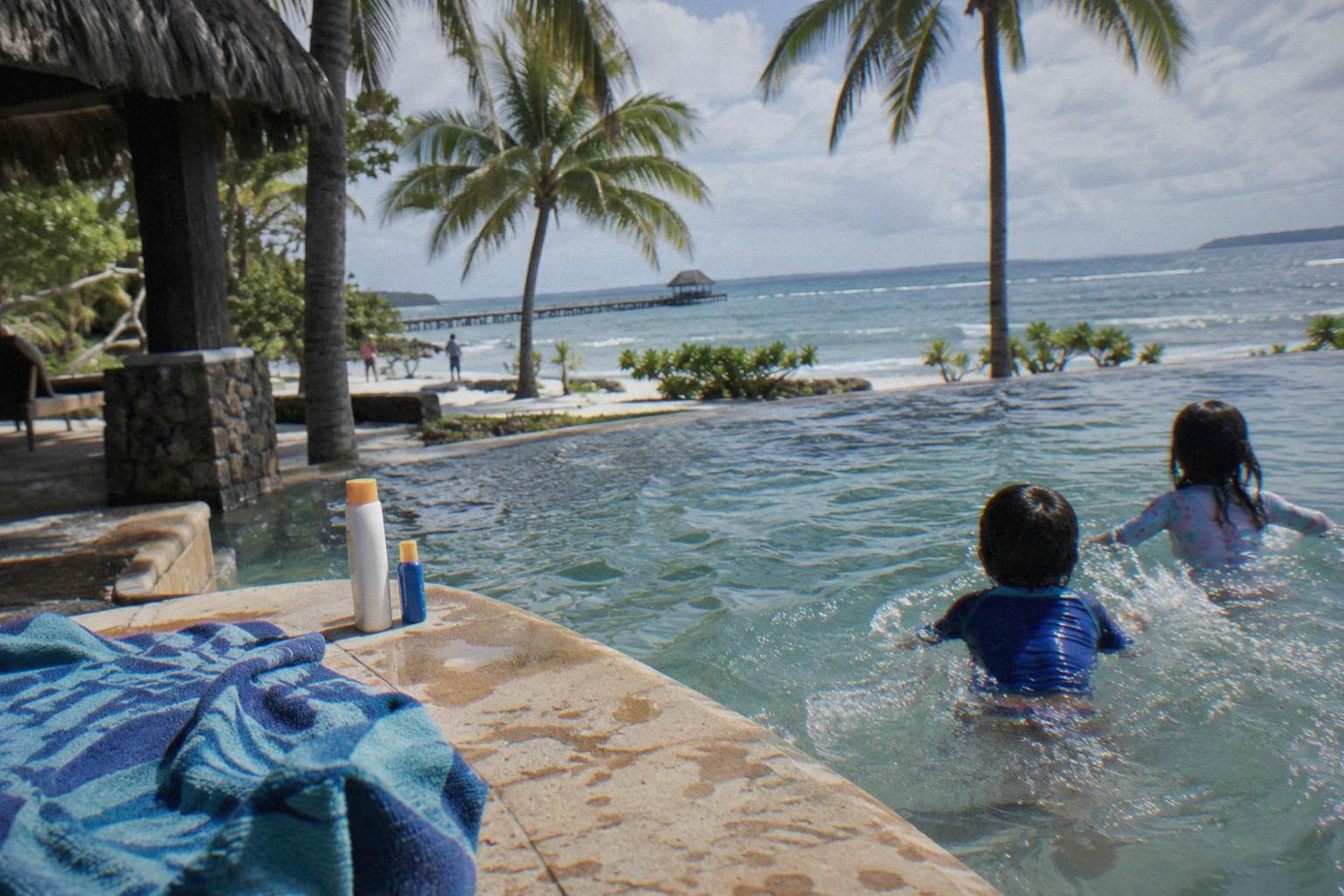
For the practical planning side, the article on what to bring to South Sea Island covers the towel, swimwear, sunscreen and reef shoes the operator recommends, and the cash or card you want for extras. On the trip itself, bring reef-safe sunscreen and reapply after swimming; the strongest sun on a Fiji lagoon day is reflected off the water and the sand, and the dry season months of May to October trade slightly cooler air for clearer, sunnier days.
The shape of a day on the water is fixed by the operator's timetable, and it helps to see it laid out before choosing. The morning and full day sailings run to different clocks, and the crossing itself differs between them: 30 minutes on the early timetable, 45 on the 10.00am one. Check-in at the South Sea Cruises desk in the Port Denarau Terminal opens 30 minutes before each departure.
| Sailing | Depart Port Denarau | Arrive island | Leave island | Back at Denarau |
|---|---|---|---|---|
| Finding Nemo morning | 8.45am | 9.15am | 11.15am | 11.45am |
| Full Day | 10.00am | 10.45am | 4.00pm or 5.15pm | 4.45pm or 6.00pm |
| Half Day | 12.15pm | 12.45pm | 5.15pm | 6.00pm |
One structural point on money: amounts in this article are US dollars and vary by date and group. The Finding Nemo morning trip runs from US$65 per person, the half day from US$108, and the full day from US$125. A mandatory per-person fuel surcharge applies for travel from 3 November 2026, payable online before departure or at check-in; children 5 to 15 pay a lower rate than adults on South Sea Island, and the amount is shown at checkout.
The Guided Snorkels: Kuata And Tivua
Two trips in this family add a guide to the water. The Captain Cook Tivua day trip, from US$107 per person, includes a guided marine-biologist snorkel and a glass-bottom boat, 4.5 from 448 reviews. The Kuata Island Marine Conservation Experience, about 9 hours with 5 ashore, snorkels inside a marine reserve area, with a buffet lunch included.
Guided snorkelling changes the experience for a beginner more than any other single factor. On Tivua, the biologist swims with the group and points out what the reef is doing, which turns a float over coral into something closer to a walk with a docent. The island, also called Kadavu Lailai, sits north of South Sea Island, about 60 minutes' sailing from Port Denarau, and the trip departs 10am and returns 5pm, seven hours all told, with morning and afternoon tea, a BBQ lunch and drinks.
| Trip | Snorkel format | Guide | Duration | From price |
|---|---|---|---|---|
| Captain Cook Tivua Island & Reef Day Trip | Guided marine-biologist snorkel, glass-bottom boat | Marine biologist | 7 hours | from US$107 per person |
| Kuata Island Marine Conservation Experience | Snorkelling in a marine reserve area | Trip crew | About 9 hours, 5 ashore | price on the booking page |
| South Sea Island Full Day | Free snorkel gear, kayaks, paddle boards | Self-guided | Full day | from US$125 per person |
| South Sea Island Half Day | Free snorkel gear in the lagoon | Self-guided | 5 hours | from US$108 per person |
| Finding Nemo morning trip | Semi-submersible coral viewer, island time | Dry viewing | About 3 to 4 hours | from US$65 per person |
Kuata is the culture-heavy option. The island sits in the Yasawa group, 1 hour 45 minutes each way by catamaran, departing 8.45am. The day includes a welcome with kava, a cultural centre next to a historically significant cave, a meke performance, a craft workshop and a cooking demonstration, with the reef snorkel in the marine reserve area and a buffet lunch included. It is a long day on the water for a snorkel, but the conservation framing suits travellers who want the reef explained rather than just visited.
The Tivua trip earns its review pool honestly: 448 reviews at 4.5 is the largest count in this family, and the biologist snorkel is the single most distinctive feature on any of these itineraries. A family weighing it against the South Sea Island trips might also read the guide to Fiji day cruises overall, which places both routes in the same planning frame, or the comparison of South Sea Island versus Mamanuca island hopping if the route, not the snorkel, is the deciding factor.
The Semi-Submersible: Watching The Reef Without Getting Wet
The Finding Nemo morning trip, from US$65 per person, 4.4 from 21 reviews, is the dry option: a semi-submersible coral viewer with seats below the waterline, plus about two hours on South Sea Island before the day guests arrive. It departs 8.45am, is back at 11.45am, and includes drinks on the island but no lunch.
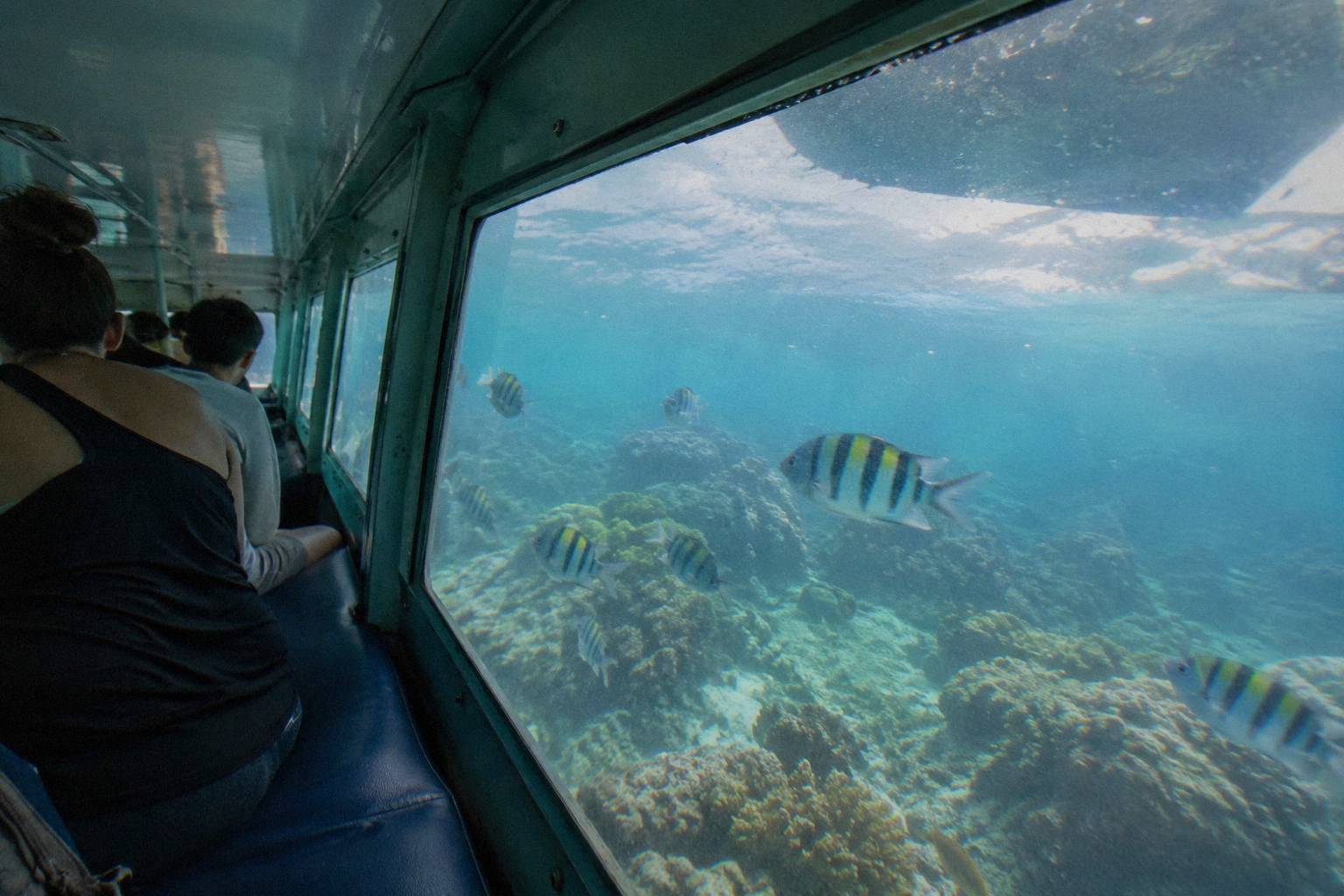
The semi-submersible is the answer for the reader whose shark question is really a deep-water question. You sit inside a hull with viewing windows, watching the reef and its fish drift past at eye level, entirely dry, while the boat moves along the coral. No swimming, no mask, no fins, and no need to decide whether the water is too deep, because you never enter it. The operator's own page for the trip is built around the coral viewer, and the Finding Nemo itinerary pairs it with the island's calmest hours.
Those hours matter. Other day guests do not arrive on South Sea Island until 10.45am, so Finding Nemo passengers enjoy the island mostly to themselves, roughly ninety minutes of near-empty beach and lagoon before the crowd lands. For a nervous swimmer or a family with small children, that quiet window plus a dry reef view is a genuinely different product from the full day, at less than half the price of entry.
One caveat to carry: the operator gives no refund if the semi-submersible is out of service for maintenance or repairs, and it is subject to availability on the combo trip. The rest of the island still delivers, with the pool, paddle boards and snorkel gear complimentary, but if the viewer is the reason you booked, it is worth asking at check-in. The operator's South Sea Island page describes the viewer alongside everything else on the island.
The full day, by contrast, is the immersion option: from US$125 per person, 4.5 from 296 reviews, departing 10.00am and back at 4.45pm or 6.00pm, with a BBQ buffet lunch, complimentary local beer, house wine, soft drinks and filtered water on the island, a meke performance and craft markets daily except Sundays. If the answer to "will I see a shark" is no, the full day is the best-supported way to see everything the reef and island do offer.
Which Snorkel Format Suits You?
Choose the guided biologist snorkel on Tivua if you want the reef explained, the Kuata conservation day if you want it in a marine reserve with culture around it, the South Sea Island lagoon if you want free, unsupervised snorkelling beside a pool, and the semi-submersible if you want the reef without the water. There is no wrong answer, but the formats are different enough that the choice shapes the whole day.
A useful way to decide is to ask what would make the day feel wasted. If it is not seeing enough sea life, book Tivua: the biologist and the glass-bottom boat stack two viewing methods into one day, and the 448-review pool suggests the format works. If it is the effort of a long crossing, stay with South Sea Island, 30 minutes each way on the morning timetable, or 45 on the 10.00am sailing. If it is getting wet at all, the semi-submersible at from US$65 is the cheapest ticket in the family and the only dry one.
| If you want... | Best fit | Why |
|---|---|---|
| The reef explained by a guide | Captain Cook Tivua, from US$107 | Marine-biologist snorkel plus glass-bottom boat |
| Snorkelling in a protected area | Kuata conservation day | Marine reserve snorkel, buffet lunch, cultural programme |
| Free casual snorkelling all day | South Sea Island full or half day | Complimentary gear, kayaks and paddle boards, pool nearby |
| The reef without swimming | Finding Nemo morning, from US$65 | Semi-submersible viewer, quiet island hours |
| A shorter commitment | Finding Nemo or half day | 3 to 4 hours, or 5 hours, back by mid afternoon or early evening |
Timing is the hidden variable. Finding Nemo departs 8.45am and is back at 11.45am, which leaves the afternoon free and makes it the one trip that comfortably fits an arrival-day plan, a point expanded in doing a Fiji day cruise on arrival day. The half day departs 12.15pm, arriving on the island at 12.45pm and back at 6.00pm, from Denarau, Nadi and Wailoaloa hotels only. The full day adds Vuda, Natadola, Sonaisali, Momi Bay and Coral Coast hotels to the coach pick-up range, a difference that matters if your hotel sits outside the core zone; the details are in the hotel pick-up and transfers guide.
What Trips People Up Before You Book
The recurring mistakes are booking a shark expectation no trip sells, skipping the fuel surcharge in the budget, assuming the semi-submersible always runs, and mixing up the pick-up zones between trips. None of these are complicated, but each one causes a worse day than it needs to be, and all four are avoidable with a minute of checking.
The fuel surcharge first, because it is the newest and least expected. A mandatory per-person surcharge applies for travel from 3 November 2026 until further notice, reviewed monthly, with the next review in December 2026. It is payable online before departure or at check-in, children 5 to 15 pay a lower rate than adults on South Sea Island, and some booking pages list it as excluded, so the checkout total can land higher than the headline from-price. The operator ties the surcharge to Fiji diesel prices set monthly by Fiji's competition and consumer regulator; no amount is printed here because the operator sets it at checkout. The operator's surcharge advisory explains the mechanics.
Second, the semi-submersible caveat from earlier in one clause: no refund if it is out of service for maintenance or repairs. Third, the pick-up zones: Full and Half Day coaches serve most Nadi, Denarau and Wailoaloa hotels, with the wider zone on Full Day only, and Finding Nemo and the Combo restricted to Nadi, Denarau and Wailoaloa. Check that your hotel is covered for the specific trip you are booking, not for the family in general.
Fourth, the weather plan. The Fiji Meteorological Service's 2026-27 outlook expects eleven to fifteen tropical cyclones in its area of responsibility between November 2026 and April 2027, against around seven in an average season, with the peak usually January to February. That is not a reason to avoid the wet season, when mornings are often fine, but it is a reason to know the cancellation terms before you book; Cloud 9, for instance, refunds a weather cancellation made 24 or more hours ahead. The article on weather cancellations for Fiji day cruises walks through the full picture, and official climate background sits with the Tourism Fiji climate guide and the Fiji Meteorological Service.
The final mistake is the quietest one: expecting a day cruise to be a wildlife expedition. It is a beach and reef day, built around swimming, eating and culture, with the reef as the underwater scenery. Readers who want that framing in full can start with whether a South Sea Island day trip is worth it, and the piece on South Sea Island Cruises as a site covers the wider family of trips.
Common Questions About Sharks And Fiji Day Cruise Snorkelling
Are There Sharks Where Fiji Day Cruises Snorkel?
No operator source describes shark presence at the South Sea Island snorkel area, and no day cruise from Port Denarau promises a shark encounter. These trips sell coral, fish and lagoon swimming, with guided snorkels on Tivua and Kuata and a semi-submersible viewer for dry reef watching.
Can You Snorkel At South Sea Island At Low Tide?
Yes. The operator states swimming and snorkelling continue on the island "even at low tide", with complimentary snorkel gear, kayaks and stand-up paddle boards, and a saltwater swimming pool beside the beach.
Which Trip Has A Guided Snorkel?
The Captain Cook Tivua Island and Reef day trip, from US$107 per person, includes a guided marine-biologist snorkel and a glass-bottom boat. The Kuata Island Marine Conservation Experience snorkels in a marine reserve area with crew on hand.
Is There A Way To See The Reef Without Swimming?
Yes. The Finding Nemo morning trip, from US$65 per person, includes a semi-submersible coral viewer with below-waterline windows, plus about two hours on the island before the day guests arrive at 10.45am. No refund applies if the viewer is out of service for maintenance or repairs.
Do Children Pay The Fuel Surcharge?
Children aged 5 to 15 pay a lower per-person surcharge rate than adults on South Sea Island, and infants 4 and under travel free. The mandatory surcharge applies from 3 November 2026, is reviewed monthly, and is payable online before departure or at check-in.
What Should A Nervous Snorkeller Bring?
Towel, swimwear, sunscreen and a hat, footwear or reef shoes, and cash or card for extras like the island massage and the Tipsy Turtle premium bar. The saltwater pool sits beside the snorkel area, so you can stay close to dry ground while you build confidence.