Can You Snorkel At South Sea Island At Low Tide?
Yes, the operator says swimming and snorkelling at South Sea Island are possible even at low tide, with a saltwater pool and semi-submersible coral viewer as backups. Here is how to plan the water time.
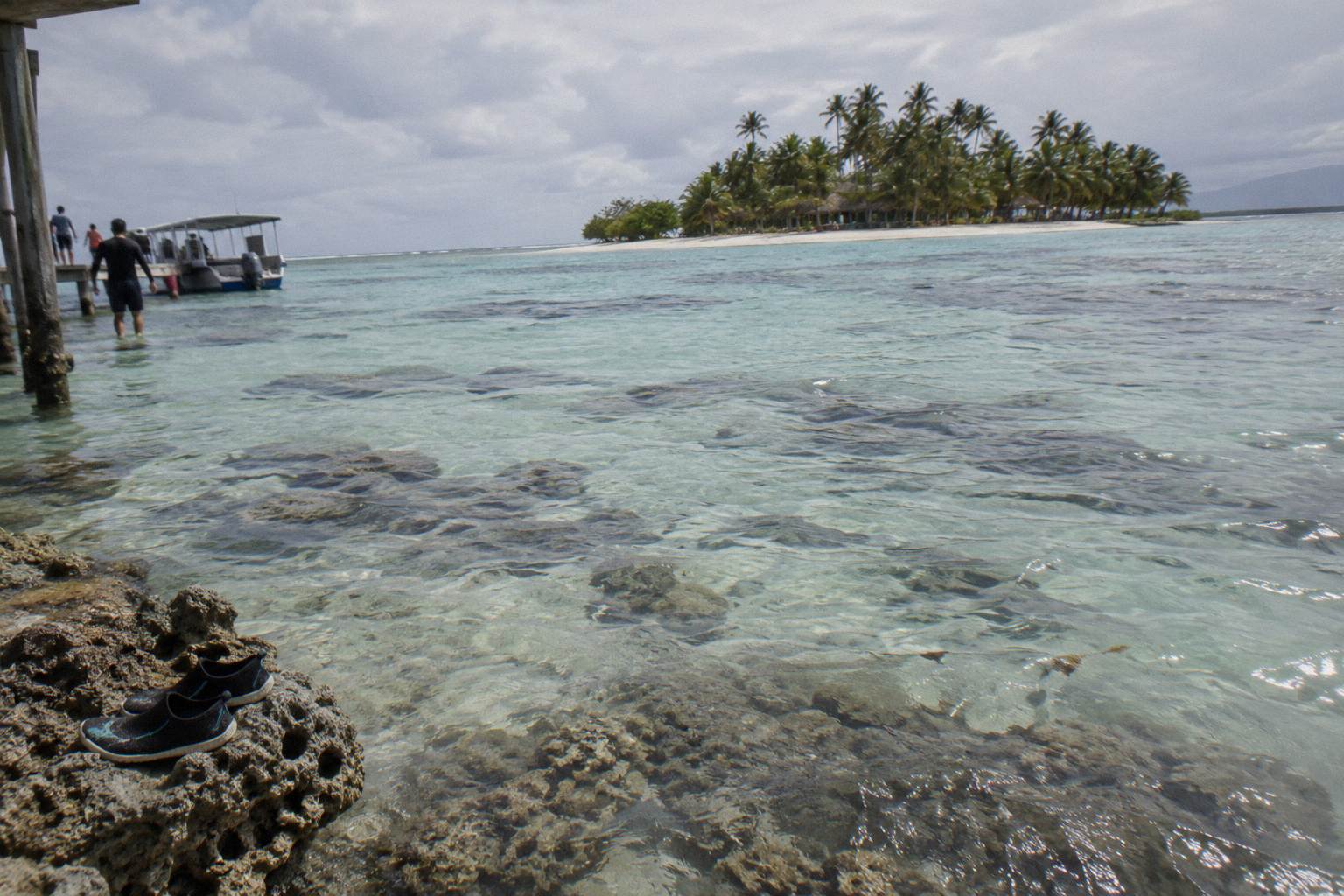
Snorkelling is the main draw of a day out on the water from Port Denarau, and the half-day island cruises from Denarau are built around it. The good news for anyone watching a tide chart before departure is short: the water does not switch off. South Sea Island is a tiny island in the Mamanuca group, run as a day trip destination by South Sea Cruises, and the operator describes swimming and snorkelling there as possible "even at low tide". A dropping tide changes how the water looks and where you enter it, but it does not close the reef.
That single phrase is worth dwelling on, because it is unusual. Most reef day destinations hedge on tides, telling guests that conditions vary and water access depends on the day. Here the operator commits in writing to the opposite. The island's whole product, its reef, its gear rack, its pool and its semi-submersible, is designed to run through whatever the sea is doing between the coach pick-up and the return to your hotel. For a visitor on a short Fiji stopover, one who cannot shift dates to chase a spring tide, that reliability is the entire point.
Yes. The operator states that swimming and snorkelling at the island are possible even at low tide, so a low tide during your visit shortens nothing and cancels nothing. Complimentary snorkel gear, stand-up paddle boards and kayaks are part of the day regardless of where the water sits, and the island keeps a saltwater swimming pool and a semi-submersible coral viewer as alternatives when you want a change.
The phrase matters because plenty of reef destinations genuinely do go quiet at low water. When a tide drops off a reef flat, coral can sit close to the surface, the deeper channels shrink, and some swim areas become awkward or off limits until the water returns. South Sea Island is positioned so that its snorkelling area stays usable through that cycle. The operator's own day trip page makes the point directly: swimming and snorkelling are available "even at low tide", which is a deliberate line aimed at exactly the question you are asking.
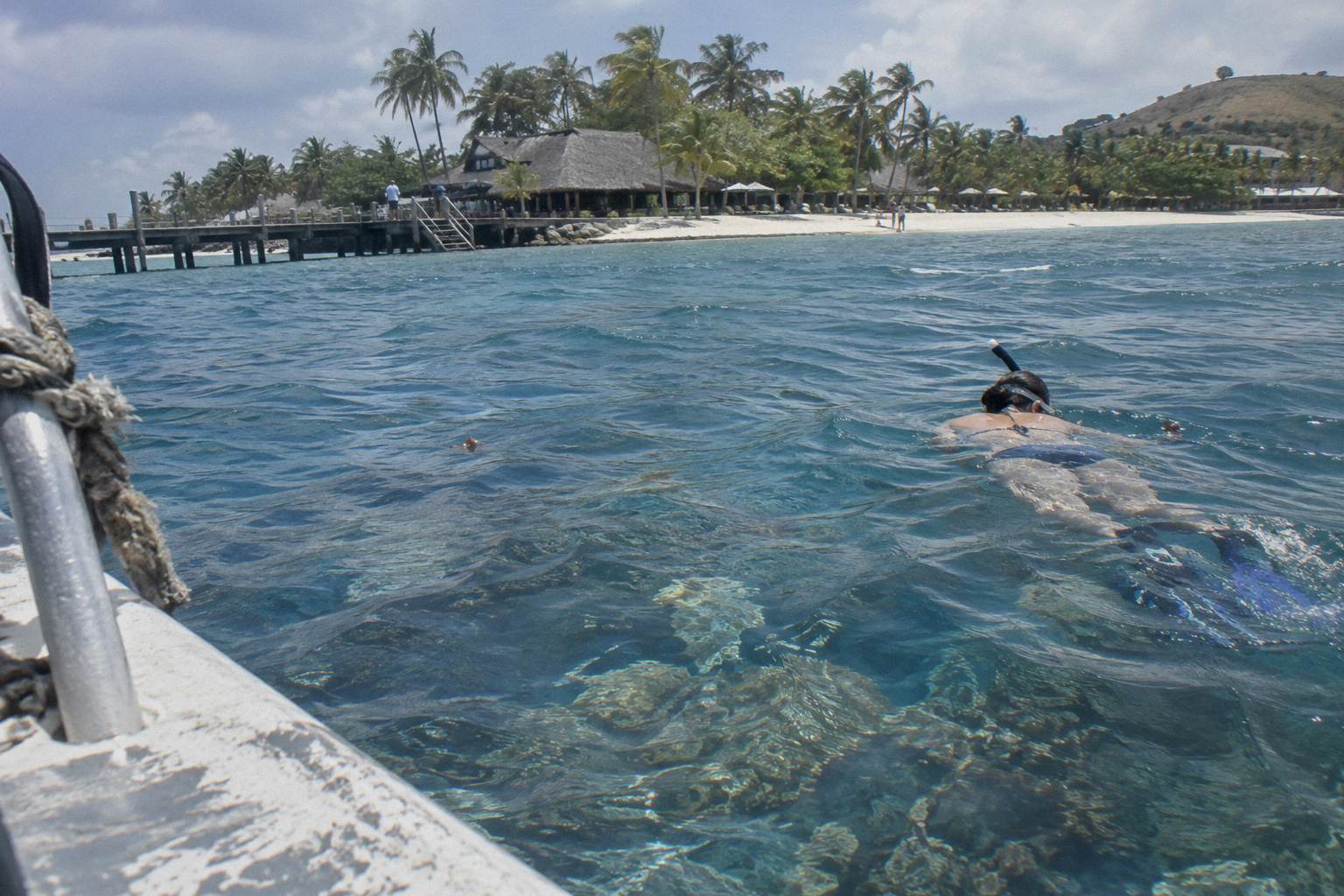
What low tide changes is the character of the swim rather than the fact of it. Water over the reef runs shallower and clearer in places, fish concentrate in the remaining deeper pockets, and entering from the beach takes a slightly longer wade before you reach swimming depth. None of that needs special equipment beyond the free mask and fins the island hands out. What it does need is ordinary care: shallow coral should be looked at, not stood on, and reef shoes make the entry far more comfortable. The packing guidance from the operator lists footwear or reef shoes alongside swimwear, towel, sunscreen and a hat.
There is a second, less obvious angle. Low water concentrates the reef's life where you can see it. On a rising or high tide, fish spread out across the full extent of the flat and some of them drift off the edge into deeper water. When the tide falls, that same life pulls back into the channels and basins that keep their depth, and a snorkeller floating above one of those pockets gets a denser view than the same spot offered two hours earlier. Photographers who know the reef often prefer the low half of the cycle for exactly this reason: less water between the lens and the coral, more animals per square metre of the remaining channel.
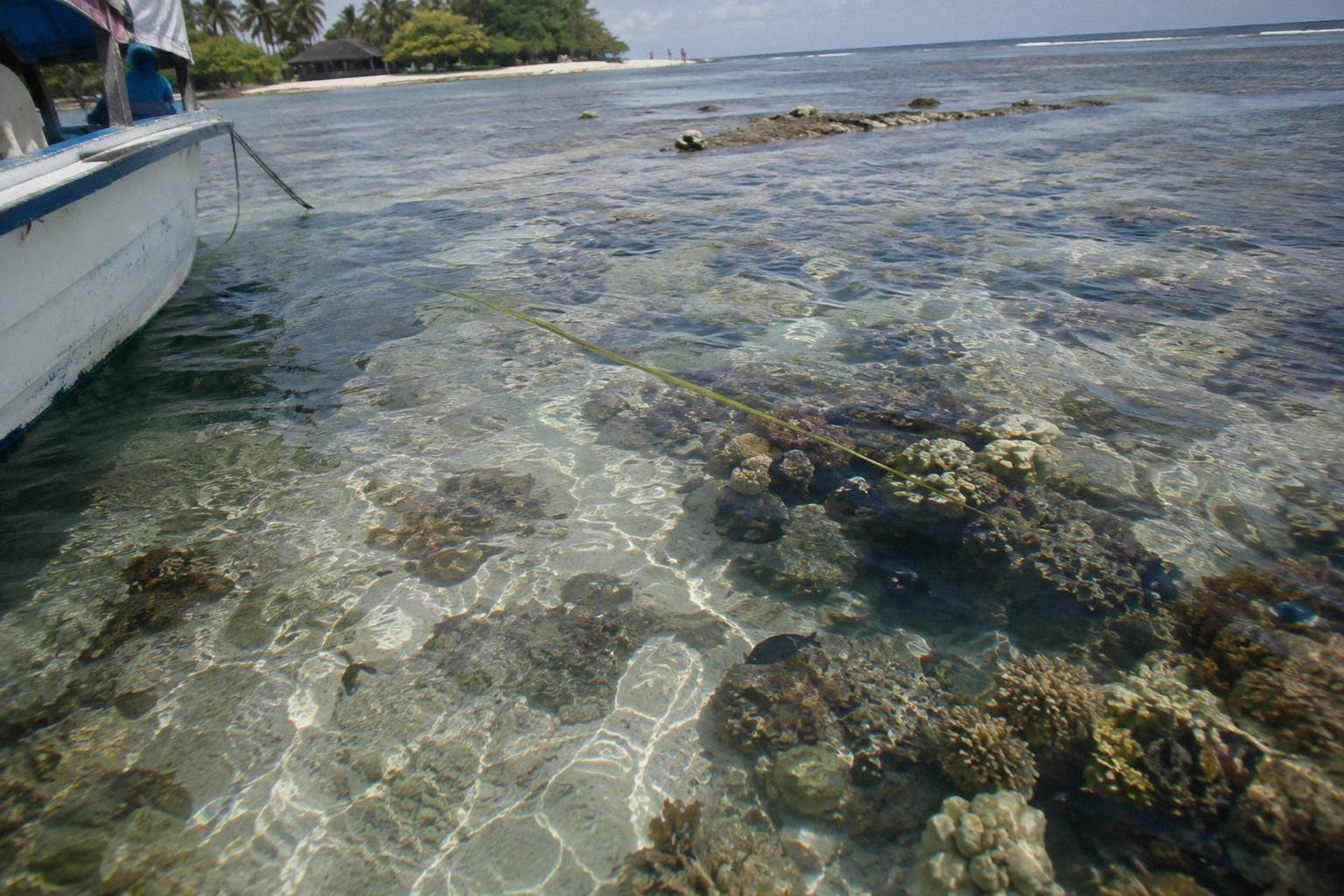
For a fuller picture of the reef itself, the masks and fins, and how the island's snorkel area works on a normal day, the South Sea Island snorkelling guide covers the detail. The short version for tide watchers: gear is complimentary, the area is part of the same island set-up the crew run all day, and the water keeps its use through the full tidal range the operator schedules trips around. If you want the broader national picture, the best snorkeling in Fiji from a day cruise compares the reef here with the other day trip options.
What The Water Around The Island Is Actually Like
The island sits inside the Mamanuca reef system, close enough to Port Denarau that the catamaran crossing takes about 30 minutes on the morning timetable and about 45 minutes on the 10.00am sailing. Guests step off the main vessel into a short tender boat ride to the beach, so arrival puts you directly onto the sand beside the swim area.
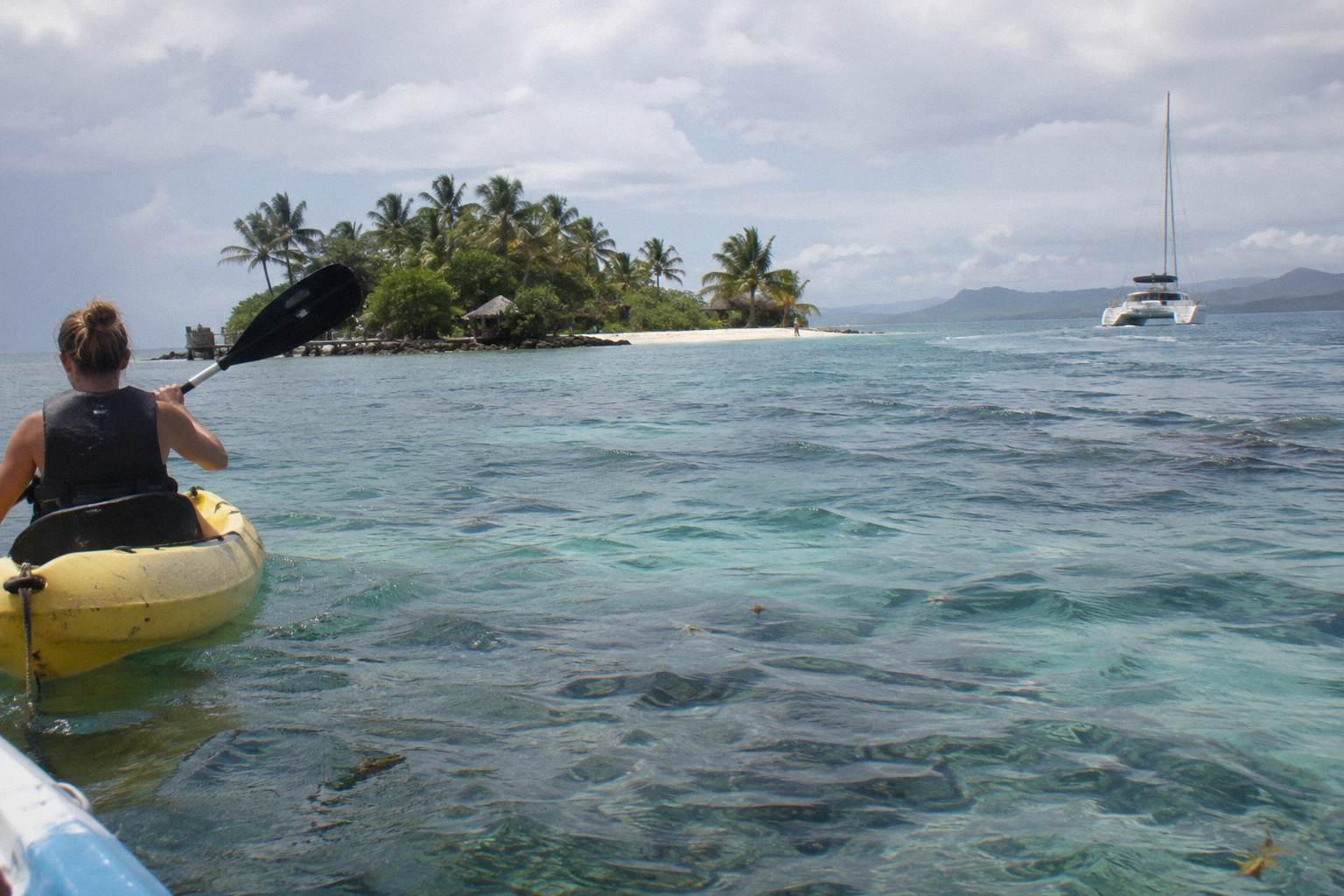
The island is small, explorable on foot in well under an hour, and the operator describes it as small in size but with plenty to keep you entertained. That compactness works in a snorkeller's favour. Everything water-related is within a short walk of where the tender lands you: the beach entry to the swim area, the rack of complimentary snorkel gear, the stand-up paddle boards and kayaks, and the saltwater swimming pool set back from the sand. There is no shuttle, no second beach to find, no decision about which side of the island to swim from.
The tide interacts with all of this in predictable ways. At higher water the reef edge is easier to float over and the paddle boards and kayaks glide across deeper lagoon water. At lower water the same area runs shallower and calmer, which suits nervous snorkellers and children, since there is less swell and the coral and fish sit closer to your mask. Many families find low tide the easier introduction, not the worse one. The trade-off is simple: watch where you put your feet, give the coral room, and let the fish come to you in the deeper pockets.
The vessel that gets you there adds its own comfort layer. The catamaran carries an air-conditioned lounge, open-air outer decks and free Wi-Fi on board, so even the crossing is not dead time; you can watch the Mamanuca group slide past from the outer deck and spot the reef colours long before you dock. Guests with young children or queasy stomachs tend to appreciate the indoor lounge on the return leg, when the afternoon breeze has filled in.
| Water activity | What low tide does | What to do about it |
|---|---|---|
| Beach snorkelling | Shallower entry, longer wade to depth, clearer light on the reef | Wear reef shoes, enter slowly, float rather than stand |
| Kayaks and paddle boards | Less depth over the flats, easier paddling in calm water | Stay in the deeper channels, watch your fins over coral |
| Saltwater swimming pool | No tidal effect at all | Use it any time, including with small children |
| Semi-submersible coral viewer | No tidal effect on boarding; viewing depends on the vessel running | Treat it as the any-tide backup, ask if it matters to you |
One thing worth saying plainly: the island is busy in the middle of the day because that is when the full day guests are ashore. The question of crowds has its own answer, and the is the island crowded piece goes into the timing detail. If quiet water matters more to you than lunch, the morning window is where you find it.
The Semi-Submersible Coral Viewer As The Any-Tide Option
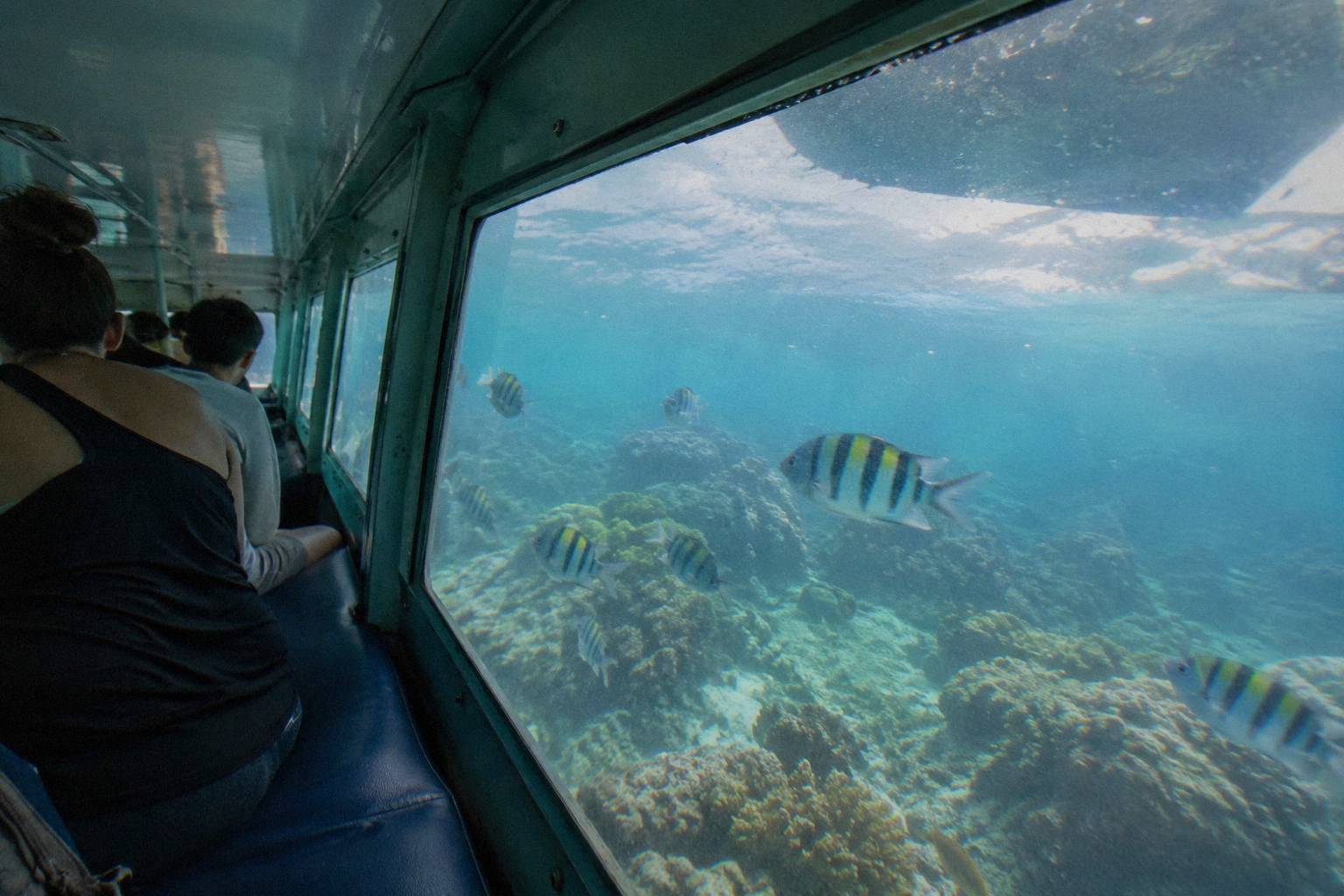
When you would rather stay dry, the island's semi-submersible coral viewer takes you below the waterline without a swimsuit, and it runs independently of the tide. One honest caveat sits in the operator's own wording: there is no refund if the viewer is out of service for maintenance or repairs, so treat it as a likely highlight rather than a guarantee.
The viewer, branded Subsea Adventure, is one of the features that distinguishes South Sea Island from beach-only day trips. You sit in a hull with viewing windows, the reef slides past at eye level, and the fish and coral arrive in front of you without a single stroke of swimming. For non-swimmers, small children, or anyone who has had enough sun for one day, it is the way to see the reef that no tide chart can spoil. On the combo trip it is subject to availability, so check when booking if it is a deciding factor.
The Finding Nemo morning trip, the island's early departure, folds the semi-submersible into the crossing itself. The boat departs Port Denarau at 8.45am, arrives at 9.15am, and the reef viewing happens on the way, so you have seen coral before you even step on the sand. It is rated 4.4 from 21 reviews and runs from US$65 per person, with drinks included but no lunch, which suits a morning-only plan. More on that trip in the timing section below.
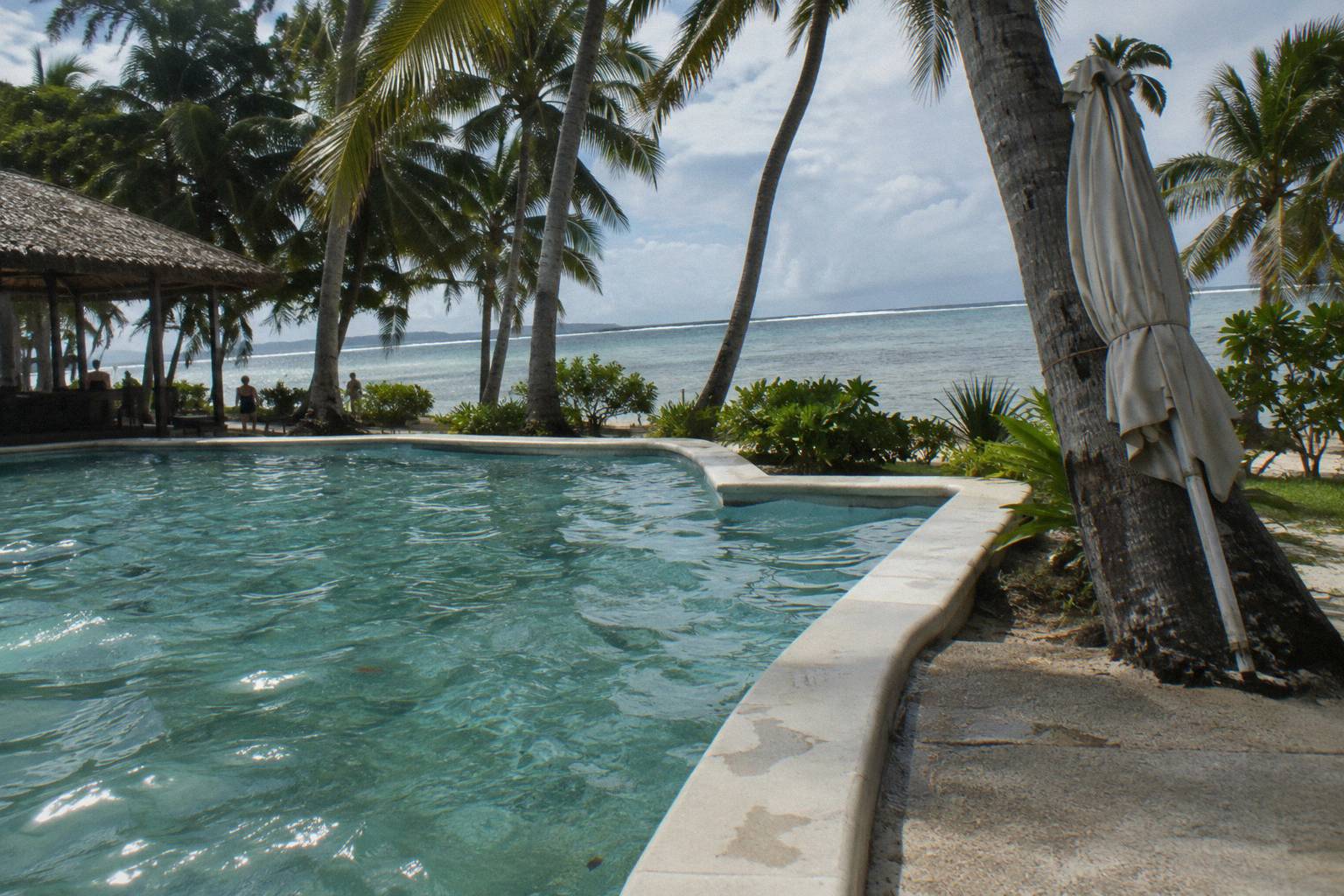
The practical frame for tide planners is simple. Snorkel at any tide, swim in the pool at any tide, view the reef through glass at any tide, and paddle a board or kayak when the water gives you depth. There is no point in the day, and no state of the tide, where the island leaves you with nothing to do in or on the water.
It is also the answer to a question many visitors are too polite to ask out loud: what happens if someone in the group cannot swim, or will not swim? On a beach-only island that person spends the day under a palm tree. Here they get the reef anyway, through glass, and they get the pool, and they get the island's non-water life, which on most days includes a Fijian meke performance and craft markets, daily except Sundays. The viewer is what turns a snorkelling trip into a trip for everyone.
Which Trip Gives You The Most Time In The Water
Time on the island is the resource that matters, and the trips differ sharply: the Finding Nemo morning trip gives about 1.5 to 2 hours ashore, the combo gives about 3.5 hours plus a Mamanuca sightseeing cruise, and the half day runs from 12.45pm to 5.15pm on the sand. More hours ashore simply means more of the tidal cycle under your mask.
If your day is built around snorkelling, match the trip to the hours you want in the water. The half day, "Fiji: South Sea Island Half-Day Trip with Lunch", departs Port Denarau at 12.15pm, lands at 12.45pm, and leaves the island at 5.15pm, returning at 6.00pm. That is an afternoon and early evening on the island, rated 4.6 from 123 reviews and priced from US$108 per person, with lunch and drinks included. An afternoon block almost always spans a tide change, so you will likely see both the deeper and the shallower version of the reef in a single visit.
The combo does something different: depart 8.45am, on the island by 9.15am, off again at 12.45pm, back at Port Denarau by 3.00pm, with a sightseeing run through the Mamanuca Islands while the catamaran drops off and picks up resort guests. You trade afternoon snorkel hours for the cruise through the group, which is the closest a day trip comes to island hopping. The combo half day is laid out in detail in the combo half day trip guide.
| Trip | Hours ashore | Water time character | Lunch and drinks |
|---|---|---|---|
| Finding Nemo morning | About 1.5 to 2 hours, 9.15am to 11.15am | Island mostly to yourself before 10.45am arrivals | Drinks, no lunch |
| Combo half day | About 3.5 hours, 9.15am to 12.45pm | Morning water, then Mamanuca sightseeing cruise | Lunch and drinks |
| Half day | About 4.5 hours, 12.45pm to 5.15pm | Afternoon into evening, spans a tide change | Lunch and drinks |
| Full day | From 10.45am to 4.00pm or 5.15pm | The full tidal cycle, all island activities | BBQ buffet lunch and island drinks |
A note on the island at its quietest: the operator points out that Finding Nemo guests enjoy the island mostly to themselves, because other day guests do not arrive until 10.45am. For a snorkeller, that first window is the closest thing the island has to a private reef, and the water at that hour is usually at its calmest before the afternoon breeze fills in.
The choice between them is less about price and more about the shape of the day you want. A traveller with an afternoon flight wants the combo, home by 3.00pm. A couple who want lunch and a lazy swim want the half day. A family that needs everyone awake, fed and sun-creamed before departure may find the 10.00am full day departure the kindest start, and its hours ashore, from 10.45am to either 4.00pm or 5.15pm, let children cycle between pool, beach and kayaks at their own pace rather than against a clock. The full day versus half day trade-offs are worked through in the full day vs half day comparison.
Timing Your Day Around The Water You Want
Check-in at the South Sea Cruises desk in the Port Denarau Terminal opens 30 minutes before departure, and every South Sea Island trip includes return coach transfers from most Nadi, Denarau and Wailoaloa hotels, so the day starts at your lobby rather than at the marina. Port Denarau itself sits 20 minutes from the international airport and 10 minutes from Nadi town.
Tide planning in Fiji is less about avoiding low water and more about knowing what each part of the day gives you. Morning water tends to be glassier, with the reef at its most visible before wind mixes the surface. Afternoon water carries more surface movement but also the warmest air, which matters if your group mixes snorkellers with sunbathers. Since the operator confirms snorkelling runs at low tide, you can pick your trip for crowd levels and lunch preferences rather than for the tide alone.
The clock itself is worth having in one place, because the four South Sea Island trips carve the day up differently and the differences are exactly where the snorkel hours hide.
| Trip | Depart Port Denarau | Arrive island | Leave island | Back at Denarau |
|---|---|---|---|---|
| Finding Nemo morning | 8.45am | 9.15am | 11.15am | 11.45am |
| Combo half day | 8.45am | 9.15am | 12.45pm | 3.00pm |
| Full day | 10.00am | 10.45am | 4.00pm or 5.15pm | 4.45pm or 6.00pm |
| Half day | 12.15pm | 12.45pm | 5.15pm | 6.00pm |
The seasons tilt the odds a little. Fiji's dry season runs May to October with most days between 19 and 28 degrees, and the wet season from November to April brings long warm days with short afternoon downpours and temperatures up to 31 degrees, per Tourism Fiji's climate guidance. Water temperature, in Tourism Fiji's wording, does not fluctuate much through the year, so cold water is not a reason to avoid any month. The seasonal detail, including cyclone season timing, is covered in the weather and best time guide.
One budget note that applies to every price in these pages: amounts are US dollars and vary by date and group. A mandatory per-person fuel surcharge applies for travel from 3 November 2026 until further notice, payable online before departure or at check-in; the operator sets the amount at checkout, with children paying a lower rate than adults on South Sea Island, and the full advisory sits with the operator's fuel surcharge notice.
What Trips People Up Before They Get In The Water
The mistakes are small and avoidable: arriving without reef shoes, expecting the semi-submersible to be guaranteed, counting on a lunch that a morning trip does not include, and assuming the tide will decide the day for you. None of these will ruin a trip on their own, and all of them are fixed by knowing the shape of the day before you board the coach.
Footwear first, because it is the one that bites. The operator's own what-to-bring line lists footwear or reef shoes alongside swimwear, towel, sunscreen and a hat, and at low water that pair of shoes is the difference between a relaxed wade out to the reef and a careful tiptoe over coral rubble. Bring cash or a card too, since the island massage, the Tipsy Turtle premium bar, merchandise and the shell market are extras at your own cost. The full packing rundown, including the sunscreen question, lives in the what to bring to South Sea Island guide.
Second, calibrate expectations for the semi-submersible. It is a real feature and most visitors ride it, but the operator's terms are blunt that no refund follows if it is out of service for maintenance or repairs. If below-the-water viewing is the reason a member of your group agreed to come, the morning Finding Nemo trip bakes the reef viewing into the sailing itself, which is worth weighing. The operator's own pages for the Finding Nemo trip and the island day trips carry the current detail.
Third, match the meal to the trip. The Finding Nemo morning includes drinks but no lunch. The half day and full day include lunch and drinks, and the full day's BBQ buffet is served at open-air rustic tables, with local beer, house wine, filtered water and soft drinks complimentary while you are on the island. Families have their own calculus, and the South Sea Island with kids guide works through it, including the complimentary Kids Club for ages 3 to 12 with adult supervision. The one thing no family should plan around is the tide: the island's water offer, in the operator's own framing, does not close.
A fourth trip-up is quieter than the others: booking a Coral Coast or outer-area hotel onto a trip whose coach does not reach it. The return coach covers most Nadi, Denarau and Wailoaloa hotels on the half day and Finding Nemo trips, while Vuda, Natadola, Sonaisali, Momi Bay and Coral Coast hotels join on the full day only. Confirm your hotel zone when booking rather than assuming, and the transfer detail, along with how the terminal works, is set out in the hotel pick-up and transfers guide.
So, back to the opening question. Can you snorkel at South Sea Island at low tide? You can, the operator says so in those words, and the island gives you three other ways to enjoy the water besides. Pick your trip for the hours and the crowd level you want, pack the reef shoes, and let the tide do whatever it plans to do. The operators of South Sea Island Cruises coverage here exists to answer exactly these planning questions, and this one has the shortest answer of the lot: the water is open.
Common Questions About Low Tide Snorkelling
Can You Snorkel At South Sea Island At Low Tide?
Yes. The operator states that swimming and snorkelling at the island are possible even at low tide, and complimentary snorkel gear, kayaks and paddle boards are part of the day at any water level.
Is The Water Too Shallow To Swim At Low Tide?
The entry gets shallower and the wade to depth gets a little longer, but the swim area stays open. Reef shoes make the entry comfortable, and floating over the coral rather than standing protects both you and the reef.
What Can Non-Swimmers Do At The Island?
The semi-submersible coral viewer takes you below the waterline without swimming, and the saltwater swimming pool is tide-proof and suits small children. Kayaks and paddle boards are also complimentary.
Does Low Tide Affect The Semi-Submersible Coral Viewer?
The viewer is not tide-dependent, but the operator gives no refund if it is out of service for maintenance or repairs. On the combo trip it is subject to availability, so ask when booking if it matters to you.
Which Trip Gives The Most Time In The Water?
The full day runs from 10.45am to 4.00pm or 5.15pm ashore, and the half day runs 12.45pm to 5.15pm, so both span a tide change. The Finding Nemo morning trip gives about 1.5 to 2 hours before the crowds land at 10.45am.
Do I Need To Bring My Own Snorkel Gear?
No. Snorkel gear is complimentary on the island. Bring swimwear, a towel, reef-safe sunscreen, a hat, footwear or reef shoes, and cash or a card for extras like the island massage and the Tipsy Turtle bar.