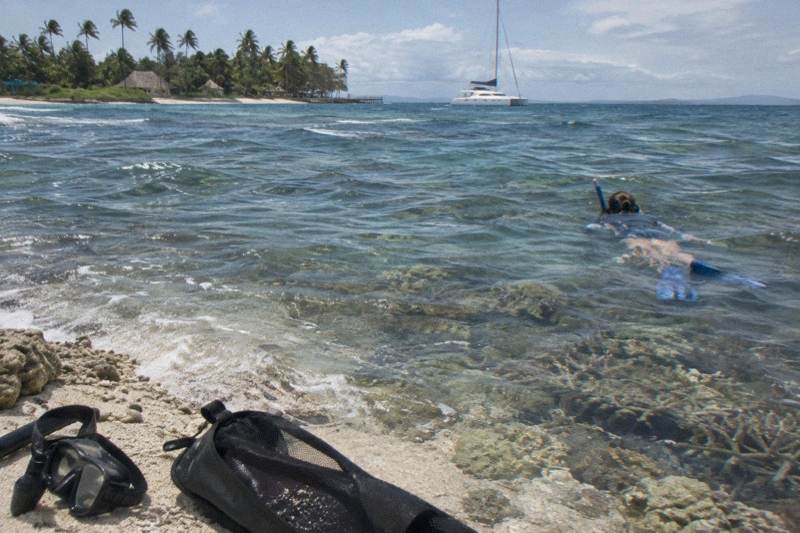
Best Snorkeling In Fiji On A Day Cruise: Where Boats Take You
Four day-cruise destinations hold almost all of the snorkelling reachable from Port Denarau in a single day, and each suits a different swimmer.
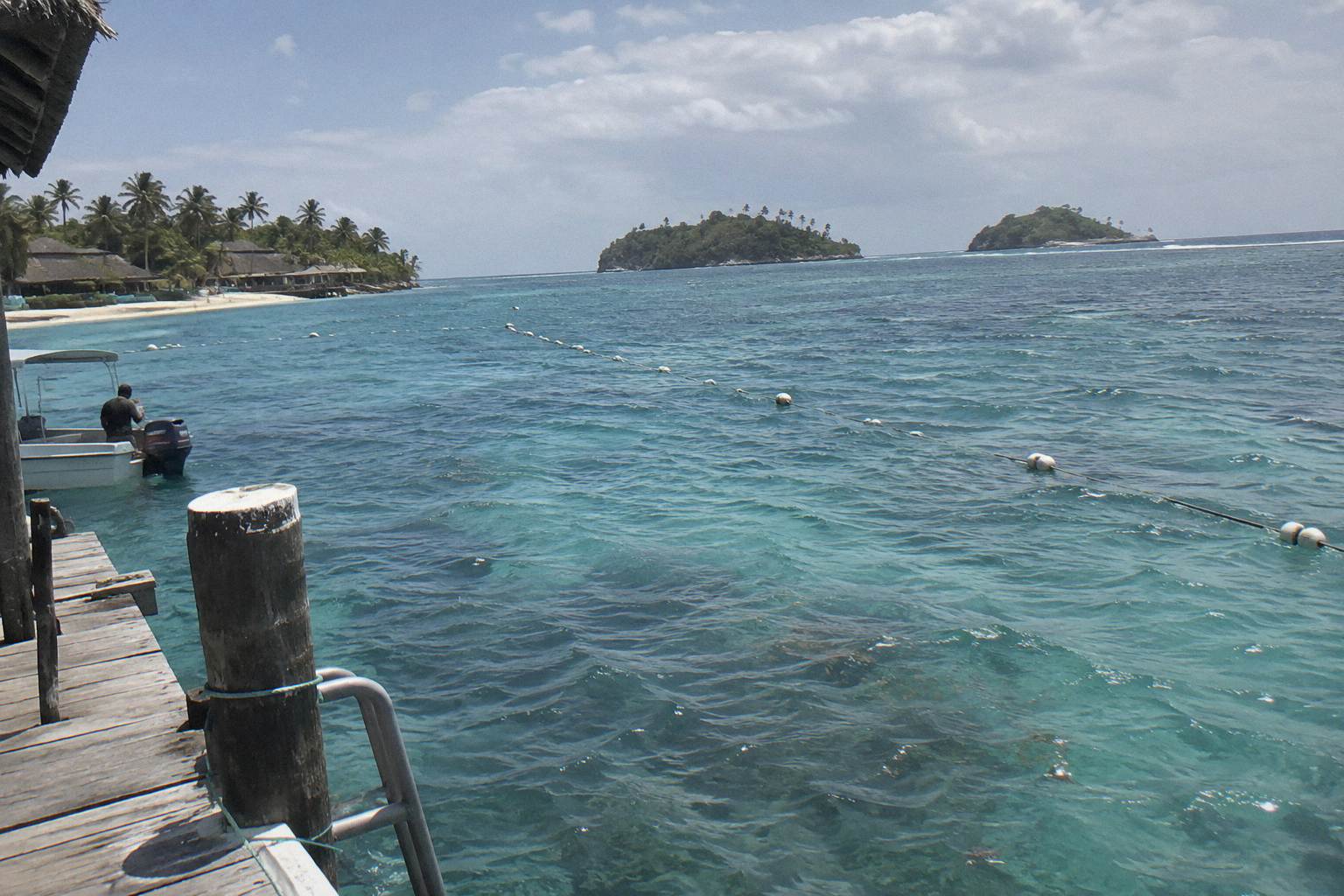
Short answer
Fiji day cruises take snorkellers to four main spots: Kuata Island's marine reserve, Tivua Island's reef with a marine biologist guide, Beachcomber Island's protected marine sanctuary, and the South Sea Island house reef. The best pick depends on guided versus independent swimming, crossing length, and budget, from US$107 per person for the Tivua sailing.
Every Fiji day cruise that leaves Port Denarau with snorkel gear aboard is gathered in the full-day island cruise collection, and almost all of the country's day-trip snorkelling happens at just four island destinations. Compare them once, here, and the choice becomes straightforward.
| Fact | Detail |
|---|---|
| Main day-cruise snorkel spots | Kuata Island, Tivua Island, Beachcomber Island, South Sea Island |
| Cheapest priced guided reef trip | Captain Cook Tivua sailing, from US$107 per person |
| Longest crossing | Kuata Island, 1 hour 45 minutes each way |
| Shortest crossing | South Sea Island, 30 to 45 minutes by catamaran |
| Guided snorkel with a marine biologist | Tivua Island reef trip |
| Complimentary snorkel gear | South Sea Island, Castaway Island, Beachcomber |
| Currency note | All amounts are US dollars and vary by date and group |
Which Fiji Day Cruise Takes You To The Best Snorkelling?
There is no single best snorkel spot in Fiji, there is a best fit. Kuata Island suits swimmers who want a marine reserve and a long cultural day, Tivua suits anyone who wants a marine biologist in the water beside them, Beachcomber suits easy sanctuary snorkelling, and South Sea Island suits short crossings and flexible, independent swimming. Pick by those rules, not by a ranking.
That answer needs a scope note first. What follows covers only the reefs and lagoons that scheduled day cruises actually reach from Port Denarau in one day. Fiji's wider reefs, liveaboards and scuba dive sites are a different world with different operators, and none of that is reachable on a day trip from Denarau, so it stays out of the comparison entirely.
Within that scope, the practical differences are bigger than most first-time visitors expect. The crossing to Kuata in the Yasawa group runs 1 hour 45 minutes each way, while the catamaran to South Sea Island takes 30 to 45 minutes depending on the departure. One trip puts a trained marine biologist in the water with a guided group; another hands you complimentary gear and leaves you to swim off the beach whenever the tide suits you. Neither is objectively better, they answer different questions.
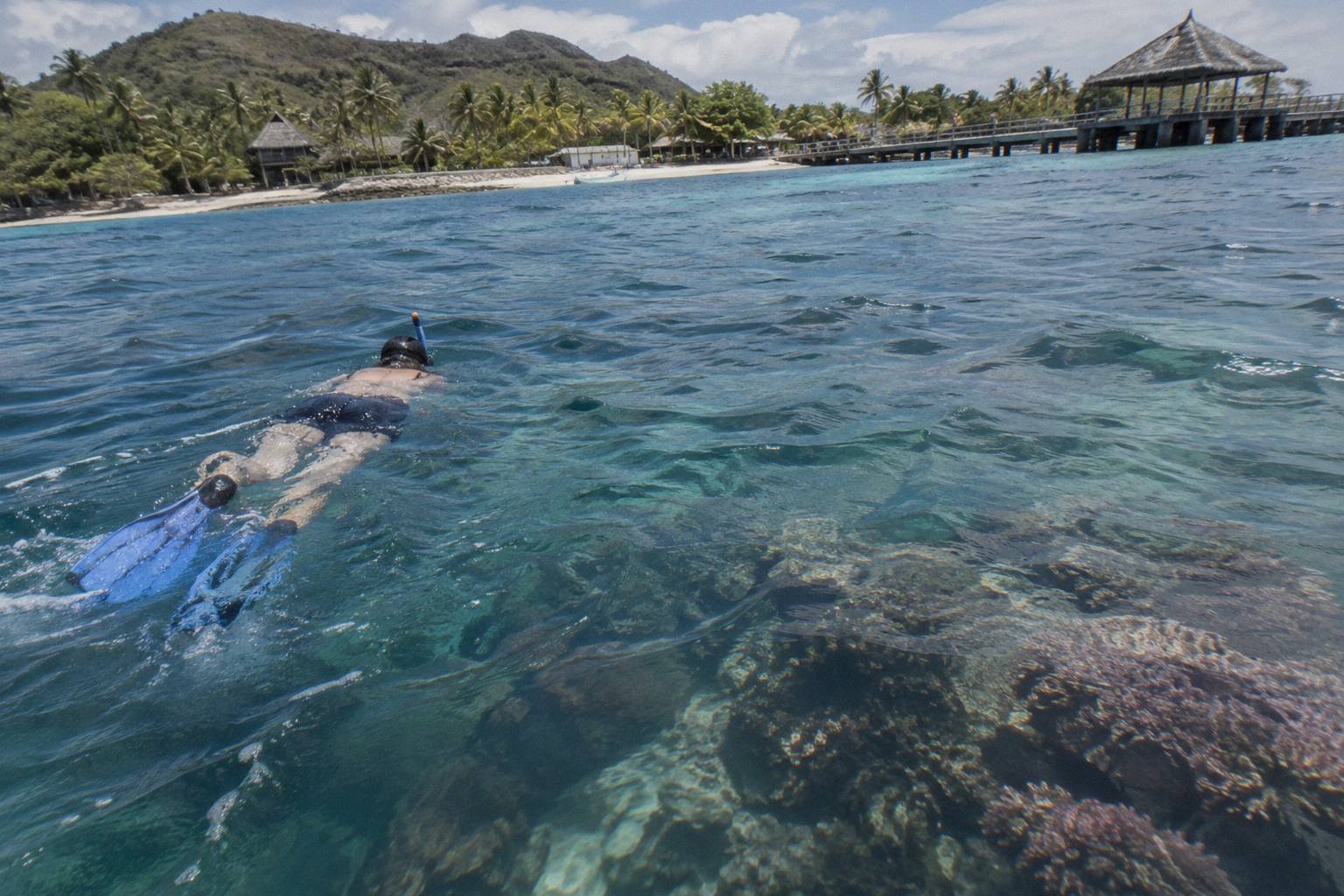
Budget and appetite for boat time narrow it further. The Captain Cook Tivua trip starts from US$107 per person, the South Sea Island full day from US$125 per person, and both include lunch. If your priority is maximum time in the water rather than maximum time on a boat, a shorter crossing buys you roughly an extra hour of swimming. Our companion piece on the full Fiji day cruise picture walks through the same trade-off for non-snorkellers.
Kuata Island: Snorkelling Inside A Marine Reserve
Kuata Island is the strongest pick for snorkellers who want protected water and a full day around it. The island sits in the Yasawa group, 1 hour 45 minutes each way by boat, and its snorkelling happens in a marine reserve area, the strictest protection any day-cruise destination in the Mamanuca and Yasawa stretch can claim. It is the longest swim-free commute of the four.
The Kuata Island Marine Conservation Experience with Lunch runs about 9 hours door to door, with roughly 5 hours ashore. Departure is 8.45am from Port Denarau, arrival 10.30am, and the boat leaves the island at 4.05pm for a 6.00pm return. Return coach transfers collect from most Nadi, Denarau and Wailoaloa hotels, and the day includes a welcome with kava, a cultural centre beside a historically significant cave, a meke performance, a craft workshop and a cooking demonstration, with buffet lunch included.
For a snorkeller, the marine reserve is the headline. Reserve status means the reef around Kuata is fished and collected under restriction, which generally shows in the density of fish life you swim through compared with unprotected house reefs. The trade-off is the crossing: at 1 hour 45 minutes each way, you spend almost as long on the water as the five hours you get ashore, and the Yasawa crossing is open water for most of it. Swimmers who get seasick should plan for that honestly before committing.
The trip has no printed price figure to quote here, so check availability and the current fare on the operator's booking page, and remember the once-per-article note: all amounts on these trips are US dollars and vary by date and group. A mandatory per-person fuel surcharge also applies for travel from 3 November 2026, payable online before departure or at check-in, with children 5 to 15 paying a lower rate than adults on South Sea Island trips; no amount can be quoted because it is set at checkout.
The conservation framing also shapes what you actually do in the water. Snorkelling in the reserve area is part of a programme built around the island's marine environment rather than a bolt-on activity, which suits visitors who like their swimming to come with context. You can read more about the island-hopping style of day in the Mamanuca island hopping trip overview, which covers how these longer crossings compare with the short hops closer to Denarau.
Tivua Island: Reef Snorkelling With A Marine Biologist
Tivua is the only day-cruise destination where a guided marine biologist snorkel is part of the product rather than an extra. The Captain Cook sailing departs Port Denarau Marina at 10am and returns 5pm, a 7-hour day with about 60 minutes of sailing each way to the small island north of South Sea Island. It costs from US$107 per person, and 4.5 across 448 reviews stands behind it.
Two Tivua products exist and the difference matters for snorkellers. The "Fiji: Captain Cook Cruises, Island & Reef Day Trip" carries the rating and the price above, with return land transfers from listed Nadi and Denarau pickup points and free cancellation up to 24 hours before start. The second, "Nadi: Tivua Island Reefs, BBQ & Marine Biologist Snorkel", departs at 10am and returns 5pm and includes morning and afternoon tea, a BBQ lunch, drinks, the guided marine biologist snorkel and a glass-bottom boat, with its fare on the booking page.
The biologist-led snorkel is the reason to choose Tivua over a closer island. Someone who can name what you are looking at, and point out the reef's structure as you swim it, turns a float over coral into something you can actually read. The glass-bottom boat on the BBQ booking adds a dry option for anyone in your group who would rather watch the reef through a hull than through a mask, which makes Tivua the easiest mixed-ability pick of the four.
Sailing rather than motoring also changes the feel of the day. The roughly 60-minute crossing each way is under canvas on the Captain Cook vessel, which many swimmers find calmer on the stomach than a high-speed catamaran run. Cancellation is free up to 24 hours before start on the reef day trip, so a forecast that turns against you does not lock you in.
Beachcomber Island: Snorkelling A Protected Marine Sanctuary
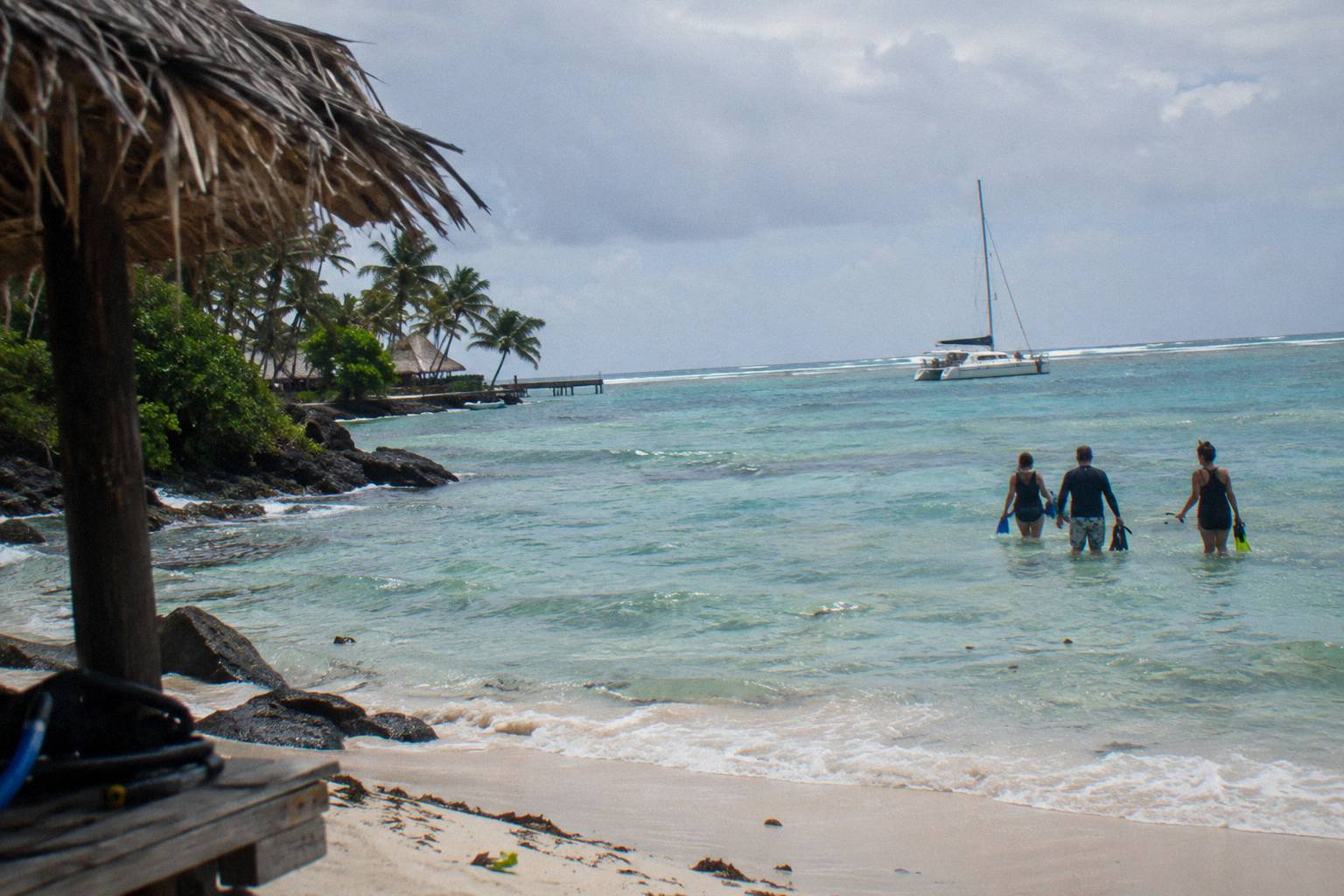
Beachcomber is the gentlest of the four: a small resort island surrounded by a protected marine sanctuary, with about 6 hours ashore and snorkelling plus kayaking included in the day. It suits swimmers who want calm, sheltered water and a social island atmosphere without a long crossing or a guided structure. There is no rating figure to print for it.
The Beachcomber Island Day Trip checks in at the booth at Port Denarau Marina and gives you around 6 hours on the island. The resort describes itself as surrounded by a protected marine sanctuary, which places its snorkelling in the same family of protection as Kuata's reserve: the reef is managed rather than open, and sanctuary waters around a resort island are typically the calmest and most forgiving place on this coast to put a mask on for the first time.
Sanctuary snorkelling has a second advantage that rarely makes the brochure. Because the island is small and the sanctuary wraps all the way around it, you can snorkel from the beach in short bursts, warm up, and go back in, rather than committing to one long swim from a boat. That suits families with children and anyone whose confidence in deep water is a work in progress. Kayaks add a surface option when arms tire of kicking.
The trade-off is information. Beachcomber's day trip carries no price figure and no review rating here, and its departure time is chosen on the booking calendar rather than printed on a timetable, so confirm both when you book. Its cancellation window is likewise unconfirmed, a fair question to ask the operator before paying. For swimmers who like the sanctuary idea but want a fully priced alternative with more on-island structure, the South Sea Island trips below are the closer and better documented option.
Between Beachcomber and Tivua sits a decision rule worth stating plainly: choose Tivua when you want guidance and structure in the water, choose Beachcomber when you want freedom and calm. And if a longer, conservation-centred day is what drew you to this comparison, the Kuata trip remains the deepest version of it, with snorkelling in a marine reserve and a full cultural programme around it, and it is the one product here that can be checked in a single click.
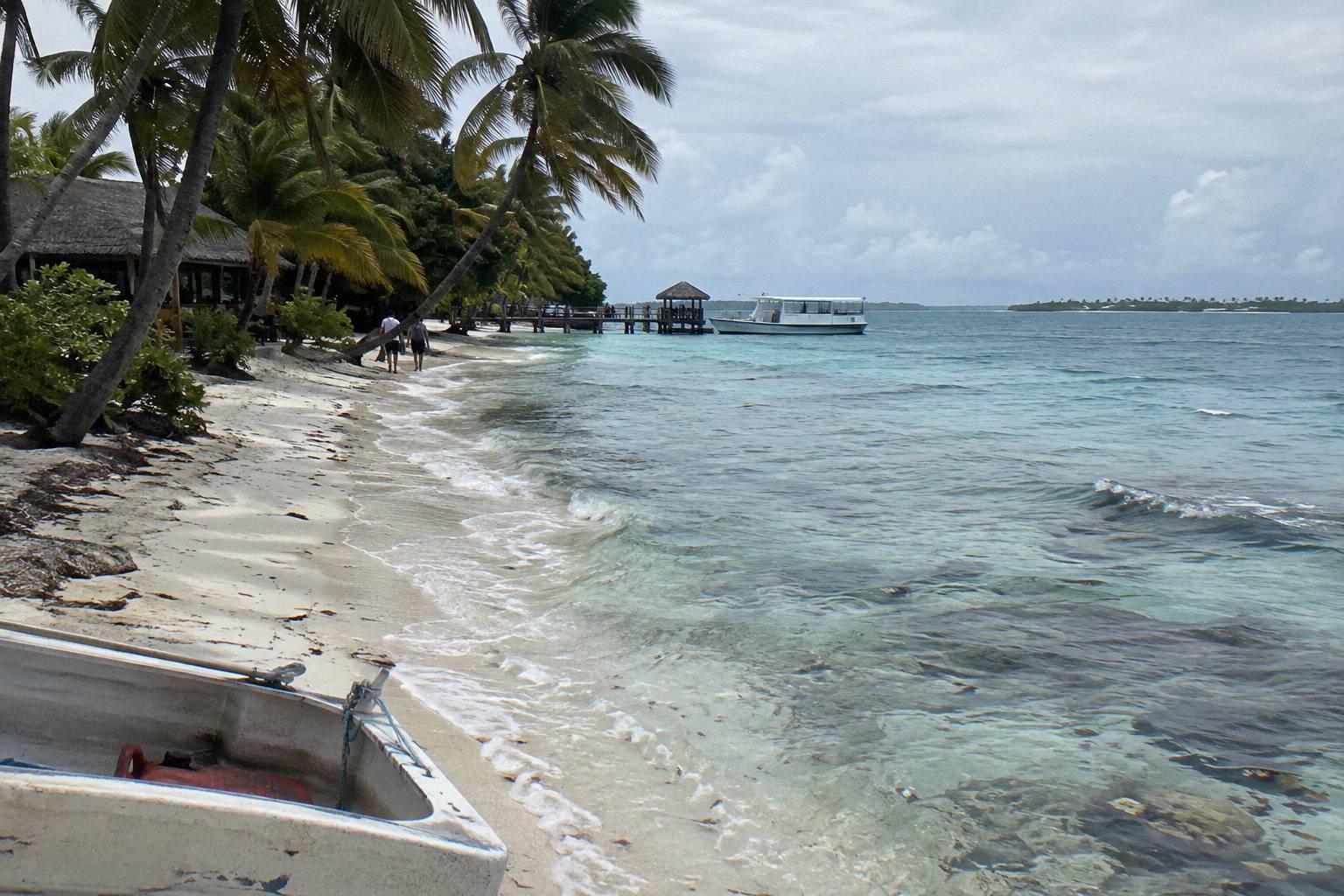
South Sea Island: House Reef Snorkelling Off The Catamaran
South Sea Island is the shortest hop and the most flexible snorkel: complimentary gear, stand-up paddle boards and kayaks, a saltwater pool, and swimming and snorkelling that the operator says holds up even at low tide. The full day costs from US$125 per person and carries 4.5 across 296 reviews, the half day from US$108 with 4.6 across 123.
The island is tiny, explorable in a couple of hours, and its snorkelling works because it is a house reef rather than a destination reef. You swim when you like, for as long as you like, between the other parts of the day: the BBQ buffet lunch at open-air rustic tables, the complimentary local beer, house wine, filtered water and soft drinks, the daily meke performance and craft markets except Sundays, and a complimentary Kids Club for ages 3 to 12 with children supervised by an adult. The semi-submersible coral viewer adds a dry window on the reef, with no refund if it is out of service for maintenance or repairs.
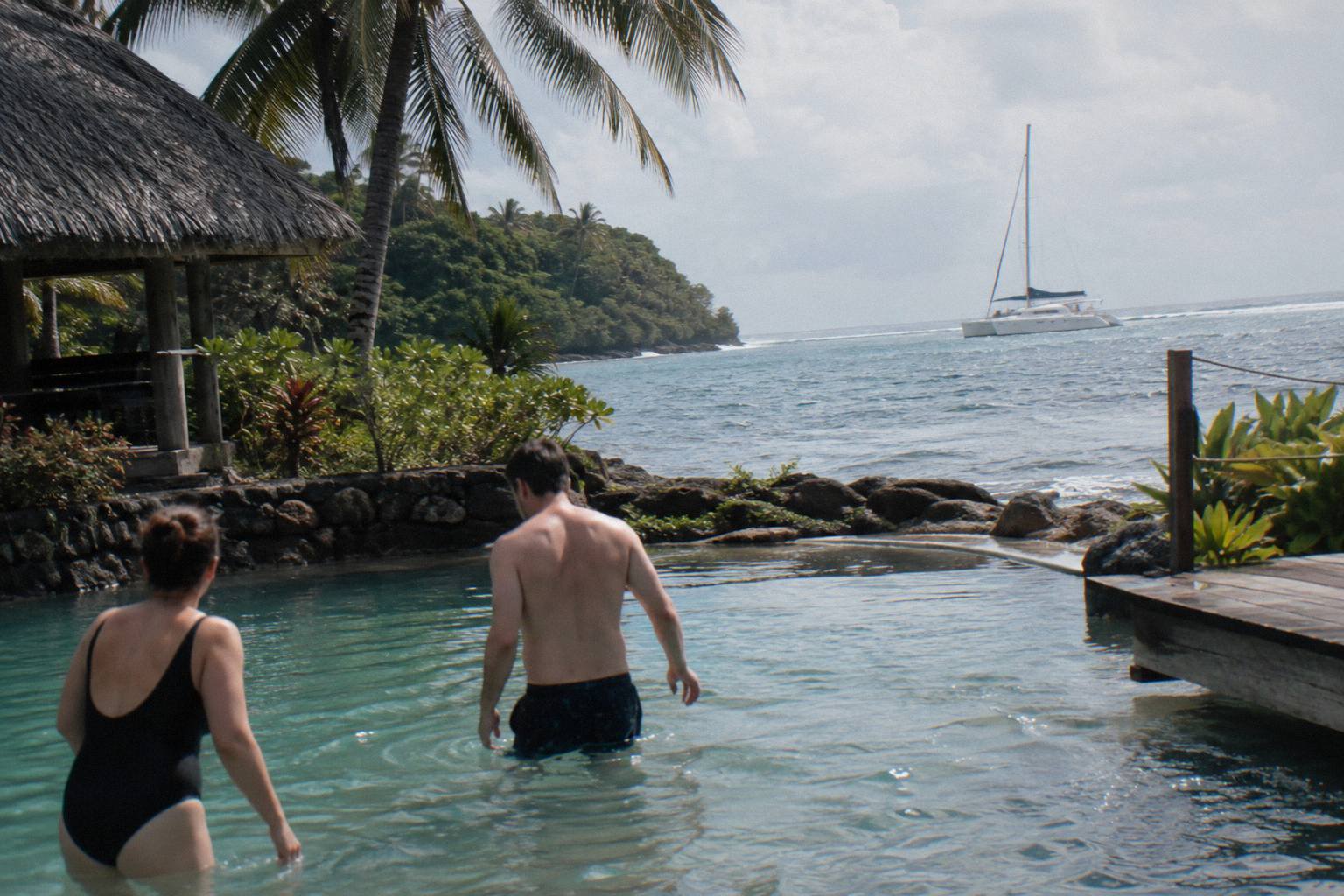
Timetable flexibility is the quiet advantage. The full day departs 10.00am, arrives 10.45am, and lets you leave the island at 4.00pm or 5.15pm, back at 4.45pm or 6.00pm. The half day departs 12.15pm, arrives 12.45pm, leaves 5.15pm and returns 6.00pm. The crossing is 45 minutes on the 10.00 timetable and 30 minutes on the 8.45 one. Return coach transfers cover most Nadi, Denarau and Wailoaloa hotels, with Vuda, Natadola, Sonaisali, Momi Bay and Coral Coast hotels on the full day only. Check-in is at the South Sea Cruises desk, Port Denarau Terminal, 30 minutes before departure.
The morning Finding Nemo trip deserves a word from snorkellers specifically. It departs 8.45am, arrives 9.15am, leaves 11.15am and is back at 11.45am, and because other day guests do not arrive until 10.45am, its guests enjoy the island mostly to themselves, which in practice means the house reef nearly empty for the first 90 minutes. It starts from US$65 per person with 4.4 across 21 reviews, and lists drinks but no lunch. Whether the tide cooperates at 9.15am is the open question, and whether the reef is swimmable at low tide is covered in detail in the island's dedicated snorkelling guide.
Comparing The Four Spots: Gear, Guides And Water
Put side by side, the four destinations split cleanly on three axes: whether gear is complimentary, whether a guide is available in the water, and what kind of water you swim in. Kuata offers a marine reserve with a structured programme, Tivua a guided biologist snorkel and glass-bottom boat, Beachcomber a sanctuary with beach entry, and South Sea Island complimentary gear over a house reef with low-tide swimming.
The table below is the whole decision in one view. Read it against your own swimming confidence and your group's mix rather than against any ranking, because no ordering of these four is defensible for all swimmers.
| Spot | Trip | Gear | Guided snorkel | Water character |
|---|---|---|---|---|
| Kuata Island | Kuata Marine Conservation Experience with Lunch | Included in programme | Snorkelling within a conservation programme | Marine reserve area, Yasawa group |
| Tivua Island | Captain Cook Island & Reef Day Trip, from US$107 | Included | Marine biologist guided snorkel and glass-bottom boat on the BBQ booking | Island reef, reached by sailing about 60 minutes |
| Beachcomber Island | Beachcomber Island Day Trip | Snorkelling and kayaks included | No guided snorkel claimed | Protected marine sanctuary, beach entry |
| South Sea Island | Full day from US$125, half day from US$108, Finding Nemo from US$65 | Complimentary snorkel gear, paddle boards, kayaks | No guided snorkel, semi-submersible coral viewer instead | House reef, swimmable even at low tide per operator |
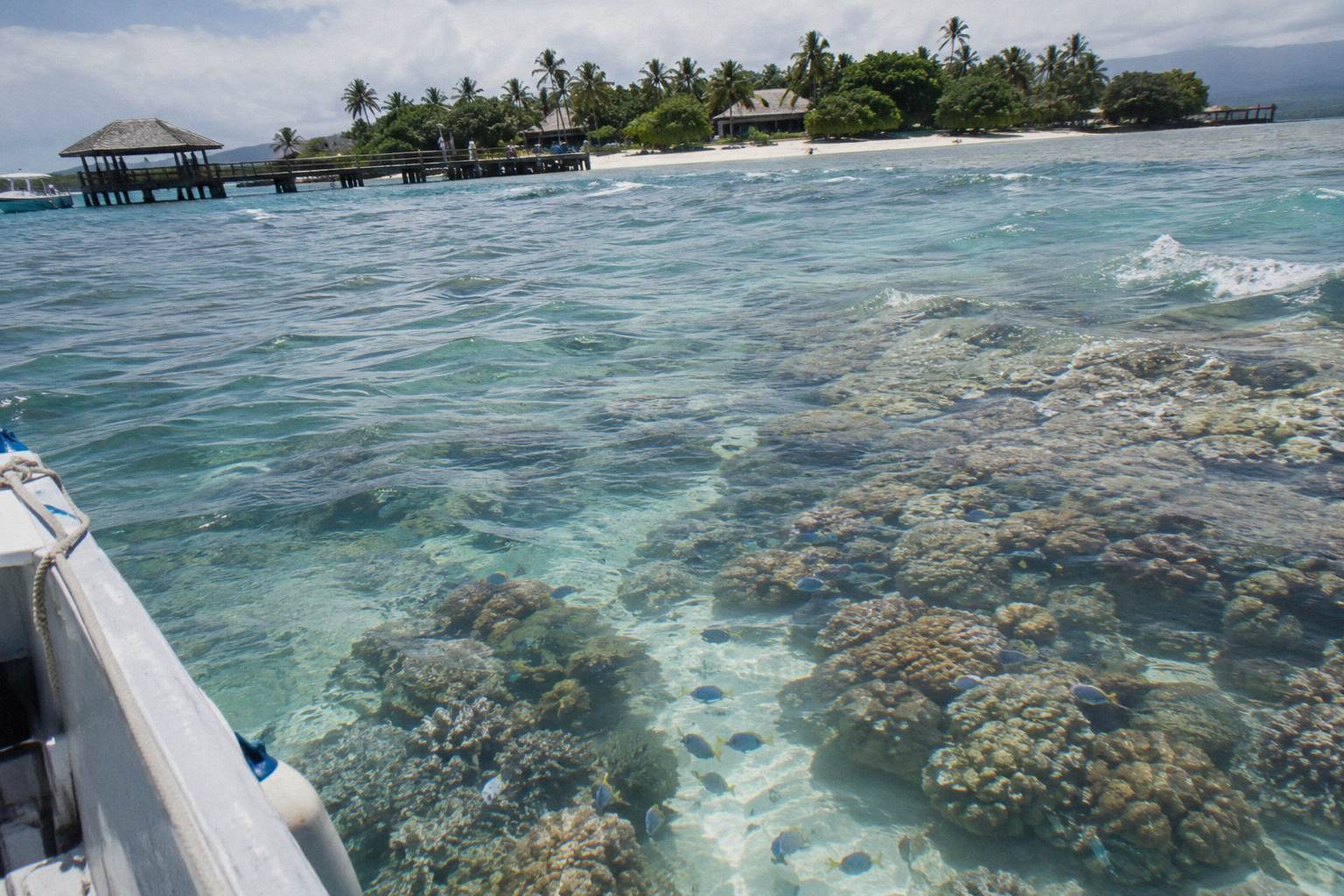
Time in the water is where the differences bite hardest, and it is worth a table of its own. Kuata gives about 5 hours ashore, Beachcomber about 6, and the half day about 4 and a quarter hours on South Sea Island. The Finding Nemo morning gives only 2 hours on the island, but nearly all of it on a reef before the crowds land. If your holiday goal is simply the most minutes in the water per dollar, the half-day South Sea Island product is hard to argue with; if it is the richest reef, Kuata earns its crossing.
| Destination | Crossing each way | Time ashore | Island departure choice |
|---|---|---|---|
| Kuata Island | 1 hour 45 minutes | About 5 hours | Single 4.05pm departure |
| Tivua Island | About 60 minutes | 7-hour day, departs 10am back 5pm | Single return sailing |
| Beachcomber Island | Chosen on the booking calendar | About 6 hours | Single return boat |
| South Sea Island full day | 45 minutes on the 10.00 timetable | Arrive 10.45am, leave 4.00pm or 5.15pm | Two return options |
| South Sea Island half day | Short catamaran hop | Arrive 12.45pm, leave 5.15pm | Single return |
| South Sea Island Finding Nemo | 30 minutes on the 8.45 timetable | 2 hours, 9.15am to 11.15am | Single return |
Seasons, Cyclones And When The Water Suits Snorkelling
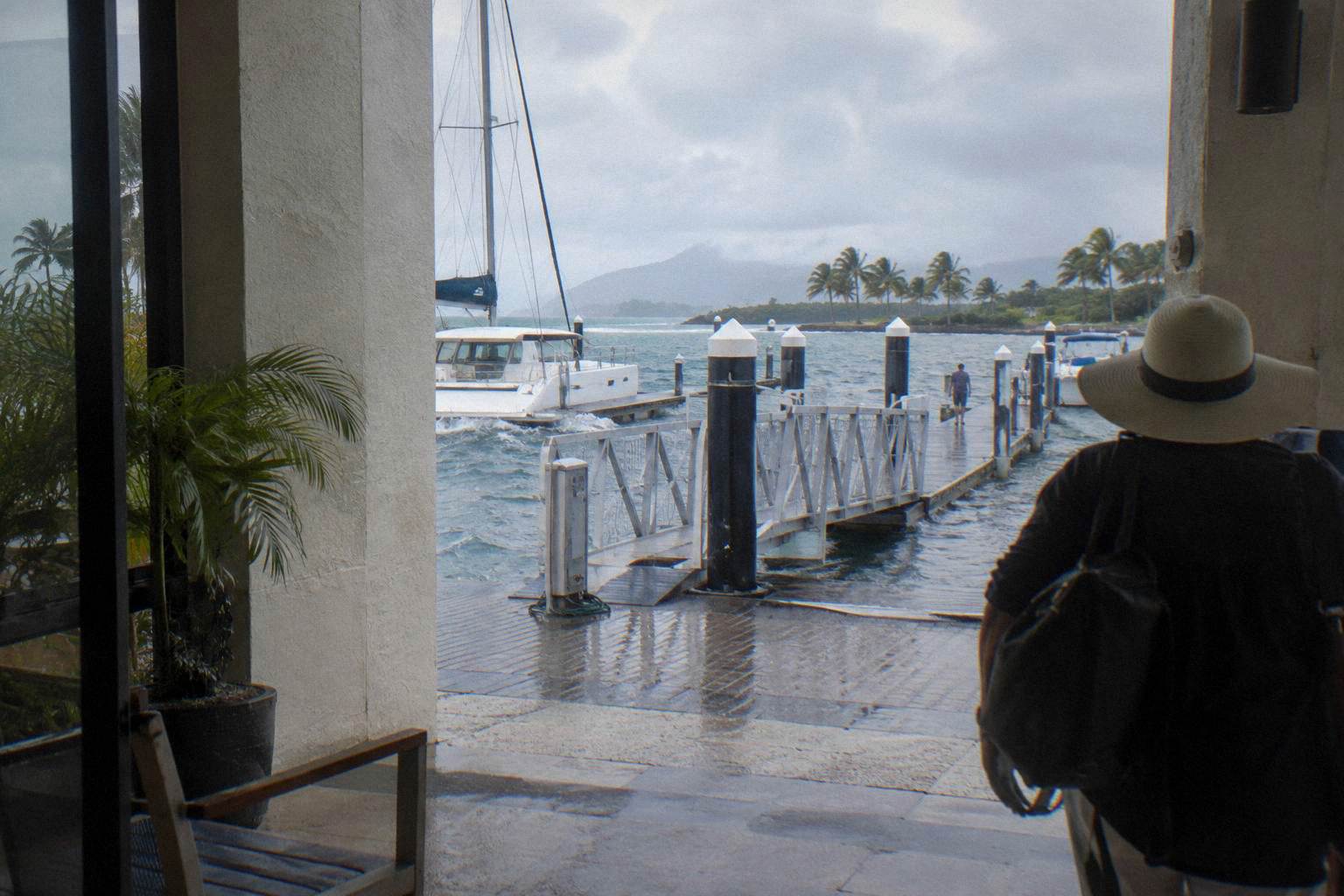
Fiji's dry season, May to October, is the surer window for snorkelling: shorter sunnier days, average temperatures of 23 to 24 °C, and rainfall down 50 to 75 percent on the wetter months. The wet season, November to April, still delivers long warm days up to 31 °C with short afternoon downpours, but it overlaps the tropical cyclone season, and the outlook for 2026-27 is an active one.
The seasonal picture comes from Tourism Fiji's climate guidance, which frames summer and winter less as good and bad and more as a trade between warmth and rain. Water temperatures, on the same guidance, do not fluctuate much through the year, so the choice of month matters far more for rain and swell than for how the water feels on your skin. For snorkellers that means the dry season's advantage is visibility and settled conditions rather than warmth.
The cyclone factor deserves plain speech. The Fiji Meteorological Service's 2026-27 tropical cyclone outlook expects eleven to fifteen cyclones in its area of responsibility between November 2026 and April 2027, against around seven in an average season, with the peak usually January to February. That does not make wet-season travel reckless, most days are still swimmable, but it makes a free-cancellation policy genuinely valuable, and every South Sea Cruises trip here allows free cancellation up to 24 hours before start.
Operators also hold explicit weather rights. The operator reserves the right to cancel departures, arrange alternative transport and vary itineraries when conditions demand, and Cloud 9, for context elsewhere in the Mamanucas, refunds a full day-trip cancellation made 24 or more hours ahead for adverse weather. If a wet-season trip is on your list, the deeper planning detail is in Fiji day trips in the rainy season, and the month-by-month trade-offs in Mamanuca weather for day cruises.
| Season | Months | Air temperature pattern | Rainfall pattern | Snorkelling read |
|---|---|---|---|---|
| Dry season | May to October | Average 23 to 24 °C, most days 19 to 28 °C, July and August coolest | 50 to 75 percent less than the wetter months | The surer window for visibility and calm crossings |
| Wet season | November to April | Up to 31 °C, average 25 to 26 °C, January and February warmest | Short afternoon downpours, higher humidity | Warm and swimmable, but overlaps cyclone season |
What Trips People Up Before You Book
The mistakes are consistent: underestimating the Kuata crossing, assuming every trip includes lunch, expecting a guided snorkel where none is offered, forgetting the fuel surcharge exists, and booking a 2-hour Finding Nemo window when a full water day was the goal. Each of these is avoidable in the five minutes it takes to read a trip's inclusions against your own plan.
The crossing mistake comes first. Kuata is 1 hour 45 minutes each way in the Yasawa group, and swimmers prone to seasickness can lose the best part of a day to it, so the reserve needs to be worth that much to you specifically. Lunch comes second: the Finding Nemo morning lists drinks but no lunch, while the South Sea Island full day, half day, Tivua and Kuata products all feed you, and on Castaway and Mana resort day trips drinks are extra even when lunch is included. Read the inclusions line before you read anything else.
Guidance is the third trap. Only Tivua's BBQ booking carries the marine biologist snorkel and the glass-bottom boat, and no product at South Sea Island or Beachcomber puts a guide in the water with you. If you are a nervous swimmer arriving with a hand on a boogie line, the South Sea Island with kids guide covers the shallow-water options, but Tivua is structurally the safer choice for a swimmer who wants supervision. The fourth is the surcharge: from 3 November 2026 a mandatory per-person fuel surcharge applies, payable online or at check-in, and some booking pages show it as excluded, so expect it at checkout rather than being surprised by it.
The fifth mistake is calendar-shaped. On South Sea Island, meke performances and craft markets run daily except Sundays, and the semi-submersible coral viewer carries no refund if it is out of service for maintenance or repairs. Neither ruins a day, but both can disappoint a plan built around them. Bring cash or card for extras like the Tipsy Turtle premium bar, island massage and the shell market, plus towel, swimwear, sunscreen, hat and reef shoes, and treat what to bring to South Sea Island as the checklist. As South Sea Island Cruises lays these trips out, the inclusions differ enough between products that the fine print is genuinely where the decision lives.
Common Questions About Snorkelling On Fiji Day Cruises
Which Fiji Day Cruise Has The Best Snorkelling?
There is no single best. Kuata Island offers a marine reserve, Tivua a marine biologist guided snorkel and glass-bottom boat, Beachcomber a protected marine sanctuary, and South Sea Island a house reef with complimentary gear that the operator says is swimmable even at low tide. Choose by guidance, crossing length and budget.
Do I Need To Bring My Own Snorkel Gear?
No. Complimentary snorkel gear is provided at South Sea Island and at Beachcomber, and gear is included in the Kuata and Tivua programmes. Bring reef shoes or footwear, a towel, swimwear, sunscreen and a hat, plus cash or card for extras.
Is There A Guided Snorkel With A Marine Biologist?
Yes, on Tivua Island. The Tivua BBQ booking includes a guided marine biologist snorkel and a glass-bottom boat, alongside morning and afternoon tea, BBQ lunch and drinks, on a 7-hour day departing Port Denarau Marina at 10am.
What Is The Cheapest Day Cruise With Snorkelling?
Of the priced trips, the Finding Nemo morning to South Sea Island starts from US$65 per person and gives 2 hours on the island, mostly before other guests arrive. The Captain Cook Tivua sailing starts from US$107 per person with a full day around the reef.
Can I Snorkel At South Sea Island At Low Tide?
The operator says swimming and snorkelling are available even at low tide on the island's house reef. The dedicated snorkelling guide covers how the tide shapes the swim in more detail.
When Is The Best Time Of Year To Snorkel In Fiji?
The dry season, May to October, is the surer window, with average temperatures of 23 to 24 °C and rainfall 50 to 75 percent below the wetter months. Water temperatures change little through the year, so months matter mainly for rain and swell.