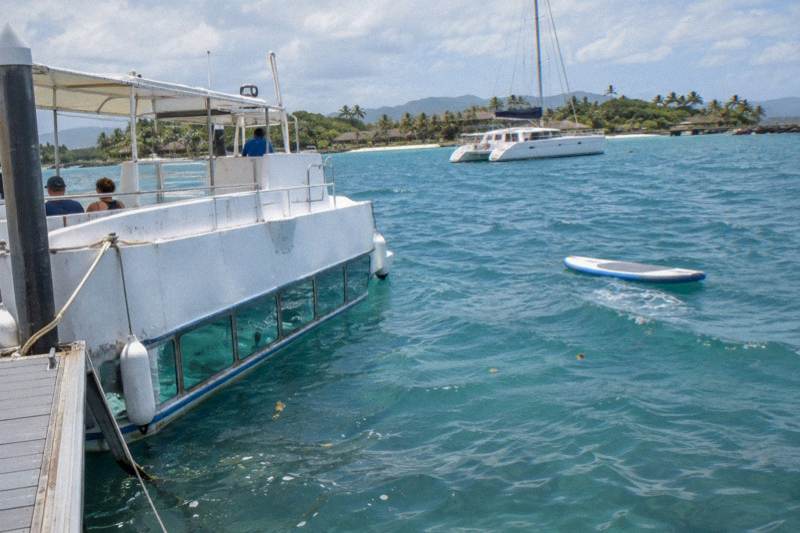
Fiji Island Day Trip In The Rainy Season
The Fiji rainy season runs November to April, and it changes how you should time an island day trip more than whether you should take one.
Short answer
The Fiji rainy season runs from November to April, with daily temperatures up to 31 °C, higher humidity and short afternoon downpours rather than all-day rain. Mornings are usually the driest window, so a morning trip such as Finding Nemo, from US$65 per person, or a midday half day, from US$108 per person, fits the pattern well.
The showery months change the arithmetic of an island day out more than most visitors expect. The trips themselves run on the same catamarans from the same terminal, and every format on offer in full day island cruises operates through the wet season, so the real decisions are which day, which departure time and which length of trip.
| Fact | Detail |
|---|---|
| Wet season | November to April, warm and humid |
| Wet season temperatures | Up to 31 °C daily, averaging 25 to 26 °C |
| Downpour pattern | Short afternoon falls, not all-day rain |
| Dry season | May to October, averaging 23 to 24 °C |
| Driest window on a wet season day | The morning |
| Morning trip option | Finding Nemo, departing 8.45am, from US$65 per person |
| Midday trip option | Half day, departing 12.15pm, from US$108 per person |
| Weather cancellation refund | Cloud 9 refunds a cancellation made 24 or more hours ahead |
What The Fiji Rainy Season Actually Looks Like
Summer, from November to April, is Fiji's wet season: long warm days, short afternoon downpours and higher humidity, with daily temperatures up to 31 °C and an average of 25 to 26 °C. January and February are the warmest months. Winter, May to October, is the dry season, with shorter sunnier days averaging 23 to 24 °C and rainfall down 50 to 75 percent on the wetter months.
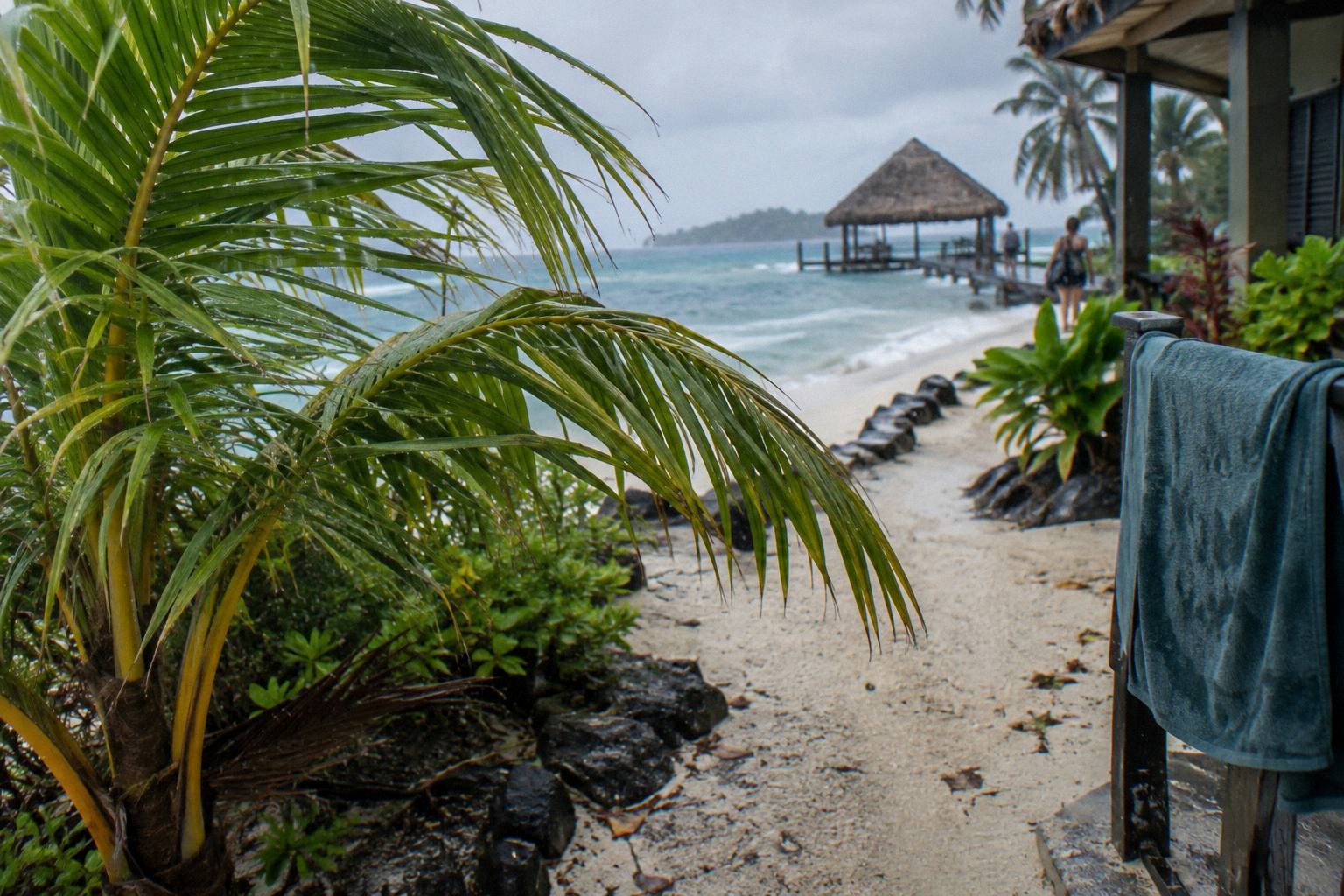
The word "rainy" does a lot of unfair work in that name. The characteristic wet season day in the Mamanuca area is not a washout. It is a hot, bright morning that builds cloud through the middle of the day, empties a heavy burst of rain for a short period in the afternoon, and often clears again toward evening. Downpours of this kind are intense and brief rather than persistent, which is why the pattern matters more than the totals.
Humidity is the part first-time visitors underestimate. With temperatures in the high twenties and moisture in the air, the middle of the day feels heavier than the thermometer suggests. That is an argument for swimming, snorkelling and paddle boarding in the late morning, and for shade, lunch and a drink during the early afternoon build-up. A day trip structure does that naturally, because the buffet lunch sits exactly in the middle of the day.
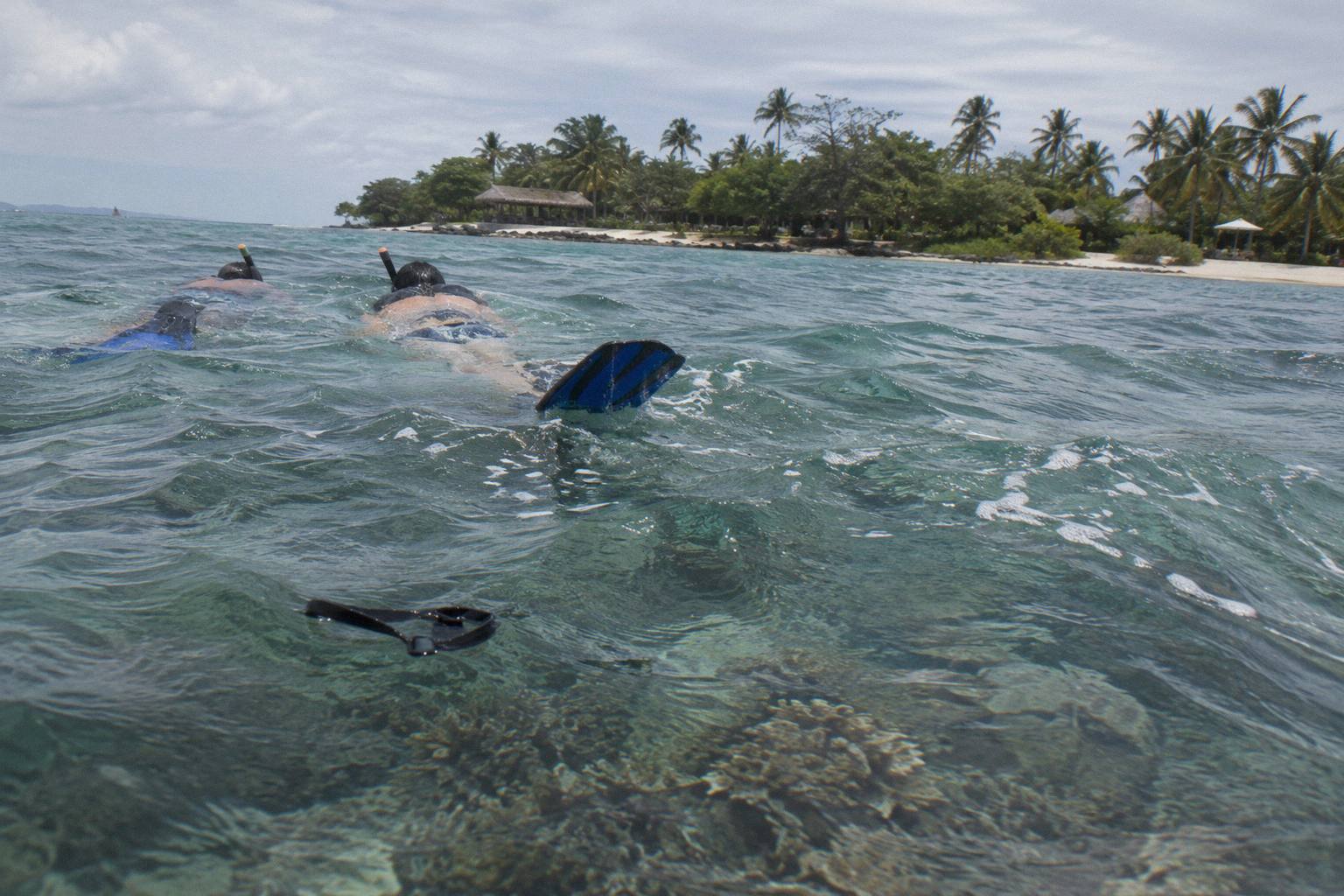
There is also a compensating upside that the wet season name never mentions: the light. A sky that carries cloud produces the saturated, soft tropical light that photographers chase, and the sea around a small island turns from flat bright blue to layered greens and greys as a system passes. Visitors who arrive expecting the postcard glare of August often leave with better photographs from a mixed February sky, simply because the contrast sits lower and the cloud formations give the horizon something to say.
Water temperatures, according to Tourism Fiji's climate guidance, "don't fluctuate much" through the year, so the sea itself feels much the same in February as it does in August. The difference is in the air and the sky, not the water you snorkel in. For a fuller read on month-by-month planning, see our guide to the best time of year for South Sea Island.
Does Rain Actually Ruin An Island Day Trip
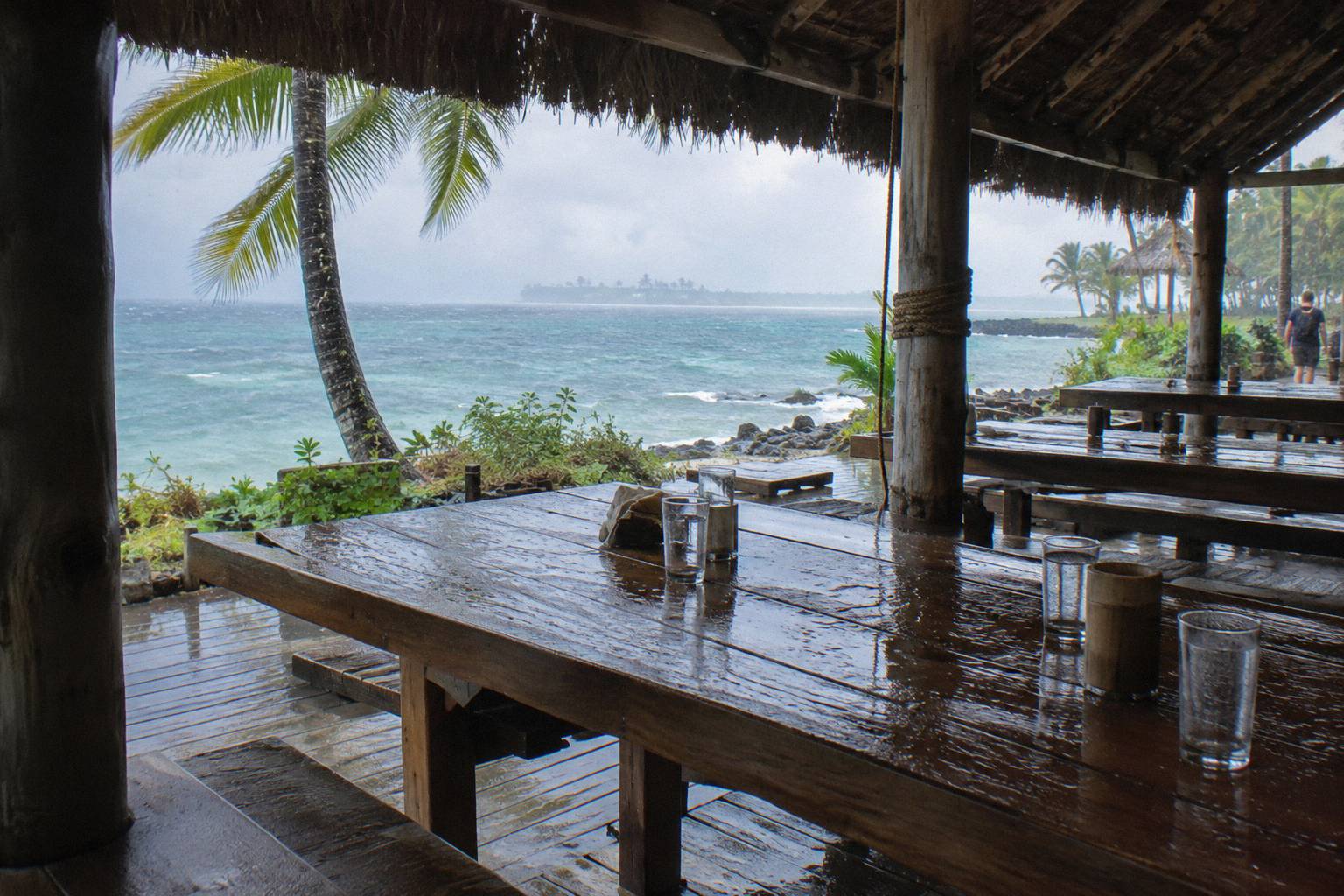
Mostly, no. A short tropical downpour on an island day reads as atmosphere, not disaster: everyone shelters under the buffet awning or the Tipsy Turtle bar roof for twenty minutes, and then the sun comes back out and the island steams dry. The trips that suffer in the wet season are the ones where the rain coincides with the only hours you have ashore, which is a timing problem you can plan around.
Think about what a wet season downpour takes away. Swimming and snorkelling pause while the rain is heavy. Kayaks and paddle boards come back to shore. The meke performance and craft markets, which run daily except Sundays, move under cover or wait out the shower. None of that closes the island, and the saltwater swimming pool fills with rain rather than emptying.
The South Sea Island product is unusually resilient to this pattern for one structural reason: the island is tiny, and the day is long. On the full day timetable you arrive at 10.45am and leave at 4.00pm or 5.15pm, which gives the day enough slack to absorb an hour of rain and still hand back several hours of sunshine. A guest who snorkels at 11am, eats through the early afternoon build-up and snorkels again at 3pm loses almost nothing to a midday burst.
It helps that the wet season is Fiji's low season. The island that feels busy in July has noticeably more breathing room in February, and the complimentary gear, the snorkels, the paddle boards and the kayaks, is easier to get your hands on when fewer day guests are competing for it. The meke performance and the craft market feel more like a village afternoon than a queue. Rain, in other words, thins the crowds that sunshine attracts.
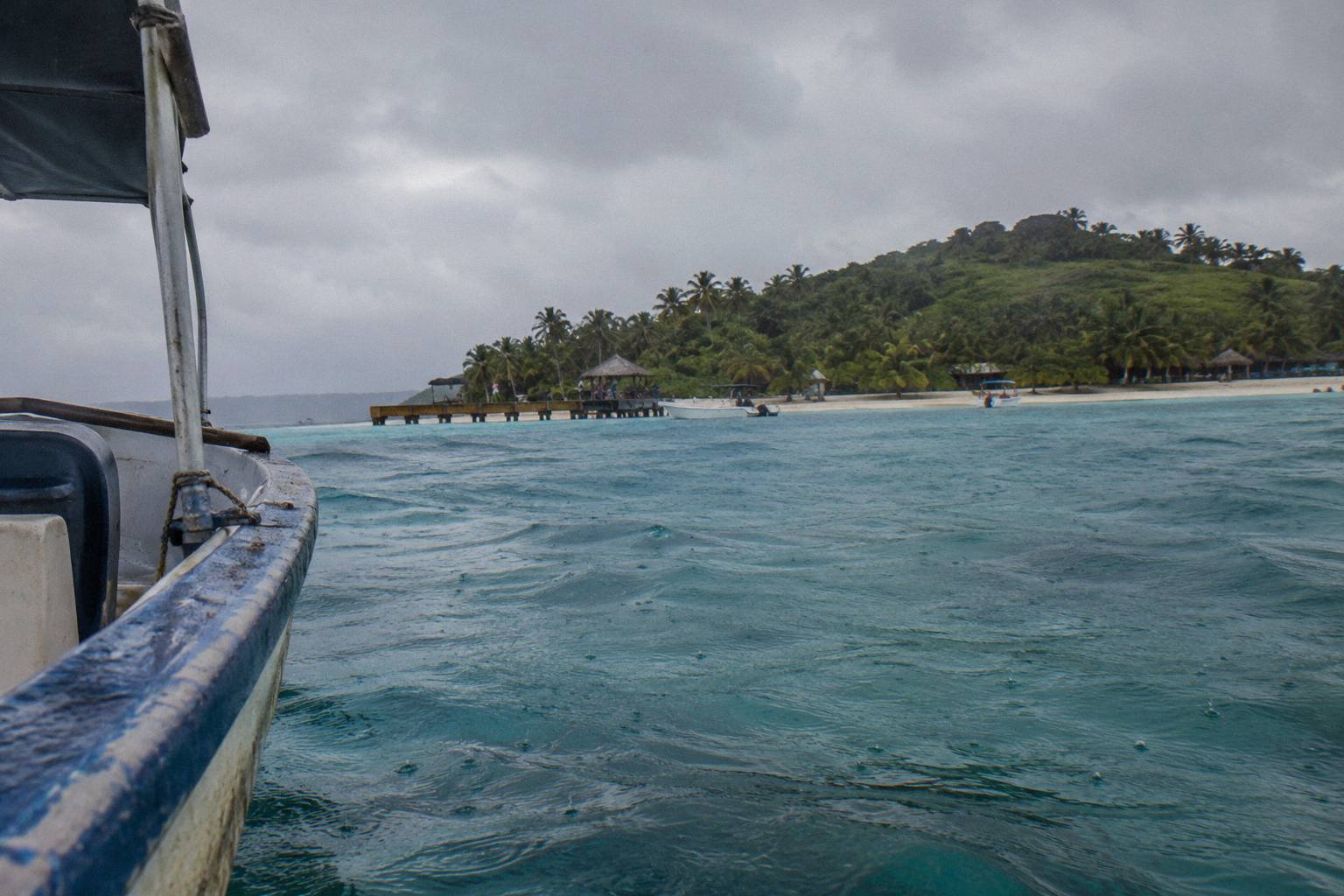
The vessel adds another layer of protection. The catamaran has an air-conditioned lounge and open-air outer decks, so even the crossing in drizzle is comfortable rather than miserable. The tender ride from catamaran to island is short, and guests arrive wet from the sea anyway on most days, which is why the packing advice for a wet season trip is the same as for a dry one: swimwear, towel, sunscreen and hat, and footwear or reef shoes.
Which Trip Format Suits A Showery Day
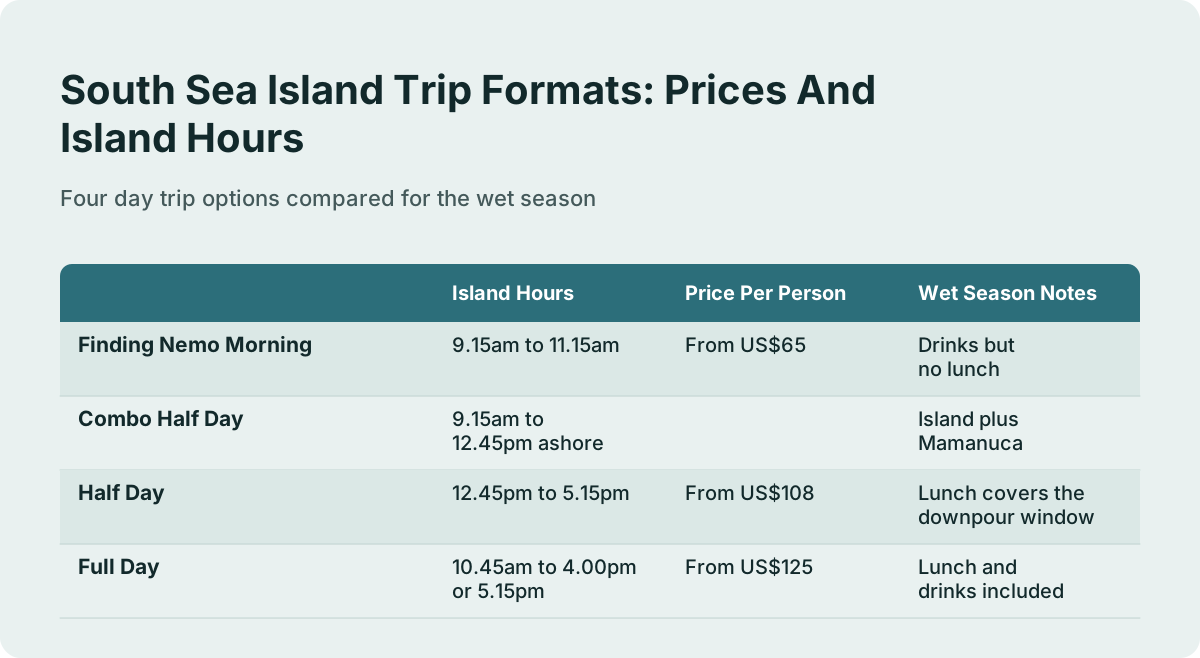
The shorter and earlier your trip, the more of it you place inside the usually dry morning window. Finding Nemo runs 8.45am to 11.45am and catches the best of the day; the half day runs 12.15pm to 6.00pm and straddles the downpour risk; the full day spans both, which is exactly why it works. Prices start at from US$65, from US$108 and from US$125 per person respectively.
There is a neat logic to the timetable in the wet season. The morning trip lands you on the island at 9.15am, when other day guests have not yet arrived, and takes you home at 11.15am, before the typical afternoon build-up begins. The half day does the reverse: it departs at midday and gives you the island from 12.45pm, which means you eat lunch under cover through the most likely shower and swim in the late afternoon clear. The full day, from 10.45am to 4.00pm or 5.15pm, simply holds both windows open.
| Trip format | Island hours | Wet season fit | Notes |
|---|---|---|---|
| Finding Nemo morning | 9.15am to 11.15am | Best: inside the dry morning window | From US$65 per person, drinks but no lunch |
| Combo half day | 9.15am to 12.45pm ashore, back 3.00pm | Strong: morning island time, midday sightseeing cruise | Island plus a Mamanuca sightseeing run |
| Half day | 12.45pm to 5.15pm | Good: lunch covers the downpour window | Departs 12.15pm, from US$108 per person |
| Full day | 10.45am to 4.00pm or 5.15pm | Most flexible: absorbs a shower and keeps going | From US$125 per person, lunch and drinks included |
Amounts are US dollars and vary by date and group.
The combo deserves a special mention in the wet season, because its structure hands you two different weathers in one ticket. You get about 3.5 hours on the island from 9.15am, largely in the morning window, and then the boat spends the early afternoon cruising through the Mamanuca Islands while it drops off and picks up resort guests. If the sky opens at 1pm, you are watching it from an air-conditioned lounge with free Wi-Fi rather than sheltering under a palm. Our combo half day guide unpacks that itinerary hour by hour.
A mandatory per-person fuel surcharge applies for travel from 3 November 2026 until further notice, reviewed monthly, and it is payable online before departure or at check-in. Children aged 5 to 15 pay a lower rate than adults on South Sea Island, and infants 4 and under travel free. The surcharge sits outside the quoted price on some booking pages, so expect it at checkout rather than treating it as a surprise.
The full day product, South Sea Island with lunch and drinks for the whole day, rates 4.5 from 296 reviews and includes the BBQ buffet lunch, local beer, house wine, filtered water and soft drinks while you are on the island. In the wet season that inclusion matters more than in August: when a shower rolls through at lunchtime, the buffet at the open-air rustic tables is already where you were going to be.
Morning Or Afternoon: Timing Logic For The Wet Months
Take the morning. Wet season rain in the Mamanucas is concentrated in the afternoon, so a departure at 8.45am buys you the most reliable weather of the day, and the Finding Nemo guests who arrive at 9.15am have the island mostly to themselves because the other day guests do not land until 10.45am. The trade is simple: the shortest trip against the driest hours.
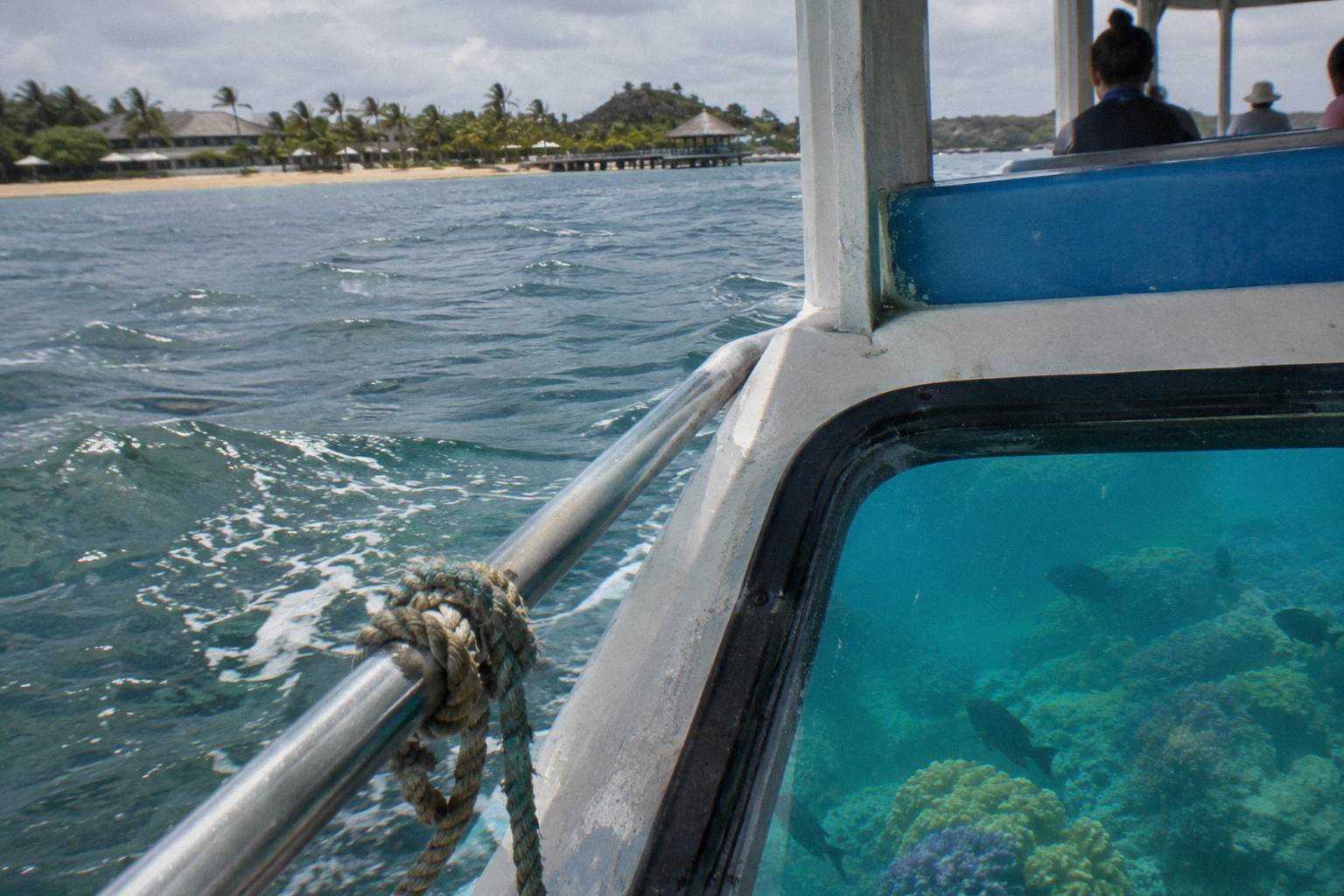
The Finding Nemo trip is the clearest expression of this logic. It departs Port Denarau at 8.45am, arrives at 9.15am, and leaves at 11.15am, so the whole island stint sits before the classic build-up. It lists drinks but no lunch, which fits a morning format: you are back at the terminal by 11.45am with the rest of the day to eat on the mainland. On the island, the semi-submersible coral viewer runs for the underwater view without getting wet, which is a genuine option while cloud sits on the water.
The afternoon half day takes the opposite bet, and it is not a bad one. Departing at 12.15pm means lunch covers the peak shower risk, and the hours from 2pm to 5.15pm on the island frequently deliver a washed-clean sky. Locals will tell you the rain clears as fast as it arrives. The risk you accept is that a stubborn afternoon system can sit on the island for the whole of your stint, and there is no second window to recover it.
Families with small children often prefer the morning slot for a different reason: the complimentary Kids Club runs for ages 3 to 12 with an adult supervising, and young children hold up better before the humid middle of the day than after it. Our piece on taking South Sea Island with kids works through that in detail, and the same timing logic applies with extra force between November and April.
What About Cyclones In The Wet Season
The Fiji Meteorological Service outlook for the 2026-27 season expects eleven to fifteen tropical cyclones in its area of responsibility between November 2026 and April 2027, against around seven in an average season, with the peak usually falling in January and February. That is a forecast for the whole South Pacific region, not a prediction your particular day trip will be hit, but it is the reason weather clauses matter when you book in the wet months.
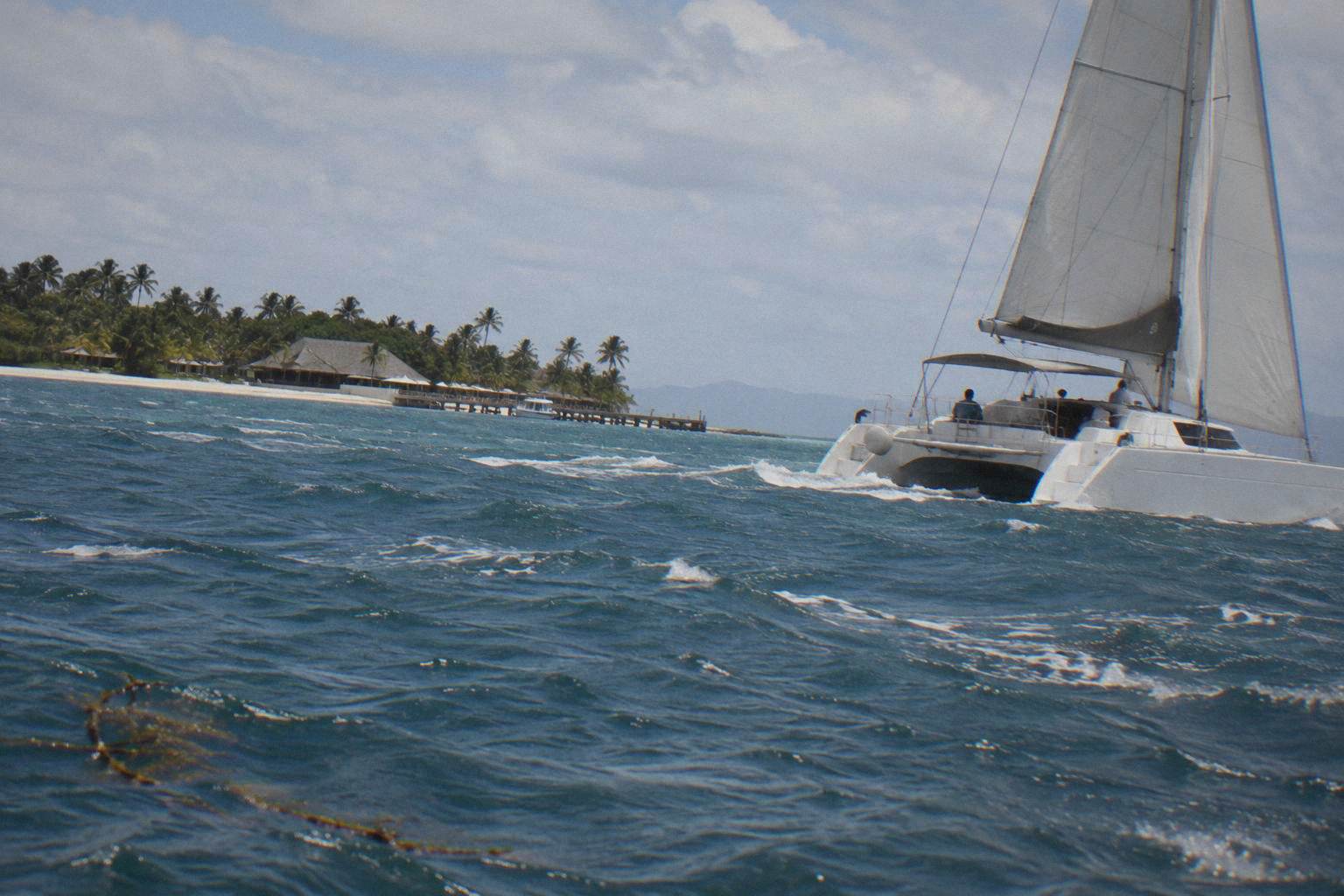
The Fiji Met Service's climate pages track each system as it forms, and a named cyclone approaching the Mamanucas is a days-ahead event with warnings, not a surprise on the pier. Day cruises simply do not sail into one. The operator's terms reserve the right to cancel departures, arrange alternative transport and vary itineraries when conditions require it, and a full cancellation of a Cloud 9 day trip made 24 or more hours ahead for adverse weather is refunded.
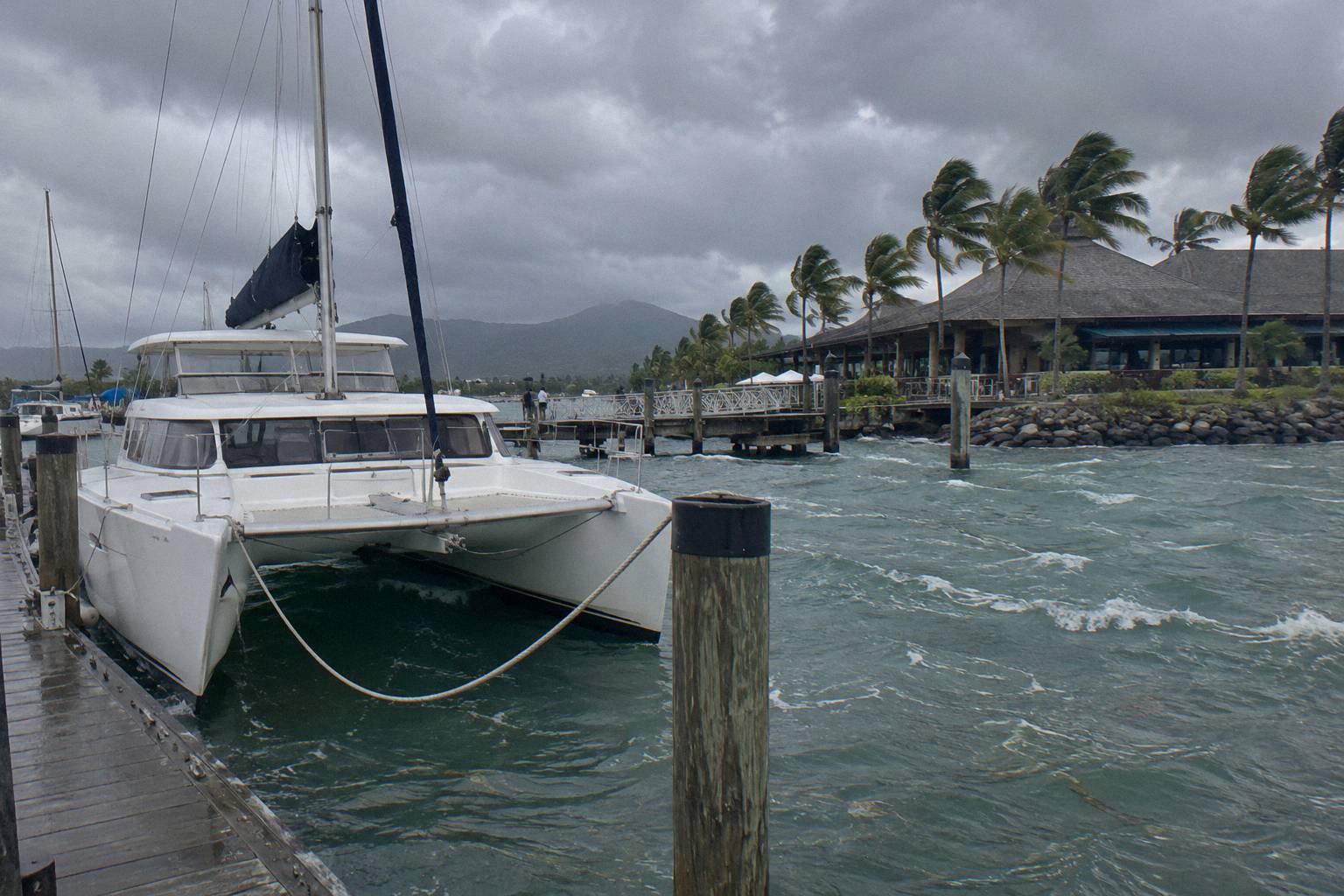
It is worth being precise about what the eleven to fifteen figure covers, because it is easy to misread. The outlook is issued for the Fiji Met Service's area of responsibility across the region, not for one island group, and most of those systems never come near the Mamanucas at all. The practical takeaway is not "avoid Fiji in January" but "know where the forecast lives and keep your booking flexible." The peak months of January and February are also the warmest of the year, with the wet season's daily highs up to 31 °C, which is exactly why they feel quieter on the water.
The practical version of this for a visitor is: keep an eye on the forecast in the 48 hours before your trip, know your cancellation window, and do not book the one non-refundable thing on the one day a system is passing. South Sea Cruises trips can be cancelled free up to 24 hours before they start, which covers most realistic scenarios short of a same-day change of plan. For what happens to your money when the weather turns, our piece on what happens when a Fiji day cruise is cancelled for weather lays out the mechanics.
A stable morning inside the wet season can still be scrubbed for a sailing trip before it is scrubbed for a big catamaran, which is one reason the Captain Cook Tivua day, 4.5 from 448 reviews at from US$107 per person, is worth holding as an alternative. It departs Port Denarau Marina at 10am and returns at 5pm with morning and afternoon tea, a BBQ lunch and a guided marine-biologist snorkel.
For budgeting the whole wet season week, our breakdown of what a Fiji island day trip costs keeps the arithmetic in one place.
What Trips People Up Before You Book
The mistakes are almost all timing mistakes: booking a 3pm-anchored activity on a wet season afternoon, assuming the quoted price is the whole price, and forgetting that the half day coach pick-up only covers Denarau, Nadi and Wailoaloa hotels. Get the departure window, the surcharge and the pick-up zone right, and the wet season rewards you with cheaper-feeling crowds and warm rain that ends quickly.
The first trap is anchoring your whole day to the afternoon. Visitors book a late spa treatment, a sunset dinner reservation or a flight at 7pm and then squeeze the island into the wettest hours. The timetable is your friend here: check-in at the South Sea Cruises desk at the Port Denarau Terminal opens 30 minutes before departure, and Port Denarau Marina is 20 minutes from the international airport and 10 minutes from Nadi town, so the margins are tighter than people assume.
The second trap is the price. From-prices are US dollars and vary by date and group, the fuel surcharge sits outside them, extras on the island cost more, and card payments through the operator carry a small non-refundable admin fee. Bring cash or a card for the island massage, the Tipsy Turtle premium bar, merchandise and the shell market, and read the details in the price and fuel surcharge guide before you commit.
The third trap is pick-up geography. The half day coach covers most Nadi, Denarau and Wailoaloa hotels only. The full day adds Vuda, Natadola, Sonaisali, Momi Bay and Coral Coast hotels. Finding Nemo and the Combo run from Nadi, Denarau and Wailoaloa only. If your accommodation sits outside your chosen trip's zone, you are driving yourself to the terminal, and the coach pick-up times sit on the operator's timetable rather than in your booking confirmation until closer to the day. Our hotel pick-up and transfers guide maps the zones.
A fourth trap deserves its own line: treating the semi-submersible coral viewer as guaranteed. It is subject to availability on the combo, and there is no refund if it is out of service for maintenance or repairs. In the wet season, when cloud can dim the underwater view on some crossings anyway, book the trip for the island and the snorkelling, and let the viewer be a bonus if it is running.
| Common wet season mistake | What happens | The fix |
|---|---|---|
| Booking only the afternoon ashore | Peak shower risk lands on your only island hours | Choose a morning or full day format |
| Forgetting the fuel surcharge | A per-person charge appears at checkout | Budget for it alongside the from-price |
| Assuming all coach zones are equal | Half day pick-up excludes Coral Coast hotels | Match your hotel zone to the trip before booking |
| Expecting the semi-submersible always to run | No refund if it is out for maintenance or repairs | Treat it as a bonus, not the reason you booked |
| Ignoring the 24-hour cancellation window | A weather-driven change of plan costs money | Decide by 24 hours before departure |
Packing And Planning For A Shower-Prone Day
Pack almost exactly as you would for a dry season day, with two additions: a light dry layer for the air-conditioned lounge, and a waterproof pouch or bag for the phone and wallet you carry on the tender. The staples do not change, and they are swimwear, a towel, sunscreen and a hat, footwear or reef shoes, and cash or card for the extras on the island.
Reef-safe sunscreen belongs on the list in every month, and a wide-brimmed hat earns its space in the wet season sun, which burns fast between showers. Footwear or reef shoes matter more when the ground is wet, because paths and decks become slick within seconds of a burst. A full checklist lives in our what to bring to South Sea Island guide.
The tender deserves a moment of thought. Guests move from the main catamaran to the island by a short tender boat ride, and on a wet day that ride happens with rain on top of spray. Phones, passports and anything paper should live in the waterproof pouch from the moment you board the coach, not from the moment the sky darkens, because the wet season has a habit of producing its first drops while you are still mid-crossing and nowhere near your bag on the boat.
| Item | Why it matters in the wet months |
|---|---|
| Dry bag or waterproof pouch | Protects phone and card on the tender ride |
| Light layer | The air-conditioned lounge runs cool after a hot deck |
| Reef shoes | Wet paths and coral shallows |
| Towel and change of clothes | You will be wet from rain and sea, not just the sea |
| Cash or card | Tipsy Turtle bar, massage, merchandise, shell market |
One last planning note: the wet season is also Fiji's low season, and South Sea Island Cruises still runs every day of it. The island that feels busy in July has noticeably more room in February, and the water is just as warm. The guests who enjoy the wet months most are the ones who booked the morning, packed the dry bag and let the afternoon shower happen around lunch instead of around their only swim.
Common Questions About Wet Season Day Trips
Is The Fiji Rainy Season A Bad Time For An Island Day Trip?
No. The wet season brings short afternoon downpours rather than all-day rain, with daily temperatures up to 31 °C and water temperatures that barely change through the year. A morning or full day format places most of your island time outside the typical shower window.
What Time Of Day Does It Rain Most In The Fiji Wet Season?
Afternoon. The characteristic pattern is a long warm morning, cloud building through the middle of the day, and a short heavy burst in the afternoon, often clearing again toward evening. That is why the 8.45am Finding Nemo departure and the midday half day both work well.
Are Cyclones A Reason To Avoid Fiji From November To April?
The 2026-27 outlook expects eleven to fifteen tropical cyclones in the region against around seven in an average season, peaking around January and February. Systems are tracked days in advance, trips do not sail into them, and the 24-hour free cancellation window on South Sea Cruises trips covers most realistic changes of plan.
Which Trip Format Is Best On A Showery Day?
The full day is the most forgiving, because hours from 10.45am to 4.00pm or 5.15pm absorb a shower and still hand back sunshine. The Finding Nemo morning trip from US$65 per person and the combo, which spends the early afternoon cruising the Mamanucas indoors, are strong alternatives.
Does It Rain All Day In The Fiji Rainy Season?
Rarely in the Mamanuca area. Tourism Fiji describes the wet season as long warm days with short afternoon downpours and higher humidity, not continuous rain. On most days the rain passes in a single burst and the island dries within the hour.
Do Day Cruises Get Cancelled For Rain In The Wet Season?
Ordinary rain does not stop a catamaran day trip. Cancellations come with named weather systems and rough-sea conditions, and the operator's terms reserve the right to cancel departures when needed. Cloud 9 refunds a weather cancellation made 24 or more hours ahead.