Sun Safety On A Fiji Boat Day: Reef-Safe Sunscreen And Shade
Fiji's summer days reach 31 °C and the boat ride out to the island is open water the whole way. Bring reef-safe sunscreen, a hat and a plan for shade, and the sun stops being the one thing that can spoil an otherwise perfect island day.
Short answer
Bring reef-safe sunscreen and reapply it through the day, because Fiji's wet season runs November to April with daily temperatures up to 31 °C, and the dry season still averages 23 to 24 °C. The catamaran has an air-conditioned lounge and open-air decks, and the island has a saltwater pool and shade at the rustic lunch tables. The full day trip starts from US$125 per person.
Getting sun right is the difference between a great island day and a painful one, and the decisions happen before you leave the hotel. Everything below applies to the full day island cruises that run from Port Denarau out to the Mamanuca Islands, and it works the same way for the half day and morning options.
| Fact | Detail |
|---|---|
| Summer wet season | November to April, daily temperatures up to 31 °C, average 25 to 26 °C |
| Winter dry season | May to October, average 23 to 24 °C, most days 19 to 28 °C |
| Warmest months | January and February |
| Coolest months | July and August |
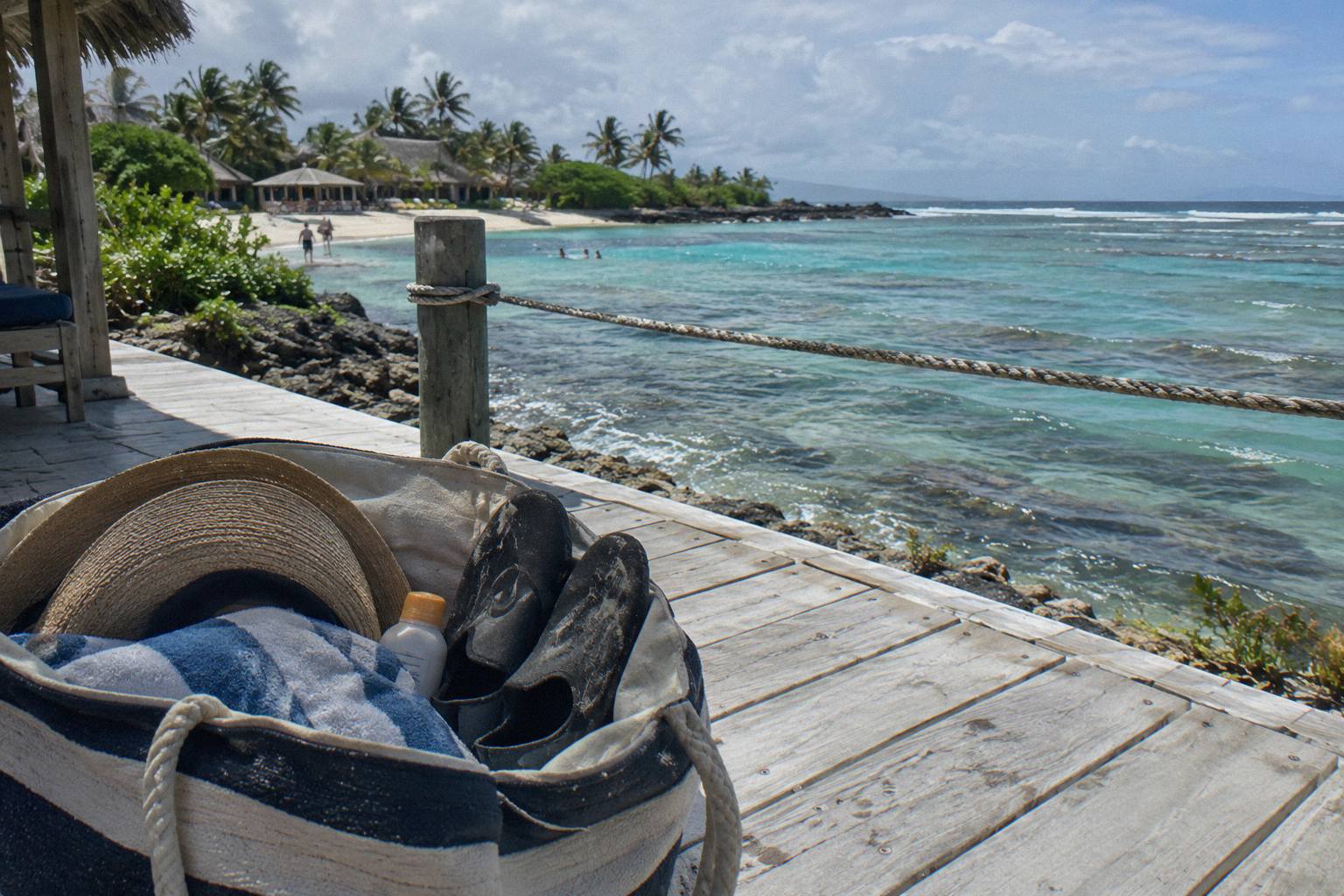
| Sun kit basics | Reef-safe sunscreen, hat, towel, swimwear, footwear or reef shoes |
| Shade on the vessel | Air-conditioned lounge and open-air outer decks |
| Shade and cover on the island | Saltwater swimming pool, open-air rustic lunch tables |
| Full day trip price | From US$125 per person |
What Does Reef-Safe Sunscreen Mean For A Fiji Day Cruise?
Reef-safe sunscreen means a product formulated without ingredients that harm coral, and on a Fiji day cruise it matters because you will be swimming and snorkelling directly over reef. Bring reef-safe sunscreen and nothing else, pack enough for several applications across the day, and apply it before you board rather than at the island. The trip includes complimentary snorkel gear, stand-up paddle boards and kayaks on South Sea Island, so most of your day is spent in and on water that sits right against living coral. A sunscreen choice made at home is the single easiest thing you can do for the reef you have come to see.
The operator's own guidance on what to bring is short and practical: cash or card for extras, towel, swimwear, sunscreen and hat, and footwear or reef shoes. Sunscreen and hat sit together on that list for a reason. On the water, sun reaches you twice, once from the sky and once reflected off the surface, and a hat alone does not cover the sides of your face and neck on a moving boat.
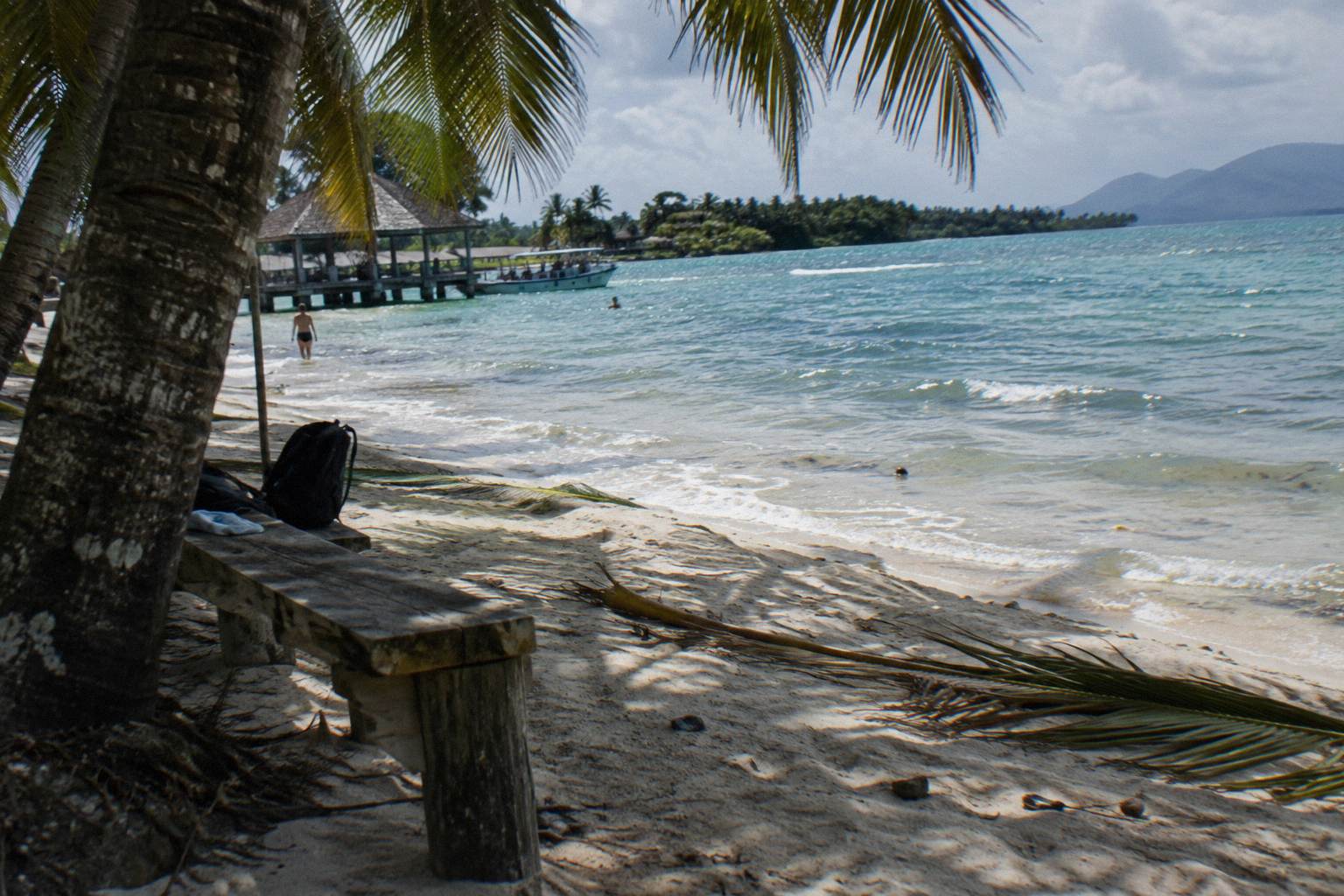
No sunscreen rule is written into Fijian law that can be quoted here, so treat reef-safe as a preparation choice rather than a legal requirement. What is certain is the setting. The snorkelling at South Sea Island works even at low tide, the island is small enough to walk around quickly, and there is very little that separates you from direct sun except the shade you bring with you or choose to sit under.
For a fuller packing rundown that goes beyond sun protection, read the companion piece on what to bring to South Sea Island, which covers footwear, towels and the extras that cost money on the island.
How Strong Is The Fiji Sun On A Mamanuca Boat Day?
The Fiji sun is strong enough to burn in every month of the year. Wet season days from November to April reach up to 31 °C, and even the cooler dry season months of July and August mostly sit between 19 and 28 °C, so there is no time of year when sun protection becomes optional on a boat day. Rainfall drops 50 to 75 percent in the dry season compared with the wetter months, which means clearer skies and more direct sun, not less need for sunscreen. Winter is when visitors are most often caught out.
The wet season brings long warm days with short afternoon downpours and higher humidity. That pattern matters for planning: a cloudy morning can turn into blazing sun by early afternoon, and the full day trip does not leave the island until 4.00pm or 5.15pm, so you are out in the brightest part of the day regardless of how the morning began. Tourism Fiji's climate guide gives the seasonal ranges quoted above and is the reference worth reading before you choose a travel month.
| Season | Months | Typical day | What it means for sun safety |
|---|---|---|---|
| Wet season (summer) | November to April | Up to 31 °C, average 25 to 26 °C, short afternoon downpours | Humidity makes sweat rinse sunscreen off; reapply after swimming |
| Dry season (winter) | May to October | Average 23 to 24 °C, most days 19 to 28 °C | Clearer skies and 50 to 75 percent less rain than the wet months; the easiest days to burn without noticing |
Reflected light deserves a line of its own. On the crossing, which takes about 30 minutes on the 8.45am timetable and 45 minutes on the 10.00am timetable, the sea acts like a mirror for the sun. Knees, the underside of your chin, the backs of your hands and the part line in your hair all catch light that never comes from above. People who burn nowhere else often burn exactly there on a boat.
If you are still deciding when to travel, the longer comparison of South Sea Island weather and the best time to go breaks the year down month by month against the trip timetable.
Building Your Sun Kit For The Island Day
A workable sun kit is reef-safe sunscreen in a quantity that allows four or more applications, a wide-brimmed hat that will not blow off, a rash shirt or long-sleeve swim top for the water, sunglasses with a strap, and footwear you can walk on hot sand and rough coral in. That is the whole list, and each item earns its place across a day that runs from roughly 10.45am on the island until 4.00pm or later. Nothing exotic is needed, only enough of the basics.
Reapplication is where most kits fail. The full day includes swimming, paddle boarding, kayaking and a saltwater pool, and every one of those activities removes sunscreen. A single morning application is not a plan. Put the first coat on at the hotel before the coach, reapply after the crossing, again before lunch, and again mid-afternoon. The BBQ buffet lunch is served at open-air rustic tables, which gives you a natural shaded pause to do it.
| Situation | What the sun is doing | What goes in the kit |
|---|---|---|
| The catamaran crossing | Direct sun plus reflection off open water | Hat with a strap, sunglasses, sunscreen on face, neck, ears, hands, knees |
| Swimming and snorkelling | Full-body exposure over reef | Reef-safe sunscreen, rash shirt or long-sleeve swim top |
| Paddle boards and kayaks | Standing exposure, reflection off the water surface | Hat, sunscreen reapplication before you go out |
| Lunch at the rustic tables | Peak midday sun, partial shade | Sit in shade, reapply, drink water |
| Waiting for the return tender | Low afternoon sun, still strong | Hat back on, one more application |
A word on quantity. Travel-size tubes run out. A full day group of four, reapplying properly, will use far more sunscreen than most people expect, and while the island sells merchandise at the shell market and craft stalls, building the day around buying sunscreen there is not a plan. Pack a full-size bottle of reef-safe sunscreen in the shared bag and a small one in the day pack.
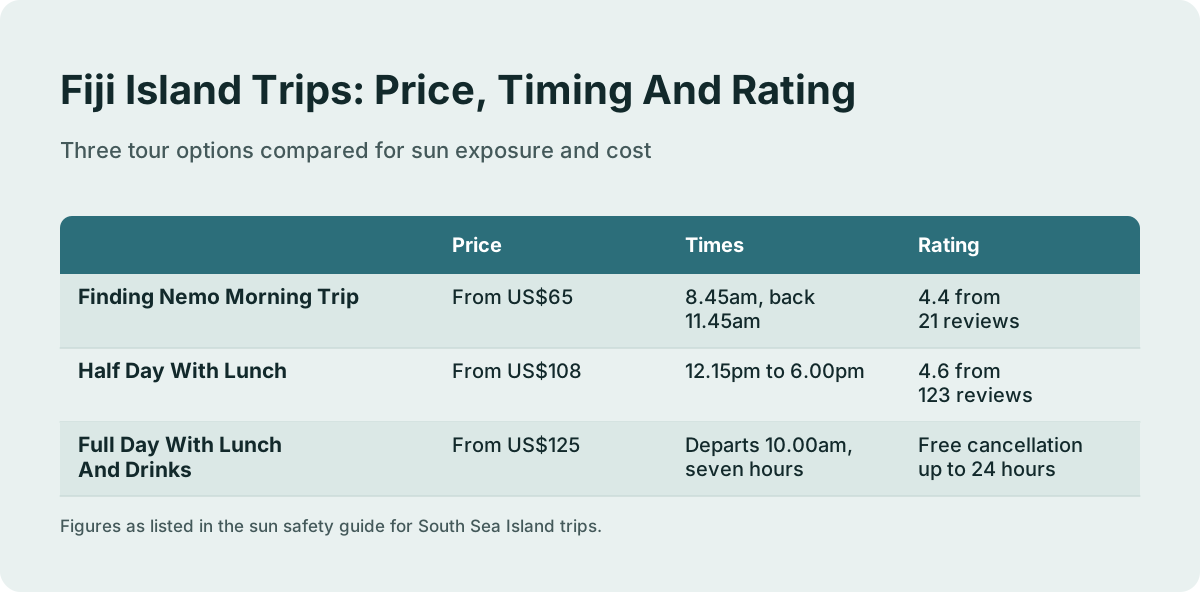
The trips below all include the same island, the same complimentary gear and the same shade options, but very different amounts of time in the sun, which is worth weighing before you book.
Shade, Decks And Timing On The Catamaran
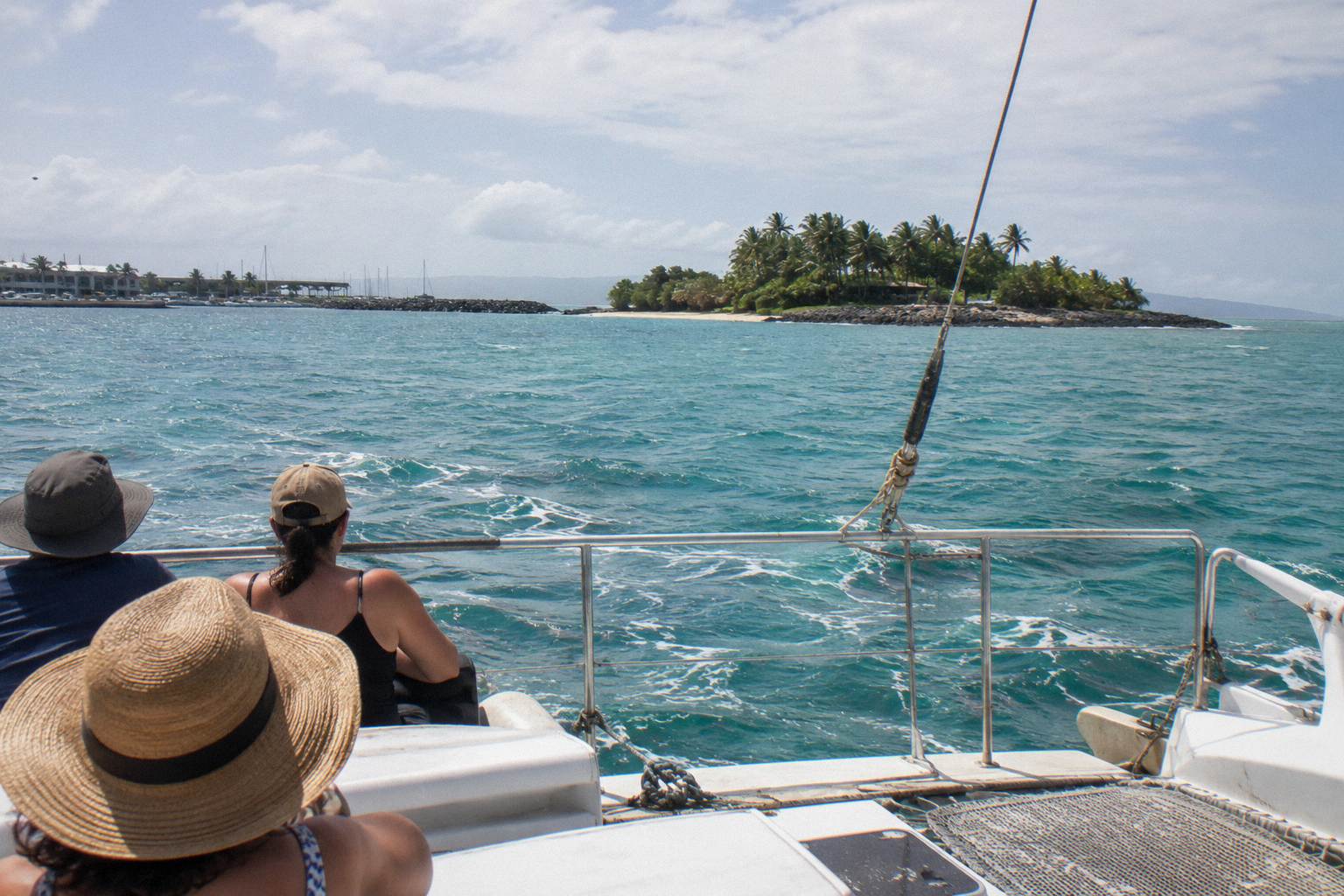
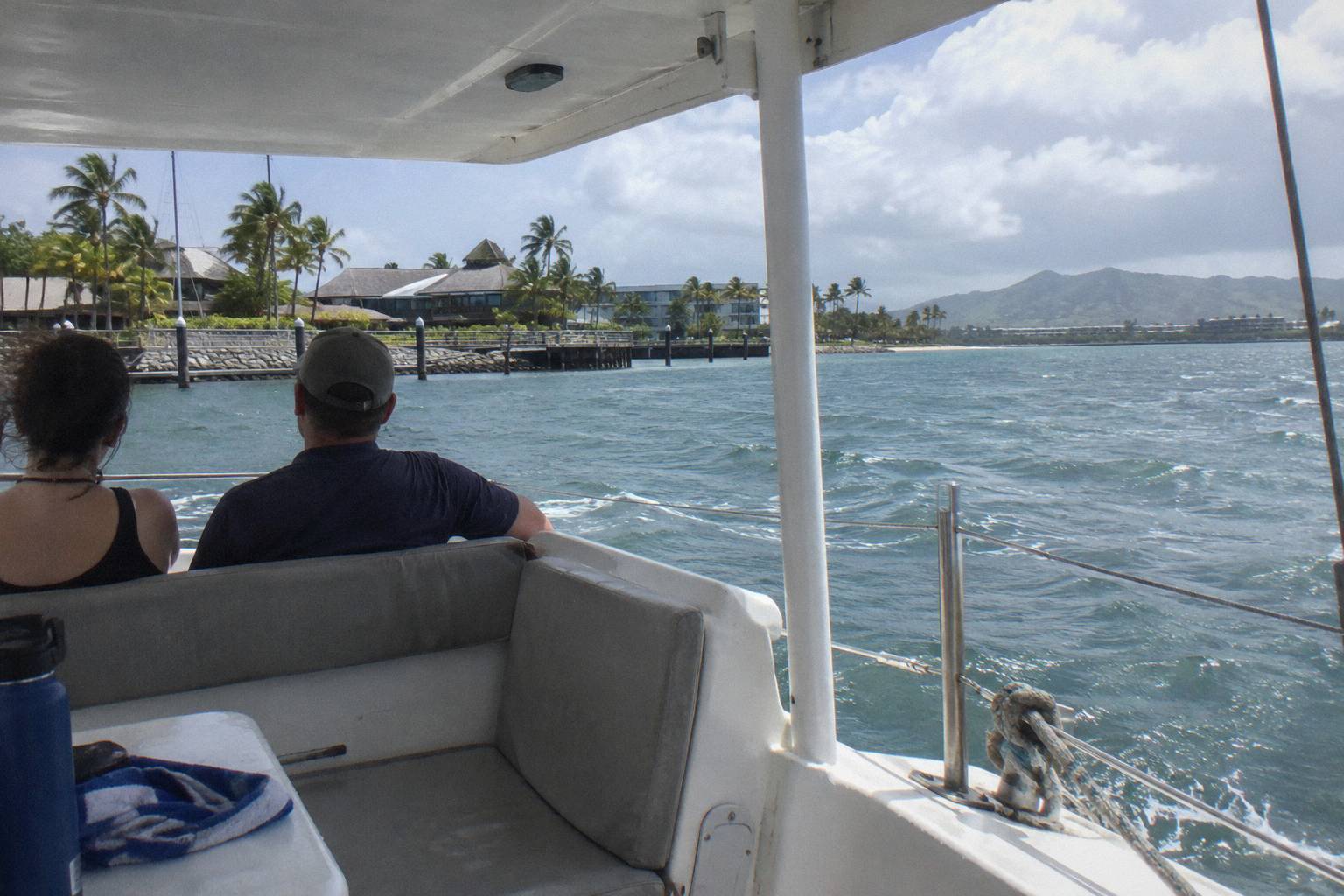
Yes, the catamaran offers real shade and deck space: an air-conditioned indoor lounge provides a cool escape on every leg of the crossing, while open-air outer decks let you enjoy sea views and sunshine. Free Wi-Fi is available on board, so you can relax, stay connected, and move between shaded indoor seating and open decking as conditions and timing suit you. The smart move is to alternate. Take the open deck for the views on the way out, the lounge for the hottest hour, and the deck again as the afternoon light softens. Sitting outside for the entire crossing, twice, in the middle of a Fijian day is how people arrive at the island already pink.
Timing matters as much as shade. The Finding Nemo morning trip departs 8.45am, arrives 9.15am and is back at 11.45am, which keeps almost the whole trip out of peak sun. The half day departs 12.15pm and does not return until 6.00pm, which puts the entire island stay inside the brightest hours. The full day, departing 10.00am, covers everything from late morning to late afternoon. The operator's South Sea Island page carries the timetable and the current island details.
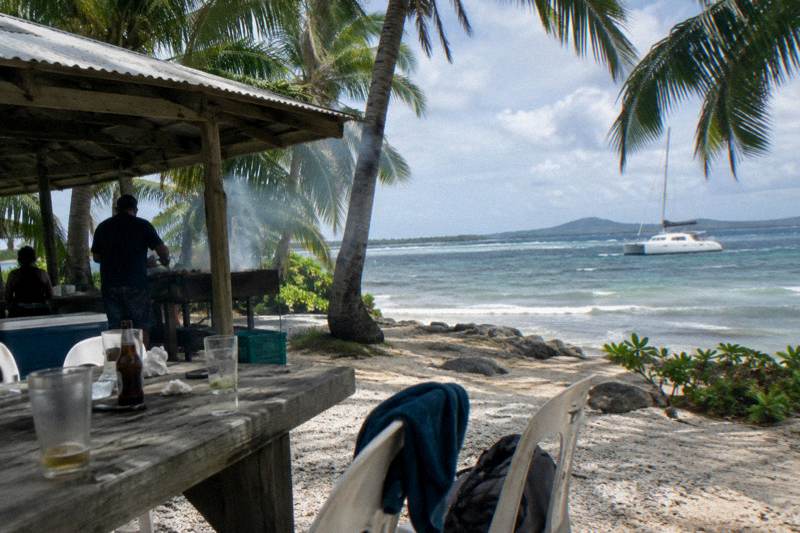
On the island itself the shade options are the open-air rustic lunch tables, whatever the trees offer, and time in the saltwater swimming pool, which keeps you cool without adding sunscreen rinse-off the way sea swimming does. The meke performance and craft markets run daily except Sundays and give another reason to be under cover in the afternoon.
Planning a boat day for someone who wants less sun rather than more? The quietest, coolest option on the roster is the Finding Nemo morning trip, from US$65 per person, rated 4.4 from 21 reviews, back at the marina before midday.
If instead you want the longest day and will manage the sun yourself, the full day trip with lunch and drinks, from US$125 per person, is the flagship: coach transfers from most Nadi, Denarau and Wailoaloa hotels, about six hours of island time, and free cancellation up to 24 hours before start. You can check availability once you know your dates, and read more about what the full day trip includes.
There is a middle path. The half day with lunch, from US$108 per person and rated 4.6 from 123 reviews, gives you the afternoon on the island and skips the mid-morning boat glare, which suits plenty of sun-sensitive travellers.
Sunscreen And Children On The Island Day
Children from 5 to 15 pay child rates on South Sea Cruises trips, infants 4 and under travel free, and the complimentary Kids Club on the island runs for ages 3 to 12 with an adult supervising, so a family day in the Fijian sun needs a deliberate sun plan for the kids, not just the adults. Kids in and out of the water all day lose sunscreen faster than anyone else on the island, and the Kids Club activities happen outdoors. Rash shirts beat repeated sunscreen for torsos, and hats need chin straps for the boat.
The island's layout helps. The saltwater pool is a controlled place for younger children to cool off between applications, and the open-air lunch tables give a shaded spot for the midday break when the BBQ buffet is served. Complimentary filtered water and soft drinks on the island remove the main excuse for children not drinking enough in the heat, and local beer and house wine are there for the adults at the same price of nothing.
Practical sequencing for a family: full sunscreen before leaving the hotel, hats on for the coach and kept on, one adult responsible for the reapplication round before lunch and another after, and reef shoes on every child. Footwear is on the operator's bring list for good reason, since hot sand and rough coral are both part of the day. The guide to South Sea Island with kids covers the rest of the family picture beyond sun care.
| Child age | Travel cost | Sun plan |
|---|---|---|
| 4 and under | Travels free | Rash shirt, shade breaks, hat with strap; toddler sunscreen brought from home |
| 5 to 12 | Child rate; complimentary Kids Club with adult supervision | Rash shirt, reef shoes, scheduled reapplication before and after lunch |
| 13 to 15 | Child rate | Adult-strength routine; they burn quietly, so set the reapplication times |
What If The Weather Turns Or The Day Runs Long?
A wet-season afternoon downpour is normal and short, and it does not usually end the trip: the full day stays on the island until 4.00pm or 5.15pm whatever the sky does, so pack for sun, brief rain and everything in between. The operator's terms allow it to cancel departures and vary itineraries when conditions require, and the booking terms on each trip carry the cancellation detail; the South Sea Island trips listed here offer free cancellation up to 24 hours before start. The bigger tropical picture is worth knowing too: the Fiji Met Service outlook for November 2026 to April 2027 puts eleven to fifteen tropical cyclones in its area of responsibility, against around seven in an average season, with the peak usually January to February. The Met Service's climate pages are the place to watch if you travel in those months.
Cloudy does not mean safe. A thin wet-season cloud layer still passes a large share of the sun's burning energy, and the reflected light off the lagoon barely changes at all. Some of the worst burns on boat days happen in exactly the weather people stop worrying about. Treat the sunscreen routine as fixed and the weather as scenery.
One fuel-related note that affects budget rather than sun: a mandatory per-person fuel surcharge applies for travel from 3 November 2026 until further notice, reviewed monthly, payable online before departure or at check-in, with children 5 to 15 paying a lower rate on South Sea Island. No amount is given here because it is set at checkout; read the price and fuel surcharge explained guide for how it works.
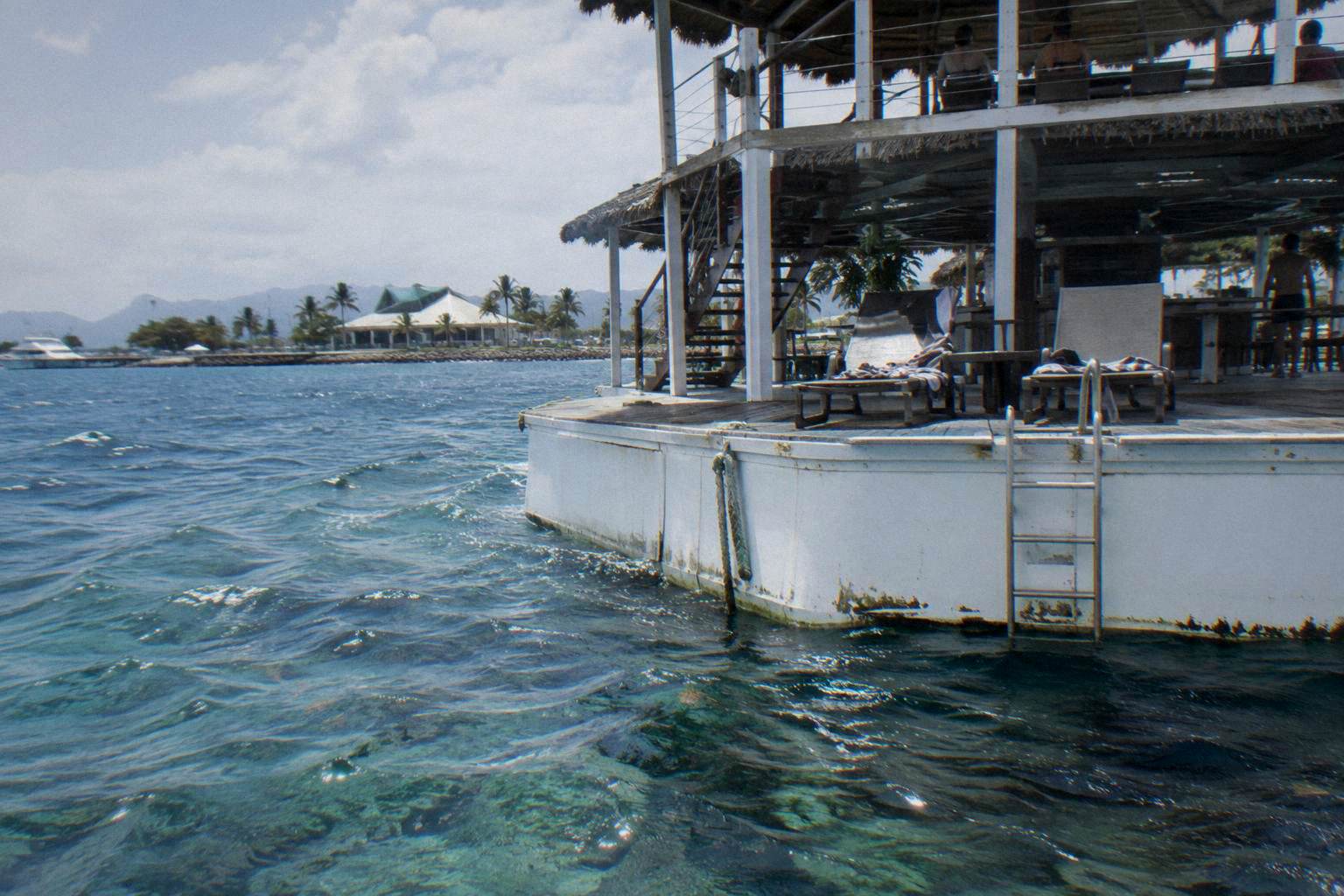
Not every boat day in Fiji is a catamaran to a shaded island. The Cloud 9 floating platform day trip, rated 4.6 from 155 reviews, is an open-water crossing of about 60 minutes to a two-level bar and pizzeria on a reef with no lockers on board, strong currents possible and children under 10 not suitable, so sun preparation there is a different and stricter discipline.
For the shorter, sun-managed island options, the half day with lunch keeps the trip inside a single afternoon and includes the same complimentary drinks and gear on the island as the full day.
Sun Protection At The Snorkel Site
Yes, you need serious sun protection while snorkelling, because the water keeps you cool while the sun keeps working on your back, shoulders and the backs of your legs, all of it reflected upward from below. A rash suit or swim shirt plus reef-safe sunscreen on exposed skin is the reliable combination. Complimentary snorkel gear is part of every South Sea Island trip, and the reef sits close enough to the beach that people stay in the water far longer than they planned. The fix is simple: a full reef-safe application before you get in, a rash shirt for anything longer than twenty minutes, and another application when you come out.
The semi-submersible coral viewer gives a genuinely shaded alternative. It runs on the island's schedule and no refund applies if it is out of service for maintenance or repairs, but when it runs it is the one reef experience where the sun is not part of the equation. For anyone travelling with a person who burns in minutes, alternating between the coral viewer, the saltwater pool and the shaded lunch tables can carry a whole full day comfortably. The wider snorkelling picture, including the marine reserve snorkelling at Kuata and the glass-bottom boat on the Captain Cook Tivua day, is covered in the guide to snorkelling on a Fiji day cruise.
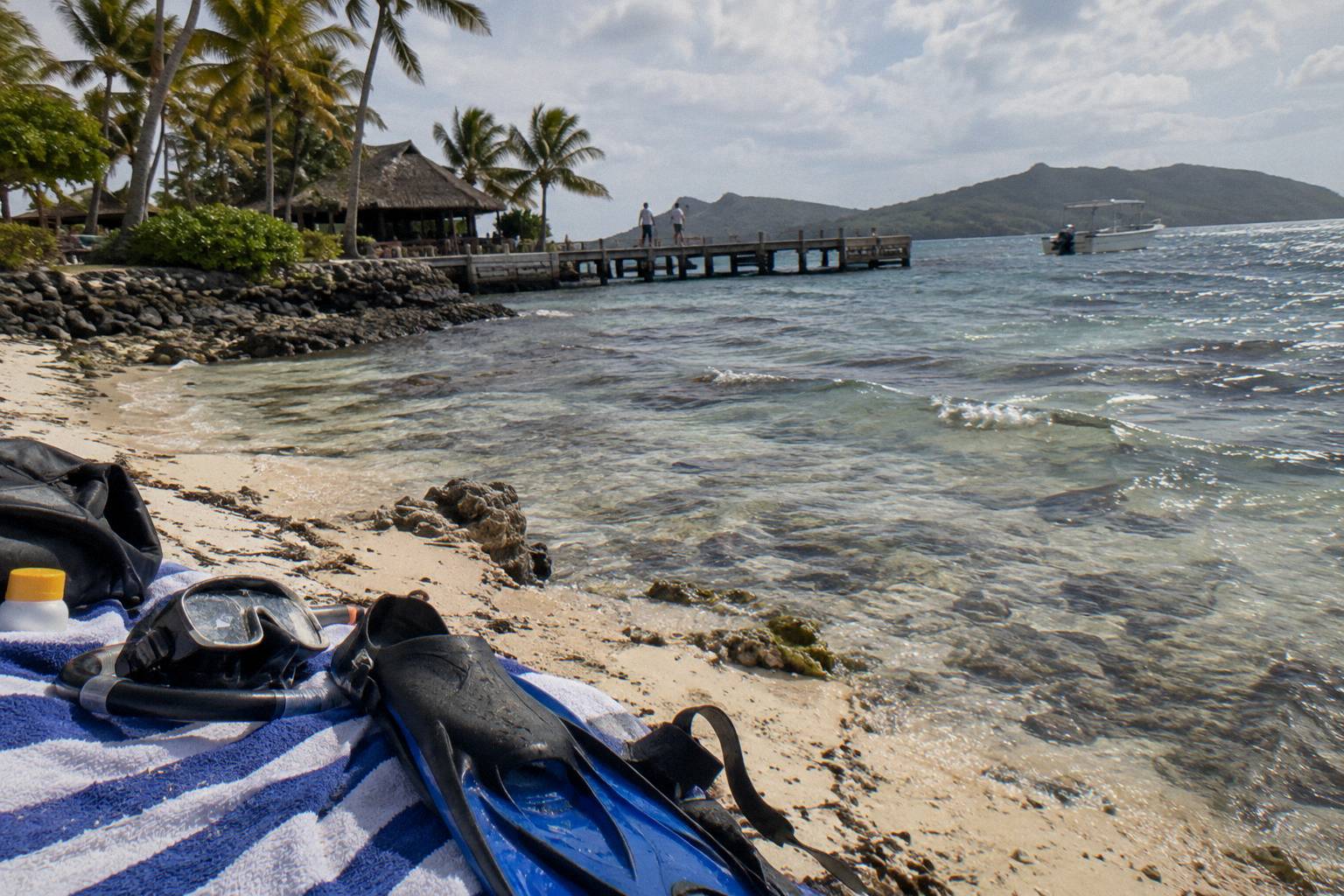
Swimming works even at low tide, so there is no natural break in water time. Set the reapplication clock by the trip, not by how you feel: before the crossing ends, before lunch, after lunch, and before the last swim. Thirst is a late signal in tropical humidity, and the complimentary filtered water on the island makes the easy habit possible.
What Trips People Up Before They Step On The Boat
The mistakes are consistent: one application of sunscreen for a whole day, no hat that survives wind, no shirt for the water, treating cloud cover as protection, and forgetting that the return crossing happens in the late afternoon sun with a body that has already taken a full day of it. Every one of these is avoidable with a five-minute packing check the night before. The day is long, the sun is constant, and the island is small with limited deep shade, so the people who enjoy it most are the ones who prepared rather than improvised.
| Mistake | What goes wrong | The fix |
|---|---|---|
| One sunscreen application at the hotel | Burns by early afternoon, four or more hours still to go | Full-size reef-safe bottle in the shared bag; four applications |
| A cap instead of a brimmed hat | Ears, neck and the lower face burn on the crossing | Wide brim plus a strap for boat wind |
| Snorkelling in a bikini top for an hour | The classic snorkel burn across the back and shoulders | Rash shirt or long-sleeve swim top |
| Trusting cloud cover | Wet-season cloud still passes burning energy | Same routine whatever the sky looks like |
| Skipping the reapplication after the pool | Salt water strips sunscreen fast | Reapply after every swim, pool included |
| No plan for the return crossing | Peak cumulative burn at 4.00pm to 6.00pm | Shade in the lounge, hat on, one more application |
Two smaller traps are worth a clause each. Card payments through the operator carry a small non-refundable admin fee, and the extras on the island, from the massage to the Tipsy Turtle premium bar, are at your own cost, so bring cash or card as the operator advises. And check-in is at the South Sea Cruises desk at the Port Denarau Terminal 30 minutes before departure, which in the morning sun is itself enough time to burn a forehead if you are standing on the wrong side of the terminal.
Whichever trip shape fits your plans, the trio below covers the long day, the gentle morning and the half day afternoon, all with free cancellation up to 24 hours before start and the same island sun to prepare for. The team at South Sea Island Cruises keeps every price and timetable detail in one place for comparison.
Common Questions About Sun Safety
What Does Reef-Safe Sunscreen Mean For A Fiji Day Cruise?
It means a sunscreen formulated without ingredients known to harm coral, which matters because you swim and snorkel directly over reef with complimentary gear on the island. Bring reef-safe sunscreen and apply it before you board, then reapply after every swim.
How Hot Does Fiji Get On A Boat Day?
Wet season days from November to April reach up to 31 °C with an average of 25 to 26 °C. Dry season days from May to October average 23 to 24 °C, mostly between 19 and 28 °C. Sun protection matters in every month.
Is There Shade On The Catamaran?
Yes. The vessel has an air-conditioned lounge as well as open-air outer decks, plus free Wi-Fi on board, so a genuine cool break is available on every crossing.
Is There Shade On South Sea Island?
The island has open-air rustic tables where the BBQ buffet lunch is served, the shade its trees offer, and a saltwater swimming pool for cooling off. It is a small island, so plan around shade rather than expecting deep cover.
What Should Children Wear For Sun Protection?
Rash shirts, hats with straps and reef shoes. Children 5 to 15 pay child rates, infants 4 and under travel free, and the complimentary Kids Club for ages 3 to 12 runs outdoors with an adult supervising.
Which Trip Has The Least Time In The Sun?
The Finding Nemo morning trip, from US$65 per person, departs 8.45am and is back at 11.45am, keeping nearly the whole trip out of peak sun. Its guests also have the island mostly to themselves before other day guests arrive at 10.45am.